
 Ecology
Scientists believe that two fossilized parts of the skeleton recently found in Spain belong to the farthest known relative of the Asian giant panda. These fossils make it possible to understand the origin of these unique bears, say scientists from the National Museum of Natural Sciences and the Catalan Institute of Paleontology, Spain.
The 11.6-million-year-old fossilized jaws with teeth have been discovered in southwestern Europe and belong to a previously undescribed species that probably belongs to the genus Giant Pandas, a family of bears . These fossils have characteristics similar to bears that have adapted to eat very tough plant material, such as bamboo leaves.
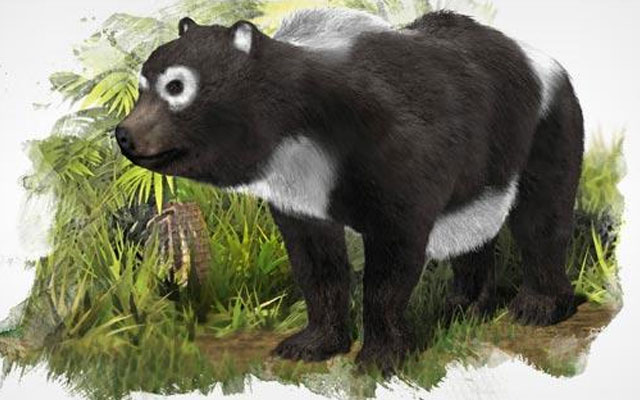
It is believed that the giant panda is native to modern China; it is the only species of this unique genus that has special eating habits. “The new bear species we described in our work is not only the first known bear to live on the Iberian Peninsula, but it is also the earliest known ancestor of the giant panda.” , the scientists said.
Interesting facts about giant pandas:
— A newborn panda baby is no larger than a pack of butter, that is, it weighs 1/900 of its mother's weight.
— The panda's paws have 6 toes, 5 main toes and one pseudo thumb (in fact, this is an enlarged wrist bone). All these limbs are necessary for the bear to hold bamboo branches well while feeding.
— Pandas have a long tail, but they are the second longest after the tail of a lip bear.
— Pandas have a well-developed spatial memory rather than visual memory.
— Female giant pandas can conceive only once a year, and ovulation lasts only 2-3 days.
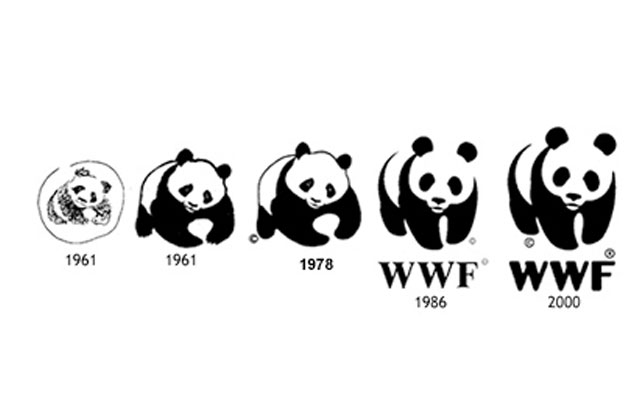
— The logo of the International Endowment for Nature (WWF) was inspired by Chi-Chi, a giant panda who has lived at the London Zoo since 1961, when the fund was created. One of the creators of WWF said: “We wanted to use a beautiful, endangered animal for the logo, which is loved by many people around the world for its qualities. It would also be good if the animal was black and white, which would save money on printed materials.”
— Pandas were one of the few animals whose body parts were not used in traditional Chinese medicine.
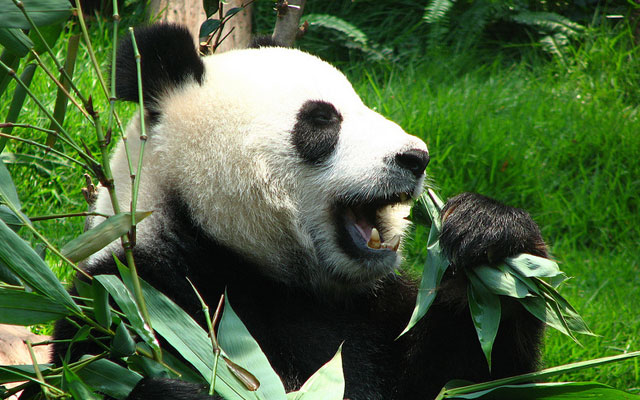
— About 99 percent of pandas' diet consists of bamboo leaves and young shoots, which are quite low in nutrients. Their digestive system does not digest cellulose well, so pandas have to lead a sedentary and sedentary lifestyle. Pandas eat the leaves of about 60 types of bamboo. Every day they have to eat about 16 kilograms of leaves to eat, so nutrition takes up most of their lives.