
 Science
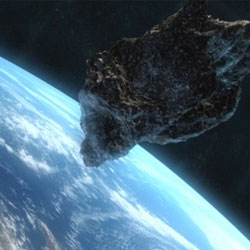
To combat global warming, scientists from Scotland have recently proposed an unusual solution: a giant cloud of dust that can be raised on an asteroid and that will act as a filter against scorching people sun rays.
The world is warming every day, and the climate is changing. While many researchers believe that in order to stop these changes, it is necessary to reduce greenhouse gas emissions that trap the heat coming to Earth from the Sun, others believe that It is possible to manipulate the climate on the planet with the help of large-scale engineering projects called geoengineering.
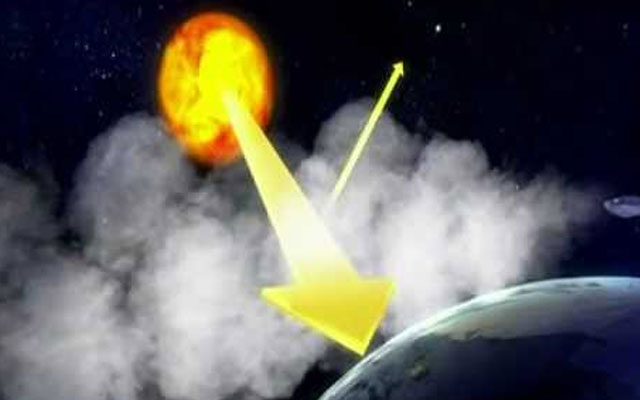
Some researchers have suggested that geoengineering projects could affect the entire planet as a whole, and they would operate from space. At the same time, there will be no need to try to change the climate by targeting either the oceans or the atmosphere. For example, projects that would reduce the amount of solar radiation received by the Earth by only 1.7 per cent would neutralize the impact of an average increase in global temperatures by 2 per cent degrees Celsius. The UN Intergovernmental Panel on Climate Change noted that climate models provide for an increase in Earth's temperature by an average of 1.1-6.4 degrees Celsius by the end of the 21st century.
“The 1.7 percent reduction in radiation is a very small amount that hardly anyone will notice,” said researcher Russell Bewick, a space scientist at the University Strathclyde in Scotland. – Sometimes people imagine giant screens that would cover the entire sun. This is completely different… Our device will be constantly between the Sun and Earth and act as a shutter or filter.”
Shading the Earth
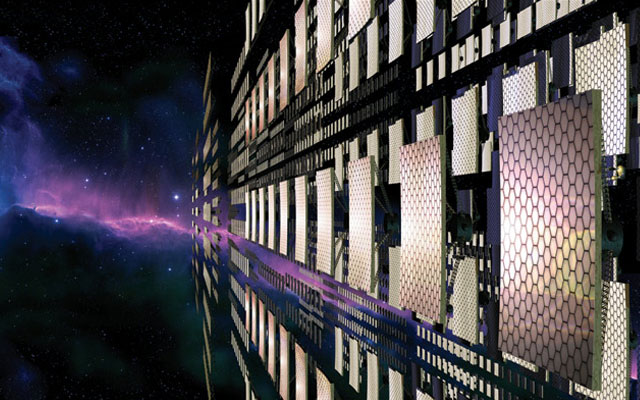
To shield the Earth from the Sun, it was proposed to place giant mirrors in space. The main problem with this concept is the incredibly high cost of the project, as well as the titanic efforts that are required to build and put into operation such reflectors, or their construction in outer space. The current cost of vehicles launched into Earth's lowest orbit is several thousand dollars per kilogram.
A filtering cloud of dust is a significant advantage over reflective mirrors, but there is a risk that it will eventually be scattered or attracted by the Sun's gravitational forces, Moons and planets. Instead of releasing a dust cloud and leaving it in space, researchers have proposed using an asteroid that can use its gravitational forces to hold the cloud, which will permanently block the sun's rays.
“I would like to make it clear that I would never say that geoengineering should be seen as a substitute for trying to reduce carbon dioxide emissions,” Bevik said. “We can buy time to find the ultimate solution to dealing with climate change. The dust cloud will not finally solve the problem, but it can help neutralize the impact of climate change while measures are taken to eliminate carbon dioxide.”
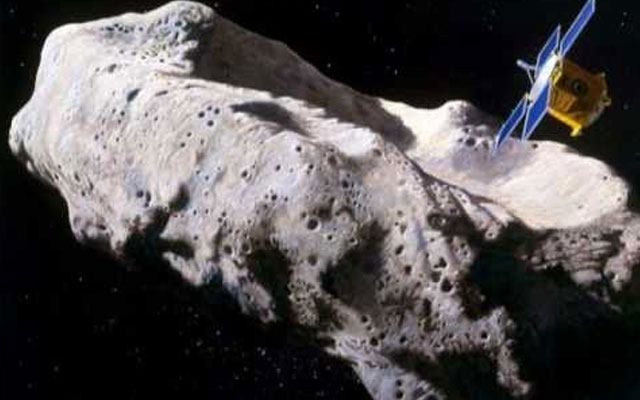
The idea is to place the asteroid at the Lagrange point, where the gravitational forces of the Sun and Earth will not influence it. This point is located at a distance from Earth, equal to four distances from the Earth to the Moon.
Scientists believe that an asteroid near Earth can be equipped with an “booster engine”, a device that consists of electromagnets and will act as a rocket, pushing an asteroid to the Lagrange point, and will also be able to release a stream of dust that will block sunlight.
Scientists have calculated that the largest asteroid nearby, 1036 Ganymede, could provide a cloud of dust that would block 6.58 percent of solar radiation, which is usually makes it to Earth. This is more than enough to cope with global warming. This cloud will contain 5 million kilograms of dust and will be 2,600 kilometers wide.
Ganymede weighs 130 million billion kilograms. Asteroids of this level can cause a lot of damage if they suddenly collide with Earth, but scientists believe they are more likely to benefit from them.
Dust cloud problems
The biggest problem that may arise in connection with the project is how to push an asteroid of this mass to the Lagrange point between the Earth and the Sun. Not so long ago, Planetary Resources announced that it intends to extract minerals from asteroids. Studies conducted by this firm have shown that by 2025 it will be possible to “catch” asteroids weighing 500 thousand kilograms. The asteroid Ganymede is much harder and “catching and moving” it seems impossible so far. However, smaller asteroids can be moved to the Lagrange point.
Safety is another issue. “Very large asteroids pose a potential threat to the Earth, so you need to work with them with great care and accuracy to complete the entire scenario flawlessly,” Bevik said. this may cause political problems that will be no less than engineering problems. If scientists start working with even the smallest asteroids, it is likely that all segments of society may become suspicious of such projects, even if the risks are minimal.”
There is also no way to test such a dust cloud on a large scale to prove its effectiveness before launching a project. This brings together all geoengineering projects, Bevik added. It is possible to create climate models, but without large-scale testing, the results of these models will not be considered valid.