
 Health
As scientists have found out as a result of a recent study of a group of children with autism, doctors have the opportunity to identify factors that indicate the likelihood of the development of this mental disorder in the future. As part of this study, British scientists selected a group of 104 children aged six to ten months, and continued to monitor the development of babies until they were three years old. As a result, scientists came to the conclusion that those children who had some signs of autism at the age of three discovered unusual brain activity in the first months of their lives when visually contact with people's faces.
According to study leader Mark Johnson, director of the Center for Brain and Cognitive Development at Berkback College, University of London (Centre for Brain and) Cognitive Development at Birkbeck College, University of London), their research suggests that it is possible to predict the risk of autism in children. Moreover, it is possible to predict even when the child is only six months old; to do this, it is only necessary to scan the brain, recording certain aspects of its functioning.
Autism, which affects an average of about one percent of people on our planet, is a certain mental disorder that is expressed in the patient's pronounced inability to normal communication with people around him. In one of the mildest forms of autism, called Asperger's syndrome, the symptoms of the disease are not so pronounced, and a certain ability to socialize may persist. There are also more severe forms, manifested in pronounced congenital dementia. It is noteworthy that the sooner doctors find that a child has difficulties with socialization and communication, the easier it will be for them to help such children overcome many symptoms by developing themselves necessary communication skills. However, autism tends to occur after about two years of age — not earlier, and this fact makes it difficult to diagnose the disease at an earlier level.
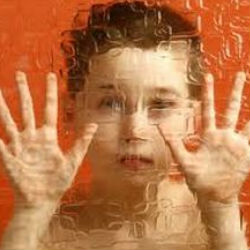 “Since there are no obvious behavioral signs at this age (under one year) that would indicate a risk of developing autism, we decided to identify them through direct scanning brain, analyzing its activity. We expected to find these more obvious early signals, “Johnson explains the reasons that prompted scientists to do this kind of study. Children for the study were not chosen by chance — scientists drew attention to those babies who were at high risk of developing autism, as their older siblings also suffered from it mental disorder. For their study, scientists used so-called passive sensors that were installed on the scalp of babies, showing clear changes in brain activity in response to the appearance of before through the eyes of children's faces. Scientists first recorded the reaction of children's brains to the face of a person looking directly into each baby's eyes, and then to the side.
As it turned out, those children who later found no signs of autism showed completely different patterns of brain activity in response to the face of the person looking them in the eye and then in the eye side. On the other hand, children who later showed signs of autism had almost the same response, regardless of whether the researchers looked the little ones in the eye or away. However, researchers are in no hurry to state unequivocally that their method of detecting a future mental disorder is one hundred percent accurate. The fact is that not all of the babies who did not react to different positions of individuals with different brain activity showed signs of autism at a later age. However, according to Johnson, the results of their research are the first step towards developing a method for early detection of autism at a very early age.