
 Culture
The bikini is the most popular women's swimsuit in all countries around the world. The types of bikini elements may differ from each other (and quite significantly), but the concept of this garment remains the same.
In other words, women wear two essentially separate garments, one of which (panties) covers the groin area and buttocks, and the other (bra) covers the chest.
Given the popularity of bikinis as a swimsuit, there may be a false impression that the fashion for it appeared on its own and began to spread completely unhindered everywhere.
However, this is not entirely true. The bikini prototype appeared much earlier than many might imagine; its journey was full of obstacles and obstacles, so we can say that our modern world got used to this fashion very gradually.
In order to find out the true history of the bikini and the reason for the popularity of this swimsuit, here are ten little-known facts about how it was created and promoted to the masses and changed.
Girls in bikinis
Bikinis have been worn since ancient times

It is widely believed that the bikini was invented in France shortly after the end of World War II. However, humanity has absolutely clear evidence that bikini-like suits were worn long before this period.
Let us look back centuries. In 5600 BC, talented artists lived in an ancient Chalcolithic and Neolithic settlement called Çatalhüyük, located in southern Anatolia, a peninsula in western Asia.
Descendants are left with many products of their art, where you can see local goddesses dressed in what looks like a real bikini. However, these are far from the only examples of modern swimwear prototypes, although they are among the most ancient.
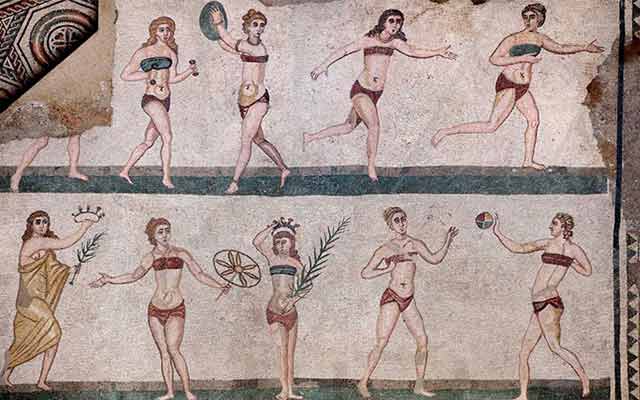
There are also antique paintings and ancient vases that date back to the ancient Greek period, to 1400 BC. They also clearly show women wearing two-piece suits. And these suits may well claim to be the predecessors of the modern bikini.
The bikini prototype can also be found in a culture associated with Ancient Rome. For example, in the central part of an ancient Roman estate (Villa del Casale), located in present-day Sicily, there is a remarkable mosaic.
This mosaic is known as “The Coronation of the Winner”. It depicts girls running, as well as girls playing hand balls and throwing a disc. Their one-on-one suits are identical to a modern bikini. It is not for nothing that this mosaic also has another, unofficial name: “Girls in bikinis”.
The bikini was mentioned in ancient literature

The evidence that you can see with your own eyes is far from the only one that confirms the fact that a bikini (or something similar) was worn many, many years ago.
For example, there are numerous references to these elements of clothing in ancient literature. Ovid, one of the three most famous Latin Roman poets, wrote that women have the potential to hide love letters on their bodies.
He referred to a peculiar women's blouse, describing it as a strip of clothing that women wrap around their breasts. Of course, there are different options, but this blouse in the description is very similar to what we now call a bikini upper, that is, a bra.
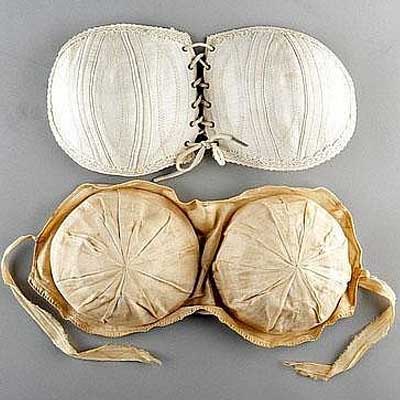
Martial, another Latin poet from a small town in Tarracona Spain who lived between 40 and 103 AD, wrote a satirical poem. In it, he made fun of one overly masculine athlete.
Martial described the athlete as eating, drinking, puking and, quite possibly, having sex with other women. At the same time, the appearance of the athlete's attire described by the poet is absolutely mirror-like what we call a “bikini” today.
In another of his poems, Mark Valery Martial mentioned a fallen woman named Chiona, who, wearing a bikini, was on her way to the bath. In an ironic manner, the poet made it clear that this woman is very immodest because she is trying to hide her true nature.
Read also: Bikini swimsuit birthday
Like, most women enter the bath naked, so it is not good for a prostitute to stand out with her provocative attire. It's funny that in the 1940s, a bikini that was just gaining popularity was also called questionable and provocative…
Bikinis began to come into fashion through cinema

Most of us are well aware of the fact that movie and television stars contribute to the popularization of many things, including clothing items. And bikinis are no exception.
French actress and true sex symbol of her era, Brigitte Bordeaux took gorgeous bikini photos during the Cannes Film Festival in France in 1953.
The famous photo shoot by the popular actress immediately led to an incredible increase in swimwear sales in France and throughout Europe. At that time, even in the United States of America, such an open bikini was still considered a scandalous garment (not to mention the Soviet Union).
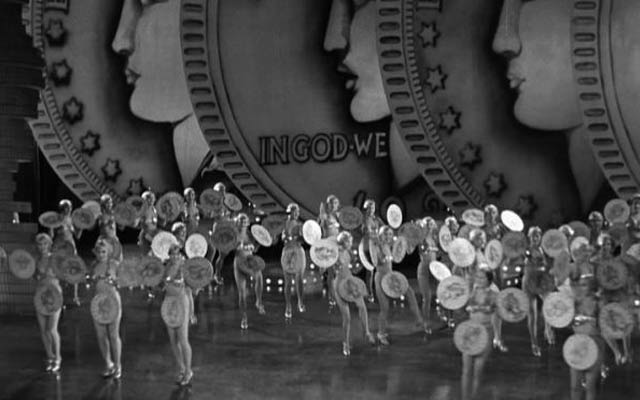
At the same time, few people know that a women's suit, almost completely identical to a modern bikini, appeared on the big screens two decades before Brigitte Bordeaux's scandalous photo shoot.
This happened during the so-called golden era of Hollywood, in the 1930s. This was before conservative laws (the Hayes Code) of the National Legion of Decency
(a Catholic organization in the US) went into effect across the country, including cinema.
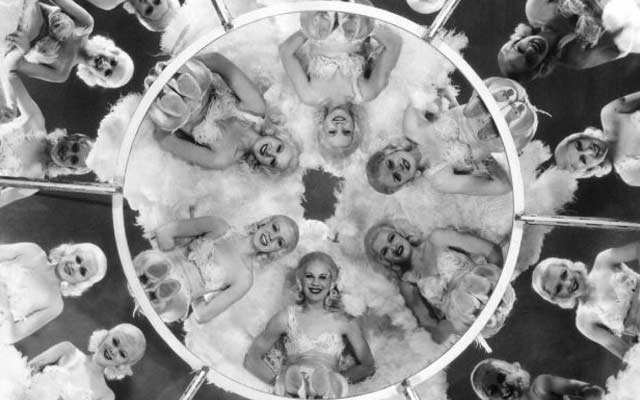
The famous American director and choreographer Busby Berkley, who had his hand in creating the film “The Gold Diggers of 1933”, which was released just in 1933, included in the film dancers wearing bikini-like (two-piece) coin swimsuits.
Then, in the 1934 film “Only Love”, choristers appeared onscreen, who also wore very tight, two-piece swimsuits. This was before Hayes's Hollywood restrictions were imposed. And this story shows that the bikini path was thorny and difficult.
Women in bikinis
The war helped promote bikinis to the masses
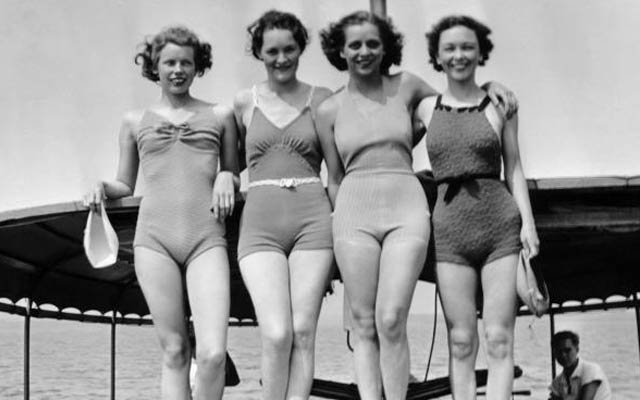
As you know, world fashion is often set by leaders. The United States is certainly one of these trend-setting leaders. However, the bikini as we know it today did not gain universal acceptance in this country until the 1960s.
However, the process of bikini movement to the masses was spurred on twenty years before this period, with the introduction of more modest bikini options in the United States. And World War II indirectly supported the popularity of this swimsuit on the beaches.
In 1942, when the war was already in full swing, the United States was supposed to provide uniforms for 16 million men and women who, in one way or another, fought for their country.

The Committee for Military Industrial Production forced civilian clothing manufacturers to reduce the use of fabrics for their daily serial orders. An order was issued that is known in the States as Order L-85. It has had a major impact on the culture of this country.
This order, of course, did not apply only to those who made swimwear. However, this order forced absolutely all manufacturers to look for reasonable solutions to the problems of economy, which were so important and necessary during those war years.

One such solution was the introduction into mass production of swimsuits that would consist of two parts, instead of the usual closed swimsuits. Thus, by eliminating the part of the suit that fits the waist, manufacturers began to consume less material, which met the requirements of Order L-85.
The following year, manufacturers went a step further, making the suit significantly shorter. Over time, a two-piece swimsuit became quite commonplace, appearing in photographs by Hollywood actresses such as Rita Hayworth and Ava Gardner. As it turned out, women themselves felt more comfortable in bikinis.
The word “bikini” has stuck despite unpleasant associations

A man to whom representatives of the fairer sex (and the strong one too!) should largely be grateful for the introduction of a modern bikini, called Louis Rear. He was a French automotive engineer and fashion designer.
The official date for presenting the modern bikini to the world is July 5, 1946. This was the period just after World War II, also known for the fact that the US military and scientists were testing the atomic bomb.
For their destructive tests, the Americans chose a Pacific atoll in the Marshall Islands chain called Bikini. And the first demonstration of this open swimsuit made of a minimal piece of fabric took place just a couple of days after one of these test explosions.

There is no doubt that these events dictated the name for the new swimsuit model to Louis Rear. In addition, the exhibition's slogan was promoted, which read: “Bikini is a divided Atom!”
And Rear's design was inspired by female vacationers he saw at the French resort of Saint-Tropez. Women trying to tan themselves curled up some parts of their swimwear to get more sunlight on their skin.
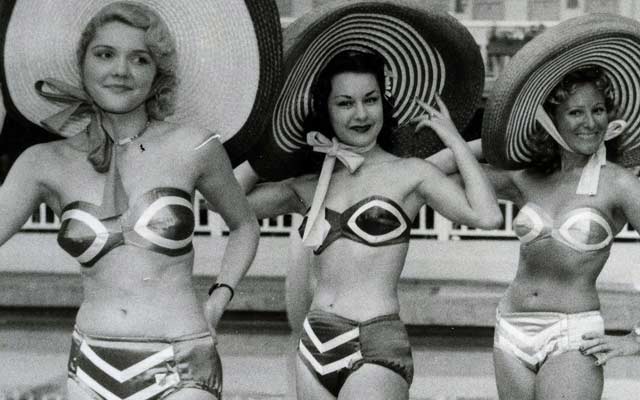
You can have different views about Rear's choice. Perhaps he, like many people on the planet, did not yet realize the mortal danger that nuclear weapons pose to people at that time.
You can accuse him of wanting to promote himself, which looks unacceptable and immoral, since less than a year has passed since the destruction of Hiroshima and Nagasaki. But we should give Rear credit — the introduction of new swimwear models has caused a bombshell effect all over the world.
Bikini models
Bikini creator Reare had a serious competitor
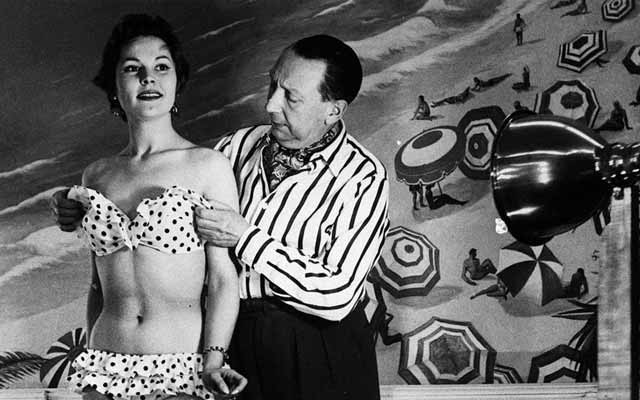
Frenchman Louis Reard has forever secured his place in history as the creator of the most modern bikini model of a women's swimsuit. However, humanity might not have known his name, as things could have turned out quite differently.
The fact is that another artist, a man named Jacques Heim, was working on the same project around the same period. Heim was a French lingerie designer who owned a store in Cannes selling the same lingerie.
In May 1946, two full months before Rear showed off his new collection, Heim debuted his new two-piece swimsuit. Heim gave his project the name Atome, which is French for “atom”.
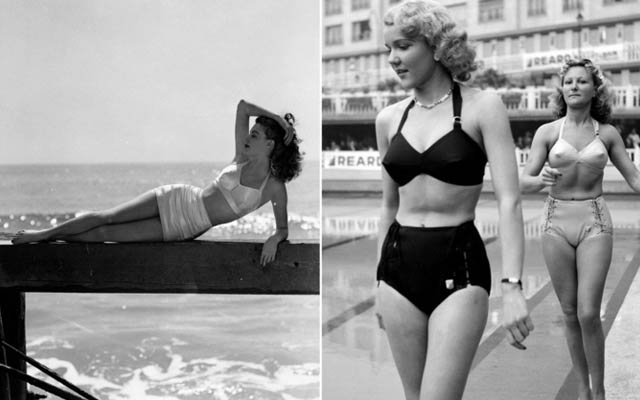
Thus, the designer wanted to focus on how small his swimsuit is, drawing an analogy with one of the smallest particles of matter. But since Heim was the first to show the world a two-piece swimsuit, why didn't his name go down in history as the creator of the bikini? Or an atom!
After all, Heim even brought aerial advertising planes to the show, trying to convey to the world that he had made the smallest swimwear ever.

Rear did pretty much the same thing only a few weeks later. However, Louis Rear was extremely witty, as he “split the atom”, making it clear to everyone that his creation was even smaller in size than his competitor's design.
In the end, it was Rear who became the very person who, as they say, won applause for a combination of more radical and attractive designs. And the word “bikini” caused much more resonance in the world when compared to the word “atom”.
A fierce bikini resistance movement

The spread of bikinis around the world has really met fierce resistance, supported by unfavorable reviews, from the very first days of its inception. The main subject of criticism, of course, was the candid design of this swimsuit.
The design was even called shameful, claiming that no professional model in the world would allow herself to wear this suit at any official bikini show.
Perhaps the bad tongues were right, as Louis Rear was forced to hire 19-year-old Michelle Bernardine, who worked as a cabaret stripper, to show off his revealing bathing suit Casino de Paris.

Then there was a press conference that was remembered for the insulting and rude behavior of the journalists present, outraged by Michelle's open navel. In fact, bikinis were met with hostility almost everywhere, including France, Italy, and Spain.
And, as mentioned earlier, this two-piece outdoor swimsuit has also faced negative attitudes in the United States. One of the attempts to popularize bikinis
was made as part of the Miss World international beauty show in 1951.
This time, however, bikini supporters faced rejection. When beauty pageant winner Kiki Håkansson from Sweden, wearing a bikini, won the award, representatives of religious groups made a fuss. The organizers of Miss World and other beauty pageants had to ban this swimsuit from their shows.
Bikini photo
The bikini was much more practical than all its predecessors
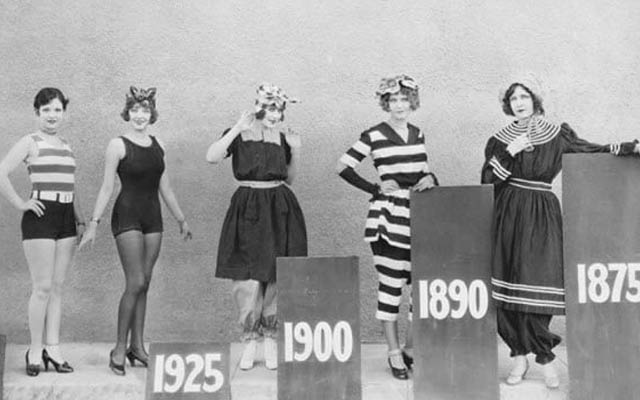
The introduction of bikinis on the market was a real relief for many women. Women considered all the other swimwear they had to wear in previous eras to be extremely impractical.
Throughout the 19th century and early 20th century, women around the world were under extreme pressure to observe the rules of decency and the need to be modest during bathing.
Women were required to wear swimwear (sometimes with stockings included!) , which completely covered the whole body. And these suits were made from wool or flannel.
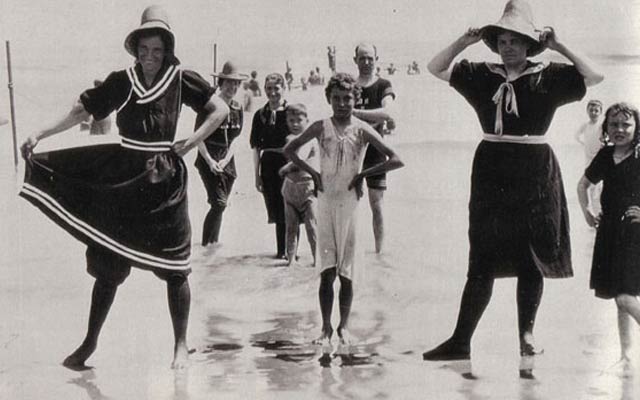
In addition to the fact that such archaic swimsuits were extremely uncomfortable to wear in hot weather, they were completely unsuitable for swimming, as the wool instantly gained water.
As soon as women spent only a short period of time in the water, their “bathing suit” became heavy, shapeless and baggy. It is clear that it was simply dangerous to swim in such suits, as it was easy to sink in the depths.
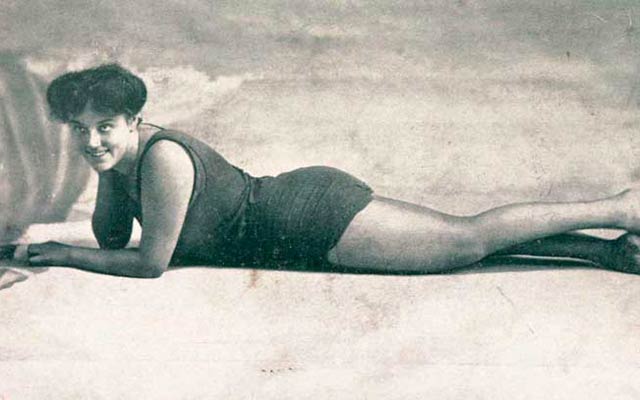
Drying this piece of women's wardrobe was also an extremely difficult and thankless task. The advent of the bikini was a turning point towards practicality and convenience when it came to designing women's swimwear.
It can be said that this movement was initiated by Australian professional swimmer Annette Kellerman. This happened back in 1907, when Annette was arrested on a beach in Massachusetts for daring to go out to people in a tight suit with bare legs.
The number of different bikini variations is very large these days

It took a very long time for the modern type of bikini to become socially acceptable. But as soon as this happened, many variations of the original model immediately began to appear.
One of the very first variations was thong bikini. It is believed that they were created by accident by a seamstress and model from Brazil named Rosa de Primallio. The girl allegedly had very little fabric left when she was stitching one of the bikini pieces.
The official presentation of this swimsuit model took place in 1974. String bikini was introduced by famous PR specialist Glen Tororic and model Brandy Perrett-Dujon (his part-time wife). This happened at the grand opening of a large shopping center in New Orleans, USA.

The monokini, a type of bikini introduced in the mid-1960s, was created by fashion designer Rudy Heinrich. Rudy's swimsuit originally had a tight-fitting bottom covering the buttocks and abdomen, as well as two thin strips of fabric that intersect between women's breasts.
Later, of course, other versions appeared, but the monokini version created by Rudy Heinrich left the woman's breasts completely naked. For obvious reasons, the monokini has remained part of, so to speak, a narrow collection (as well as Rudy's even more revealing pubikini version).
Another bikini variation that used even less material was a microkini that used extreme public nudity (at least as far as it is allowed by laws around the world).

In the late 90s of the last century, tankinis first appeared on the market. This was an attempt to revise all earlier swimsuit concepts by combining a bikini bottom with a women's strappy tank top instead of a bra.
As it turned out later, this idea caught on. It is not surprising that, around the same time, another bikini variant called “skirtini” appeared on the market, which, as the name implies, combined a standard bikini bra with skirts different lengths.
Eventually, the controversial burkini, which was created by Australian designer Aheda Zanetti specifically to allow Muslim women to walk, appeared on the market to the beach. This suit was banned in France in 2016, which, however, was later canceled.
Beautiful bikinis
A bikini like a jewel

As you have already seen, the story of promoting bikinis to the masses was not simple and rosy. In addition to learning about many historical facts, you also got to know the most famous bikini variations.
And although the need for many of these variations is controversial among different segments of society, almost every woman can afford almost every option. Everyone except those who are outside the reach of people whose financial condition does not allow them to be called rich.
Although one of the copies, which was made in 1977 from platinum specifically for Miss Great Britain to wear to the Miss World pageant, could also be afford by the wealthy people. That bikini cost $10,000.

At the time, it was the most expensive bikini ever made. However, in 2006, fashion designer Susan Rosen broke this record by creating a bikini that cost… $30 million!
This piece of art, which you can't even call a swimsuit, was made of flawless 150-carat diamonds. For most people, this bikini is completely unaffordable. And some people just don't feel comfortable wearing it…
Read also: Test: Which swimsuit is right for you?
For those who think of finding a chic bikini at a relatively reasonable price as a gift, we can recommend a product manufactured by Pistol Panties in 2009. Although this bikini is covered with 5,000 Swarovski stones, it costs only £2,000.