
 Incredible facts
Books are one of our greatest resources, but many books have been written in history that are misleading or untrue. In some cases, this has led to mass deaths as well as to the emergence of destructive government regimes.
Below is a list of books that have done more harm than good. The common feature of all books is that the reader is deceiving, in some cases possibly unintentional, but the consequences remain the same.
9. Witch Hammer (18+)
 Heinrich Kramer and Jacob Sprenger, 1486
On this list because: triggered witch hunts across Europe.
The Witch Hammer is a guide for witch hunters that described step by step how to catch and get rid of a witch. It was published shortly before the Protestant Reformation, and this book was one of the most popular among reformers who wanted to cleanse their countries of “evil”. Between 1487 and 1520, 20 editions of the book were published, and 16 more were published between 1547 and 1669. Thus, this book single-handedly started the age of witch hunts.
8. Coming of age in Samoa (18+)
Margaret Mead, 1928
 On this list because: provoked sexual confusion and misunderstanding of many concepts.
Margaret Meade was an American cultural anthropologist who traveled to Samoa to answer new questions about sexuality that emerged in the 1920s and were very interesting Americans and Europeans. Unfortunately for Meade, the young people she interviewed told her wild stories about sexual licentiousness, and Meade, in turn, took it all at face value. One of the girls later said, “She must have taken it seriously, but I was joking. As you know, girls in Samoa are amazing liars when it comes to jokes. But Margaret treated our fabricated stories as true.” If Meade said anything against it by trying to challenge it, the girls would probably tell the truth, but Meade didn't even question what they said.
According to Wikipedia: “Using cross-cultural comparison to reveal the characteristics of Western society was very popular at the time, so all the information received contributed greatly to raising awareness in anthropological and ethnographic research”. Interestingly, Meade's work was highly appreciated by the scientific community.
7. Sovereign (18+)
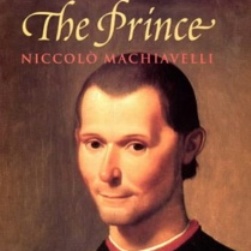 Niccolò Machiavelli ,1532
On this list because: it served as an inspiration and was a desktop for a large number of state tyrants.
The Sovereign is a treatise for rulers who fully believe that doing evil is more beneficial to society than “doing good things.” Machiavelli hoped that with his book he would revolutionize the souls of his readers, and he certainly did. He spoke proudly about things he had only dared to talk about in whispers before, and whispered things that were even scary to even think about.
According to Machiavelli, “a sovereign does not need to possess mercy, loyalty, humanity, honesty, or religiosity, but he should pretend to have these qualities; in fact, possessing these qualities It is very harmful both for the Tsar and for his entire country, but if he simulates their presence, it can serve him very well.” Some of the rulers for whom this book was a reference book are Stalin, Hitler, Mussolini and Napoleon I.
6. The basis of civilization (18+)
 Margaret Sanger, 1922
On this list because: contributed to the spread of eugenics (promoting the reproduction of people with traits that were considered valuable to society).
Margaret Sanger is the mother of modern contraception and the founder of the Birth Control League. In her 1922 book The Foundation of Civilization, she talked about eugenics theory (selective control of the human race) and racial purity (three years before Hitler did it in Mein Kampf). Underlying her commitment to contraception was the belief that inferior people must be killed in order for a perfect race to emerge over time. Sanger did not just have fun retelling a popular idea that was popular in society at the time, she was an ardent supporter of it.
In her book, she says: “The most pressing issue today is how to limit and prevent excessive fertility among mentally and physically unhealthy people. Perhaps if society continues to encourage chaotic breeding, it should start using harsh Spartan methods.” Birth control was, in her opinion, the most significant and truly eugenic method.
5. Democracy and Education (18+)
John Dewey, 1916
 On this list because she has convinced the world that education has nothing to do with knowing the facts.
In his book, Dewey demeans the traditional form of education that focuses on developing a child's personality and on giving him enough knowledge. Instead, he suggests teaching “skills”. His views had a major impact on the direction of education in both Europe and the US, as he was a respected specialist around the world. This book can be considered a classic “anti-education” manifesto.
So what are the consequences? These are entire generations of under-educated young people who lack any clear knowledge and skills. Dewey was one of the three founders of the philosophical school of pragmatism (a school of thought based on the idea that truth is created and can change). Dewey would certainly like the current curriculum in New Zealand, as it is largely based on its principles.
4. Children and child care (18+)
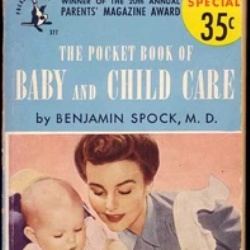 Benjamin Spock, 1946
On this list because: provoked a large number of deaths due to wrong advice.
Whether or not you agree with Spock's method, which was extremely popular at the time, no one can deny the fact that many children probably died from sudden syndrome infant death as a result of parents following his advice to put newborns to sleep on their stomachs. This advice was extremely popular among medical professionals around the world, and they gave it until the 1990s. Spock believed that if an infant sleeps on his back, he could die choking on his own vomit.
Scientists later found that Spock's advice eventually led to an increase in child deaths from asphyxiation. It is estimated that this bad advice has caused more than 50,000 deaths.
Moreover, before Spock, experts always told parents that children should be taught to sleep on a regular basis, and if the baby wakes up and starts crying and the parent starts with him When awake, the baby will cry even more and eventually stop sleeping at night. Spock taught exactly the opposite.
3. Protocols of the Elders of Zion (18+)
The author and year of creation are unknown
 On this list because it served as propaganda and was intended to incite racial hatred.
The Protocols of the Elders of Zion is a book aimed at describing a conspiracy by the global Jewish community and Freemasonry to seize power over the whole world. Despite the fact that this book was a fiction, it was very popular, and most Europeans believed that everything written there was true. Many people still regard the information in the book as accurate. It played an important role in Hitler's anti-Jewish efforts, and it was also used after the Russian Revolution to “justify” hatred and violence against Jews. The book continues to be published and distributed in many Middle Eastern states that are political enemies of Israel.
2. Communist Manifesto (18+)
 Karl Marx and Friedrich Engels, 1848
On this list because she could win the contest for the most harmful book ever written.
This book inspired some of the most brutal regimes in human history. Regardless of whether a true Marxist state ever existed, this book inspired so many brutal acts that it simply couldn't help but be in it list. Some of the principles included in the manifesto are the abolition of private ownership of land, the confiscation of emigrants' property, high taxes, and the abolition of inheritance.
1. Darwin's Black Box (18+)
Michael Behe, 1996
 It's on this list because: it's nothing but a fundamentalist attack on science.
By refuting aspects of Darwin's theory, this book reinforces the view of fundamentalists, who argue that a literal interpretation of Genesis is the only correct way to create the Earth. Despite numerous rebuttals from the scientific community, many fundamentalists still use this book as a “source” to prove that evolution is real did not exist. The book itself was not peer-reviewed, as stated by the author, and the vast majority of the scientific community did not accept it. It should be noted that Behe himself is not a fundamentalist and does not believe in a literal interpretation of the Bible.