
 Events
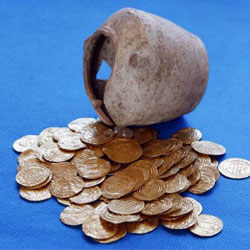
A pot of Crusader gold, estimated at $500,000, was recently discovered buried in an ancient Roman fortress in Israel. The gold coins were buried by Christian soldiers of the religious-military Order of the Hospitaller when the Crusaders were attacked by a huge Muslim army. The Knights of the Order were killed in April 1265.
Gold coins, which were a fortune back in 1265, were deliberately placed in a broken jug that did not attract much attention. The fortress was destroyed in April 1265 by the Mamluks, who captured the Crusader army, and the treasure was preserved only thanks to the cunning of one of the defenders.
“The idea was to hide the gold in some unattractive vessel, such as a broken jug, and fill it with sand. Even if someone found the pitcher, they wouldn't check its contents, so the coins were safely hidden. When we started sifting sand from this jug, coins began to fall from there,” says Oren Tal from Tel Aviv University.
The Roman fortress, which is now located in the Apollonia National Park, held a huge amount of archaeological treasures. Recently, archaeologists made their way to the 13th century layer and were shocked by the find — a perfectly preserved pot of gold.
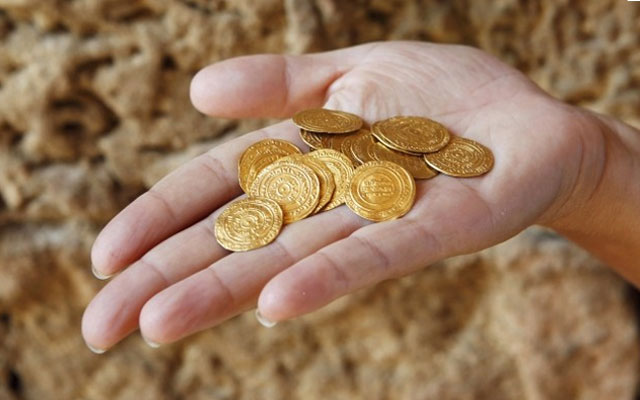
The clay vessel contained more than 100 gold coins from the time when the Crusaders captured the fortress originally built by the Romans. These coins date back to the Fatimid period in North Africa and were 200-300 years older than the ruined fortress where they were found. The coins were minted in Tripoli and Alexandria and are of great value.
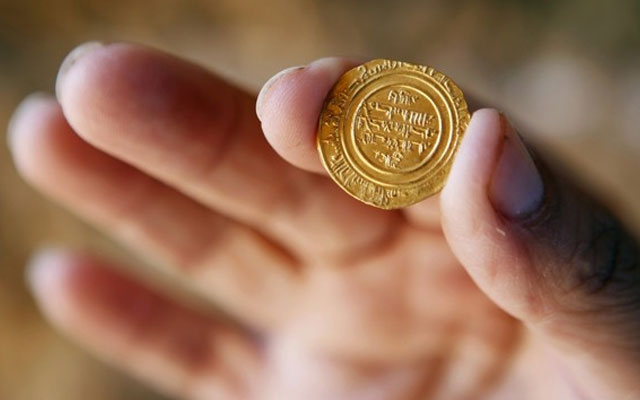
Fatimid coins are difficult to study, researchers said, as the symbols on them are difficult to decipher. Each such coin costs about $5,000. This find offers a unique opportunity to explore Crusader fortifications in the Middle East. The layer of Crusader artifacts has been completely intact since 1265. The Muslim city of Arzuf, where the fortress was located, was conquered by the Crusaders in 1101, and then in 1265 the Crusaders were defeated by the Mamluks.
The presence of the Crusaders left its mark on the city. Large parts of it were rebuilt, as well as extensive fortifications, private and public buildings, and a castle was built. Much of what was left of the Crusaders after the arrival of the Muslims was preserved due to the fact that the city was deserted.