
 Science
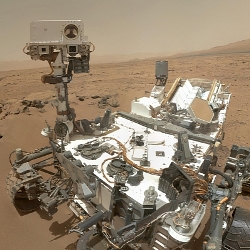
The Curiosity rover was set to safe mode after a computer system crash caused by corrupted files.
The robot, which analyzes rock samples from the Red Planet, is now running on a backup computer.
NASA engineers are now trying to find out the possible causes of damage to flash memory files.
A bug in Curiosity's computer caused the rover to be suspended and unable to perform its functions.
Last week, engineers noticed a glitch on one of the rover's two computers. On Wednesday, February 27, 2013, Curiosity, as usual, “communicated” with Earth, updating its status, but did not go to sleep as planned.
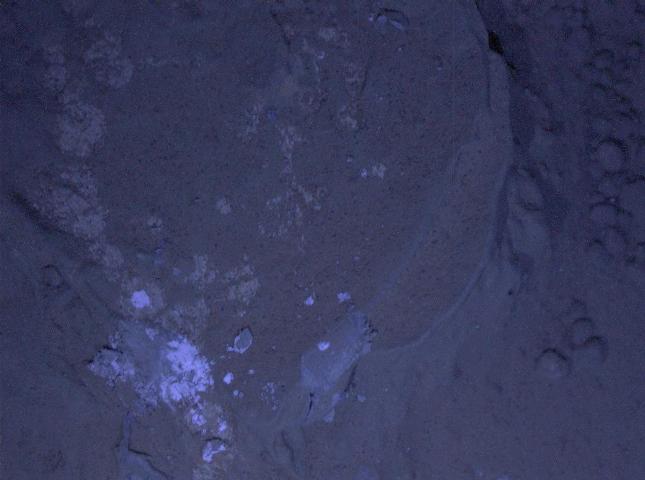
When they began to find out the cause of the crash, it turned out that main computer A had corrupted files. The Curiosity rover, meanwhile, switched to backup computer B. He already used a computer at some time when he went from Earth to Mars in 2012, but most of the time he works on the main computer A.
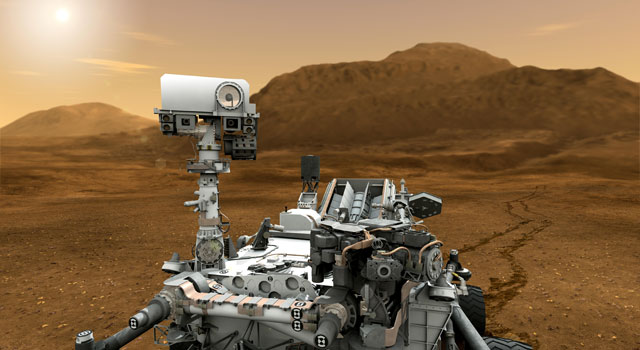
Scientists believe that cosmic rays may be the cause of the damage. High-energy particles are constantly irradiating all planets. And while the Earth's magnetic field protects us from most of these particles, they're all torn up causing a shower of charged particles that could damage computers.
Although Curiosity is equipped with many types of protection for interplanetary flight, it is not as well protected on the surface of Mars.
Curiosity marker news (photo)
This will be a pretty long delay for NASA, given that the Curiosity rover has just begun analyzing rock samples under the Martian surface.
Mars isn't really the Red Planet
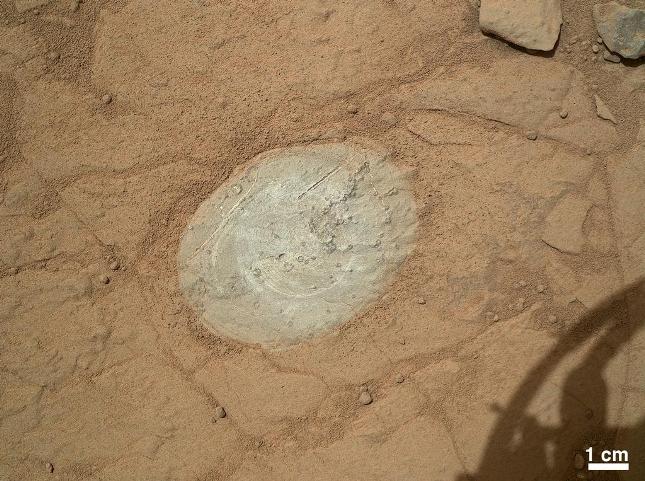
Many people call Mars the Red Planet and photos from the rover confirm that rocks, dust, and even Mars' atmosphere have a slightly reddish, rusty color. However, the first samples of rocks from Mars have shown that under the surface, Mars is actually more of a bluish-gray tint.
The first samples of Mars rocks
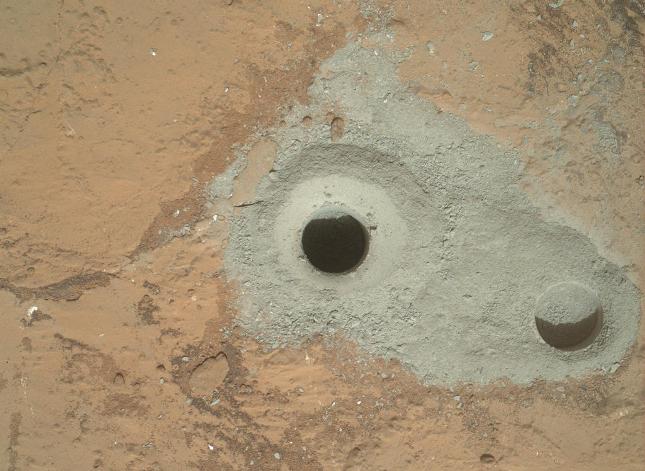
The Curiosity rover drilled a hole 16 mm wide and 20 mm deep on the surface of Gale Crater to obtain rock samples.
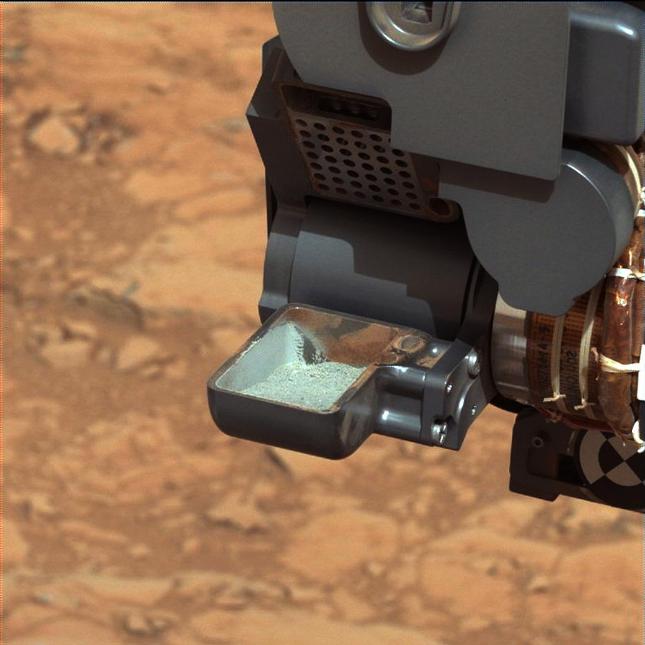
The first sample of crushed rock collected by the bucket will be sifted and then analyzed with ChemIN and SAM tools. These instruments will determine the chemical composition of rocks to answer whether there was life on Mars.
Curiosity Marker's Journey
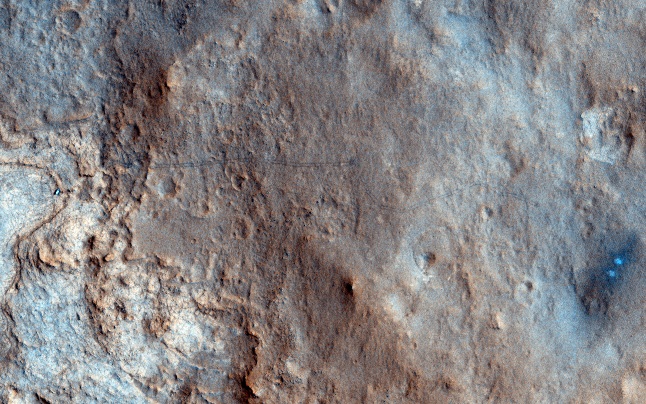
While we await the results of the analysis of rock samples, NASA has released the first color photo of Curiosity's journey from space. The rover traveled about 700 meters. The blue dots on the right show where Curiosity landed and its path (right to left) with stops to Yellowknife Bay, where it first drilled.