
 Unbelievable facts
Watch videos, If you're too lazy to read
Watch videos, If you're too lazy to read
Content:
Sensory isolation
Hallucinations
Anxiety and need for movement
Loss of orientation over time
Attention and thinking disorders
Depression
Extreme isolation
Beyond isolation
“Dark” retreat Sensory deprivation
chamber or floating therapy
Did poker player Rich Alati go crazy in the dark?
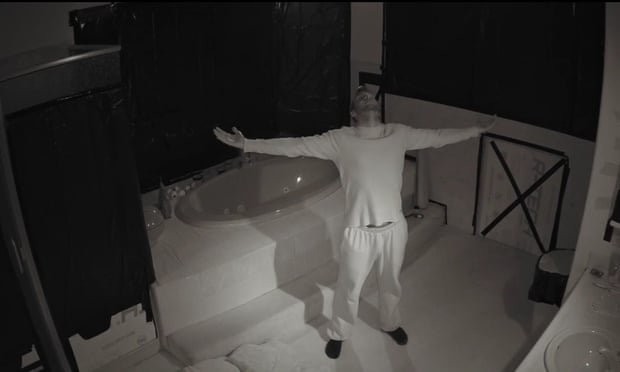
On November 21, 2019, Rich Alati, a professional poker player, bet that he would be able to spend 30 days in absolute isolation and complete darkness. Psychiatrists were categorically against it. They warned Rich that this could cause serious brain changes, but poker players are gamblers. Alati made up his mind.
Do not try to repeat the experiments described in the article – it is dangerous for mental health and life. The material has an informational and reference function! Before using any products or services, you should consult a specialist!
© theguardian.com
How does the brain react to the absence of light? What happens to a person who finds himself in absolute darkness and is unable to speak to anyone? What if something extreme happens and a person immersed in the dark doesn't know if he'll survive at all? Would you like to know if Alati won the argument and whether he lost his mind? Read our article to the end.
Read also: Stories of people who spent years in complete isolation
Sensory isolation
Why is it so difficult for many people to stay at home on self-isolation, even though they have the Internet and the opportunity to communicate? Our brain is an ancient organization. No matter how accustomed we are to new technologies, the brain does not consider virtual communication sufficient, because not all senses are involved in this process. After sensing a “deception”, the brain becomes anxious, depressed, and our performance decreases. In a mild way, we experience what is known as sensory deprivation or isolation.
© Syda Productions
Sensory deprivation literally means a loss of feelings. This is a condition when an organism from an environment with a large number of external stimuli suddenly enters a place where it is all alone, where there are no smells, sounds, light and nothing to touch. At first glance, it seems that this is a paradise for our nervous system, that we will be calmer without stimuli. But it's not that simple.
After all, it is light, sounds and other stimuli that allow us to experience the reality of the present moment. What happens if a person is deprived of this reality?
Hallucinations
The brain needs new experiences — food for the mind. When this need is not met, the brain feels something like hunger or thirst for information and begins to create its own picture. The sources of illusions are our memories, past experiences, imagination and desires. American psychologist Marvin Zuckerman calls this phenomenon the “capture” of thinking by fantasies and dreams.
In July 2009, Sarah Shurd, 32, was traveling with friends in the mountains of Iraqi Kurdistan. When they crossed the Iranian border, the entire group was arrested and charged with espionage. In Tehran's Evin prison, they were held in solitary confinement, 410 days, or about 10,000 hours of imprisonment. In 2010, the prisoners were released and Sarah spoke about what happened to her.

Sarah Shurd © Iran.ru
In total darkness and silence, she began to hallucinate. There were flashes of light from time to time, they were very real, but as soon as the girl turned her head towards the source, they disappeared. These hallucinations are called “prisoner movies”. But auditory hallucinations were more difficult — the sound of footsteps, the rustling of paper and screams. Once there was a scream in my ears all the time, it was impossible to get rid of it,” Sarah said. When the guard brought her to her senses, it turned out she was screaming herself.
An interesting fact
Scientists at Harvard Medical School conducted an interesting experiment in 2004. The experiment involved 13 volunteers who were put on a special blindfold that did not let in light. The experiment lasted 5 days. Ten subjects developed visual hallucinations from day one. For some, they were simple — just circles or lines of light; others saw faces and even landscapes.
Read also: The 7 strangest hallucinations
Anxiety and need to move
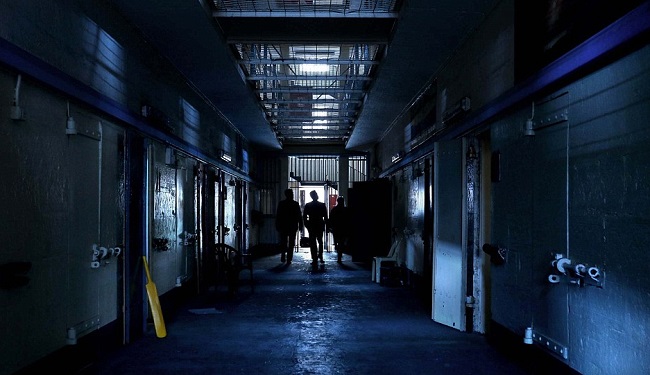
Fear is the body's first reaction to a sudden or unexpected change of scenery. This “mental protest” makes us nervous and seek a way out of a situation that is uncomfortable for the nervous system. In order to somehow cheer up, after a day in conditions of sensory isolation, people automatically begin to perform monotonous movements. More often than not, they just rock in place. Many people are beginning to measure space in steps. At some point, they even stop controlling the safety of movement. They don't care if they crash into the wall or the iron door of a prison cell, for example.
Parramatta Prison © dailymail.co.uk
Movement is another way for the brain to stay active, another task you can do without losing your mind. Our brain is trying to create a new meaning for us, find a goal, and make the situation informative. For example, people who remain isolated can take a long time to understand the nature of their food, count their breaths and exhalations.
Scientists are convinced that the degree of anxiety depends on the individual. For extroverts, people who love to talk a lot, this isolation is real torture. Self-focus and the tendency to react violently to what is happening accelerate the onset of hallucinations. In people with unstable minds, even 15 minutes in complete darkness and silence makes the brain create illusions. But, for example, specially trained military personnel are able to maintain mental clarity longer, giving themselves various tasks and controlling emotions.
An interesting fact
The first anechoic chamber was created in the United States. It was named the Orfield camera after its creator. According to rumors, a person cannot stay in it for more than 45 minutes; Orfield himself only stayed there for half an hour. The sound insulation in the chamber is almost 100%. The person in it does not hear the sound of his steps, does not see anything. The only sounds available to him are his own heartbeat, the sound of blood flow, and the rumbling of his stomach. But the most depressing effect of absolute sound insulation is the “Ganzfeld effect”. Our brain makes something that looks like white noise. You could also “hear” a similar buzz if you were lying in silence for a long time at night. White noise may seem pleasant at first, like the sound of a waterfall, but after a while it begins to drive a person crazy.

The structure of the sound-absorbing wall of the Orfield chamber
Loss of orientation in time
In many films, a person rescued from an extreme situation is asked what his name is and what date it is today. This is a good way to find out what condition the victim's brain is in.
People imprisoned or trapped under the rubble lose track of time. This is because without light our internal clock or circadian rhythms are disrupted. When light hits the retina, the brain receives information about the onset of morning and releases hormones that make the body wake up. Now imagine a person in total darkness. If he falls asleep, he won't know how much time he slept or when he woke up. Prisoners who lost track of time quickly lost touch with reality.
© Scopio Images
In 1962, French geologist Michel Siffre decided to conduct an experiment and explore the limits of his capabilities. He lived in one of the underground caves in the Alps for 3 weeks, then 2 months and gradually increased the duration of his underground life to 200 days. Michelle did without a calendar or clock. Special sensors recorded key indicators of brain health and activity. He had only a small lamp and books at his disposal, and Michel's friends, who were sitting on the surface, lowered the food into the cave. When the experiment ended, Michelle was surprised because he thought it was only 10 to 11 days, not 3 weeks. It turned out that in the absence of sunlight, the internal clock works more slowly.
Once in the dark, our brain retrains itself, and instead of 24 hours, we live in a 36-hour rhythm. The exact cause of this phenomenon has not yet been established, but scientists suggest that it's dopamine. When no drastic dopamine releases occur, the brain works more slowly and a time shift occurs. Michel Siffre said that he subjectively felt two minutes of time on the surface like 5 minutes.
An interesting fact
When deciphering ancient Mayan calendars, scientists found evidence that a day on earth once lasted 36 hours.
Attention and thinking disorders
Observation of students showed that those sitting in a dark corner of the classroom performed worse on assignments than those who were closer to the window. In complete darkness, our brain can lose up to two-thirds of its abilities — memory, attention, logical thinking, speech, the ability to learn new information and solve logical problems.
The thing is that due to the absence of external stimuli, different brain centers are desynchronized, and the rate of impulse transmission between them decreases markedly.
Psychologist Ian Robbins was convinced of this. In 2008, he worked with the BBC to recreate the situation experienced by many prisoners of war. Six volunteers spent 48 hours alone in the cells of the nuclear bunker. The cameras were fully soundproofed and had a bed and a night vision camera for surveillance. Three of them wore headphones with white noise and long gloves that did not allow them to touch objects around them. The aim of the experiment was to turn off the main senses and find out how sensory isolation affects brain function. Before closing the cell door, volunteers underwent memory and concentration tests.
After 48 hours, when people finally came out, the tests were repeated. The brains of the participants in the experiment began to work more slowly. The ability to remember decreased by 46%. It took 79% longer to complete any test. It was difficult for the subjects to pronounce words clearly, remember associations, and most importantly, their suggestibility increased significantly. In this state, they resembled children who were given an impossible task.
An interesting fact
After leaving prison, one of the prisoners found that he was unable to do much of what he had previously been able to do. His frequent stay in a dark cell, where he was locked up for 15 days, severely damaged brain neurons. The person could not say in what order he performed activities during the day, nor could he drive during rush hour. And the worst thing is that even years later, he failed to restore the brain to its previous parameters.
Depression
“How do I know I'm still alive?” — asked himself one of the prisoners who spent 12 years in prison in the Middle East and experienced all the torments of total isolation. A brain devoid of feelings quickly becomes depressed.
© Getty Images Pro
It's important!
Depression should not be considered a prolonged bad mood. Real depression is a deep depression of the nervous system, the extinction of its activity, and the loss of will.
The link to depression and darkness has been known for a long time. At night, the amount of melatonin in the brain increases. This neurohormone helps us fall asleep, but if its level does not decrease during the day, we develop melancholy, turning into apathy. At the same time, melatonin still has many more beneficial properties, but we'll talk about that later.
At the University of Pennsylvania, scientists put mice in a dark room for 6 weeks. The animals showed signs of depression, and the brain responded by reducing the activity of the same zones that are responsible for a satisfactory human condition. Neurons in brain centers have stopped releasing norepinephrine, dopamine and serotonin — hormones that are responsible for emotions, joy and thought processes. Fortunately, the mice responded to treatment with antidepressants, so scientists believe that the process of brain damage during short isolation is reversible. Read more about the study by clicking on the link in the bibliography.
An interesting fact
Silence and darkness are among the most stringent methods that intelligence agencies use during inquiries. Human rights activists believe that sensory isolation can be considered torture.
Extreme insulation
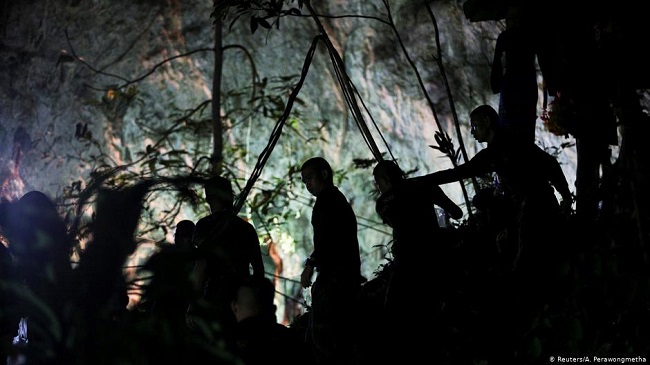
While in prison, a person still knows that he may be released someday. Hope and purpose help him overcome loneliness even in a punishment cell. But it is more difficult for those who have remained under the rubble, lost their way in catacombs or underground caves to keep their minds.
© https://www.dw.com/
If you have gone to the mountains, live in an area with high seismic activity, or live in an emergency building, remember how to behave if you suddenly find yourself under the rubble:
Do not make sudden movements. Do not try to pull out the limb stuck under the rubble. By doing so, you can trigger an even greater collapse.
If your phone is still intact, use it.
Try dialing the emergency number. If there is no connection, check if the built-in flashlight works. Try to save battery and turn on the flashlight periodically to stay in the light or give a signal.
If you have a metal object, move it, move it from side to side. This will help the rescue metal detector find you faster.
Give your voice periodically. Every hour, rescuers announce a time of silence so that people can hear the voices of people under the rubble.
Try not to give in to negative thoughts. In this situation, your brain releases a lot of stress hormones. They're creating panic. Your task is to stay calm and keep your brain busy with some mental task. The less you panic, the longer you will survive and the more likely you are to be rescued.
An interesting fact
In 2010, an earthquake hit Haiti, killing more than 200,000 people. A young Haitian lay under the rubble for 27 days. When he was pulled out, he was exhausted, completely disoriented, and claimed that someone wearing white clothes had brought him water all along. Rescuers are convinced that these were hallucinations. It was simply impossible to get to the place where the rescued man lay.

The consequences of the 2010 Haiti earthquake © boston.com
Read also: Loneliness: 10 tips to benefit from this condition
On the other side of insulation
It is known that there are people who use sensory isolation as a spiritual practice and, as a result, this does them more good than harm, unlike unfortunate people who are involuntary in such a situation or foolishly. “Whoever looks outside only dreams; who looks into himself wakes up.” These words by Carl Jung are perfect for describing sensory isolation techniques that are currently very popular. Their essence is simple — in the dark, the brain produces theta waves. They connect us to a source of inspiration. We go into this state for a short time every day before going to bed, but then we fall asleep right away.
Dark retreat
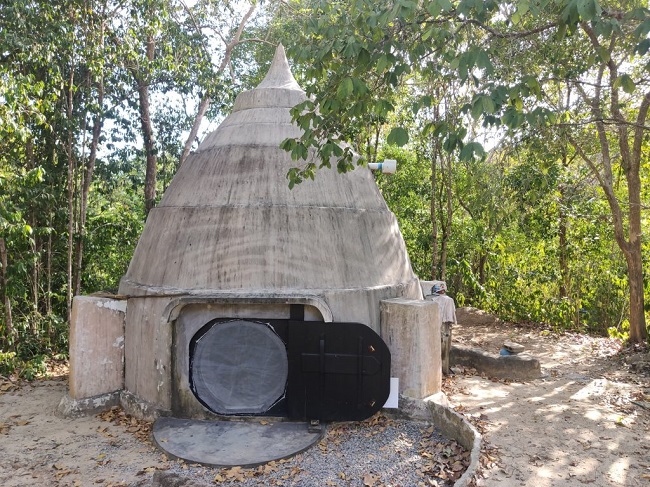
In India, severe mental disorders and various addictions were treated in an interesting way. For 3 weeks, the patient was closed in a dark place. It was usually something like an underground cave. Many spiritual practices began with a dive into complete darkness. Darkness helped shamans and yogis heal, undergo transformation, and “open their third eye.”
Tantra devotees call the pineal gland or pineal body the third eye. It is located in the brain and is no larger than an average grape. There is a theory that with age, the epiphysis undergoes calcification and ceases to function properly. But being in the dark can activate it, which is what Indians call “opening the third eye”. Activation of the pineal gland implies an increase in the production of one of the neurohormones, melatonin, in it.
© Getty Images Pro
The hormone melatonin has the following effects:
Regulates our internal clock. Without melatonin, we wouldn't be able to sleep. At nightfall, the pineal gland converts the happiness hormone serotonin into melatonin, which makes us want to sleep.
It affects the level of female sex hormones. If there is not enough melatonin, the menstrual cycle may become irregular.
It protects the heart and blood vessels. Recent studies have shown that after coronary artery stenting, melatonin, together with conventional treatment, significantly reduced the degree of heart muscle damage after myocardial infarction.
It has antioxidant and anti-inflammatory effects. Antioxidants protect cells from old age. With age and chronic diseases, their number in the body increases sharply.
Regulates metabolism.
Melatonin can improve glucose absorption, reduce triglycerides and “bad” cholesterol. In fact, melatonin is able to restore blood flow and slow down the development of atherosclerosis.
Given how beneficial melatonin is for us, sufficient amounts can really be considered the “key” to the body's recovery.
An interesting fact
Anyone can take part in the Dark Retreat. It is usually organized in ashrams. According to dark retreat adherents, when the pineal gland is activated, DMT (dimethyltryptamine) is formed, which is also called the “spirit molecule”. In humans, this substance is very actively excreted at birth and death. Basically, DMT is an internal psychedelic substance that puts us into a trance. Shamans get it from plants, and tantric enthusiasts learn to develop it themselves by meditating in the dark. However, there is no scientific evidence to confirm that a “spirit molecule” is released in the dark.
Practice Building – Dark Retreat © journeybacktothesource.com
Read also: Test: Do you have a third eye? Stereograms
Sensory deprivation chamber or floating therapy
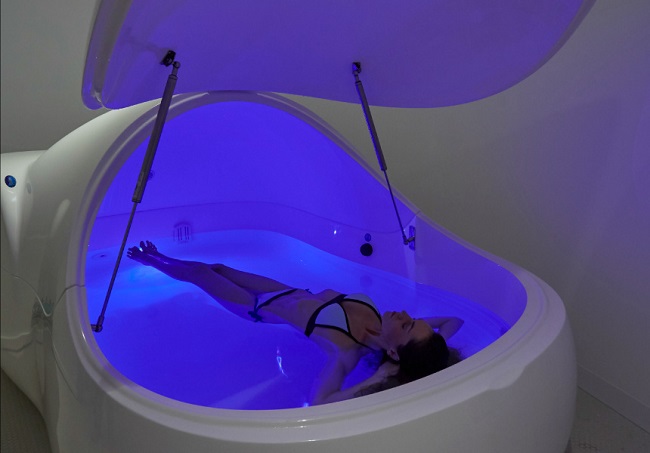
A dosed, relatively short stay in darkness, silence and weightlessness can be beneficial. In the 1950s, neuropsychologist John Lilley created a floating capsule. It resembles a small chamber or tank. It is filled with water and Epsom salt, so when you dive into the water, you float up and don't risk drowning. The camera creates perfect silence. It also does not penetrate light. Immersion in water eliminates tactile sensations. Your brain stops receiving any stimuli for a while, and there is no need to analyze and control the situation. This condition is very similar to the conditions in which a human fetus develops.
Floating capsule © broadsheet.com.au
During a stay in the floating capsule, the following happens:
the level of stress hormones decreases; blood pressure
is normalized; sleep
is restored; digestion
improves.
The sensory deprivation chamber is used to treat certain functional disorders and neuroses.
An interesting fact
Before filming the Twin Towers movie, Hollywood actor Nicholas Cage plunged into a sensory deprivation chamber. According to the script of the film, a police officer played by Cage is buried in the rubble of the World Trade Center towers in New York City. While rescuers are looking for him, the hero remains immobilized in the dark. The floating camera helped the actor “get into the role” and understand what a person with claustrophobia feels.
Did poker player Rich Alati go crazy in the dark?
As you can see, darkness could have had both harmful and positive effects on Rich, although the experimental conditions were by no means extreme. Rich's room had a bathroom, a toilet, and a yoga mattress. He also took with him an expander, a massage ball, essential oils and a scrub. Alati was watched by a camera, and to make the “test subject” completely lose track of time, food was brought to him at different hours.
Of course, Alati knew he would be able to leave at any moment. His life was not in danger, he did not worry if rescuers would find him. However, 30 days is a long time for the psyche.
© Pexels
From day three, he began to hallucinate. At first it seemed to him that the room was filled with soap bubbles, and then that the ceiling was opening and he saw the starry sky. Rich's positive attitude wasn't always perfect either. Many times his brain was filled with doubts. Alati ended up in the dark for 20 days and agreed to leave when his opponent paid him $62,400 in winnings. When he went “out”, Rich was really shocked. It was difficult for him to get used to communication and technology again. But after such an experiment, he admitted that he began to appreciate the little joys of life more.