
 Ecology
Mothers from the human world and from the world of orcas often live long after menopause. Recently, researchers have found out why, even if they are unable to reproduce, females continue to live. They suggested that this is at least partly due to the fact that they have been caring for children for many years to come.
This also helps explain why female orcas and females live longer than males. In the case of orcas, the difference in life expectancy between females and males is quite significant. Females can live about 90 years, while male orcas live about 50 years on average.
“For most animal species, the chances of increasing the transmission of their genes stop as soon as they stop producing offspring,” said Darren Croft, one of the study's authors. — Our results showed that, like women, female orcas can increase the spread of their genes even after menopause. They do this by helping their older sons survive, who in turn produce more offspring.” Through this process, evolution encourages females to live longer even after menopause.
Researchers at the University of Exeter and York analyzed data on the life expectancy of orcas collected over the past 36 years from two populations of these cetaceans in the North Pacific Ocean, coasts of the United States and Canada. 589 animals took part in the studies, of which 297 individuals died over the past period.
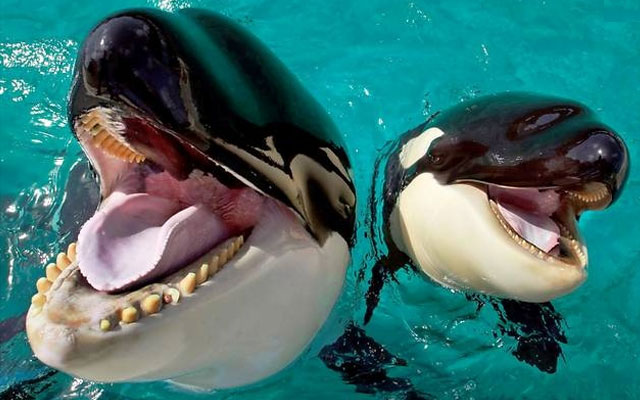
The researchers created models to calculate the probability of survival for each killer whale at any age. As a result, it was found that orcas, whose mothers live long lives, are also able to live longer. This is especially true for male sons.
“Due to the stable social structure of resident orcas, females from another family take care of their sons,” the researchers said. “Conversely, if daughters give birth, the offspring remain in the same group,” the researchers said. , which increases competition for sources within the same family group.”
In theory, to increase the chances of spreading their genes, female mothers should focus on their sons. Research supports this theory and shows how older sons depend on their mothers to survive.
Orca mothers help their sons feed, support them during clashes, and so on.
Human mothers, of course, live in a slightly different social system, but they care about their sons, daughters, and grandchildren, which is of similar importance, at least from an evolutionary point of view. Apparently, this could also explain why women go through menopause in the first place.

“It is believed that menopause in women evolved to allow them to focus on their grandchildren. Female orcas care for their own offspring all their lives, especially their eldest sons,” Croft said. “It's incredible that sons are really attached to their mother all their lives.”
In addition to humans and killer whales, females of only one genus of mammals, grind whales, have menopause. Scientists believe that whales developed menopause so that mothers could better care for their offspring. Unlike a person whose sons and daughters can equally get help from their mothers, only sons benefit from orcas.