
 Ecology
Rising sea levels, killer storms, drought, extinction of species and spending money on snow plows are not the only reasons for concern in the face of global climate change. It turns out that climate can influence size!
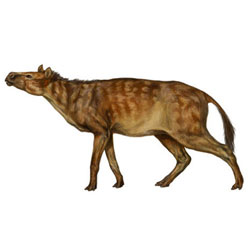
This happened to sifrippus, the first horse on the planet, which lived 56 million years ago. This extinct animal has shrunk in size as the climate warmed for thousands of years. At first, the mini-horse weighed an average of 5.5 kg, and later — 3.8 kg, as shown by research results.
The little horse lived in the Bighorse Basin area, Wyoming. This area is still considered a horse area, as wild mustangs roam there.
Sifrippus did not look like mustangs or modern horses. It was about the size of a cat and ate more leaves than grass. It is classified as a horse only according to scientific classification. If someone domesticated it in due course, this animal could become a cute pet. However, for some people to domesticate them, sifrippus would have to live for many more millions of years.
Judging by the fossilized remains of these horses in the Bighorn Basin, the size of sifrippuses has changed over a period of global warming that spanned 175,000 years. In Earth's history, this period is known as the Late Paleocene Thermal Maximum, when temperatures rose significantly and then fell again.
Scientists know that many mammals began to shrink in size during this warm period. Bergman's rule states that smaller members of a particular mammal species will live in warmer climates. Although this rule refers to differences in the location of living organisms on the planet, it can also be attributed to climate change over the course of history. There are no very detailed details yet.
In the course of their research, Ross Secord from the University of Nebraska-Lincoln and his colleagues analyzed the fossilized remains of sifrippus collected in the Bighorn Basin area.
They reported that the tiny horse had become 30 percent smaller in 130,000 years, which also reduced its weight. After that, over the next 45,000 years, it increased its size by 75 percent. The fossils made it clear that the lowest weight of the animal was 3.8 kg, and the largest weight was 6.8 kg. Having data on the climate of this period, scientists concluded that the horse changed size depending on what the climate was like.
“It's like natural selection,” says Dr. Secord. “Animals try to get smaller in warmer conditions, because it's easier for little ones to survive in such conditions. The smaller the animal, the easier it is for it to lose heat.”
Other scientists believe that the question of whether natural selection was the cause of these changes is still open. The destruction of ecosystems during the warming period may have forced smaller animals to migrate to new territories.
The climate warming we face today will take place over hundreds of years, not thousands, so scientists can only wonder if modern animals will be able to shrink in size.
“It's hard to say that mammals will react to warming in this way,” Secord said. “I think only a few can shrink in size.” Research shows that some birds are already getting smaller in the face of global warming. Perhaps if warming continues at this rate in the near future, mammals will also keep up with birds and become smaller. Time will tell.