
 Science
Scientists have discovered why people see different expressions on Leonardo da Vinci's Mona Lisa's face at different times.
For centuries, art lovers and critics have been puzzled by the famous painting, and Mona Lisa's facial expression has often been controversial — some believed she was smiling, while others simply took it it's like a grimace.
However, in a new study, researchers at UC San Diego tried to explain why Mona Lisa's facial expression “changes.”
Mona Lisa Leonardo
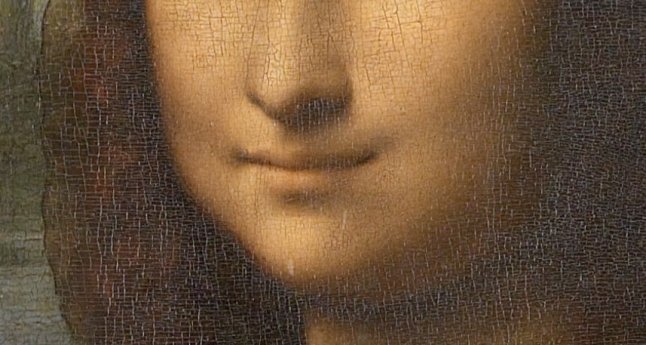
Through experiments in visual perception and neurology, scientists have discovered that our emotions can actually influence how we see a neutral face.
People come from all over the world to visit the Louvre and in particular to see Da Vinci's most famous painting.
Back in 2005, scientists from Amsterdam in the Netherlands analyzed Mona Lisa's face using an emotion recognition program.
According to algorithms, her face is 83% happy, 9% disgusted, 6% afraid and 2% angry.
But the perception of expressions in the human mind is much more complex, and it is constantly changing.
See also: Interesting facts about the painting “Mona Lisa”
Portrait of Mona Lisa
Now science has confirmed what journalist and biographer Walter Isaacson said about the painting: “The Mona Lisa, for me, is the greatest emotional picture ever made. The way the smile flickers makes this painting both a work of art and science.”
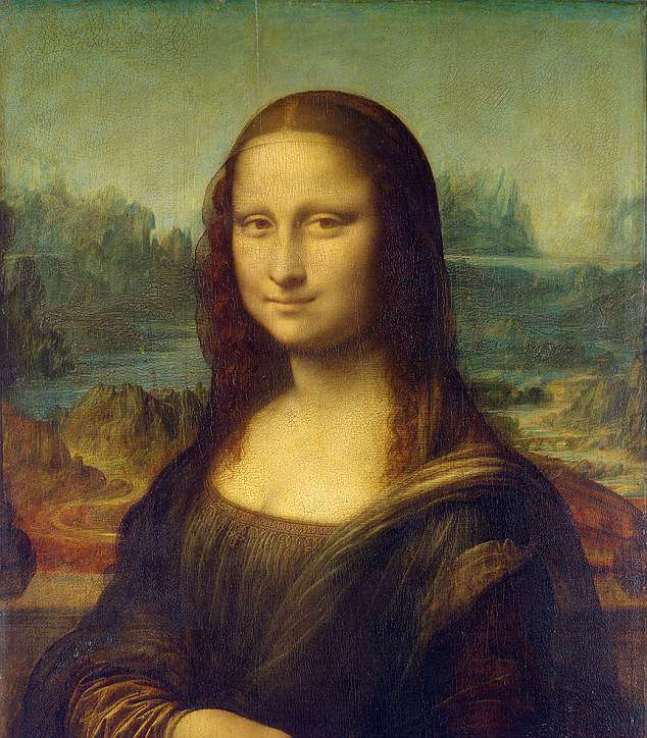
This smile gives Mona Lisa's face a certain neutrality, and researchers at UC San Diego have studied how people perceive neutral faces.
Dr Erika Siegel and her colleagues are studying how emotions change our perception of the world around us — even when we're not aware that something has affected our feelings.
This research is based on modern theory, according to which people use their experience to predict what they will experience next.
“Incoming information is actually only used to correct predictions if they turn out to be wrong,” explains Dr. Siegel.
Thus, scientists believe that our perception of the expressions of unknown faces is closely related to our feelings and experiences.
See also: A hidden portrait was discovered under the painting “Mona Lisa”
Mona Lisa's beauty
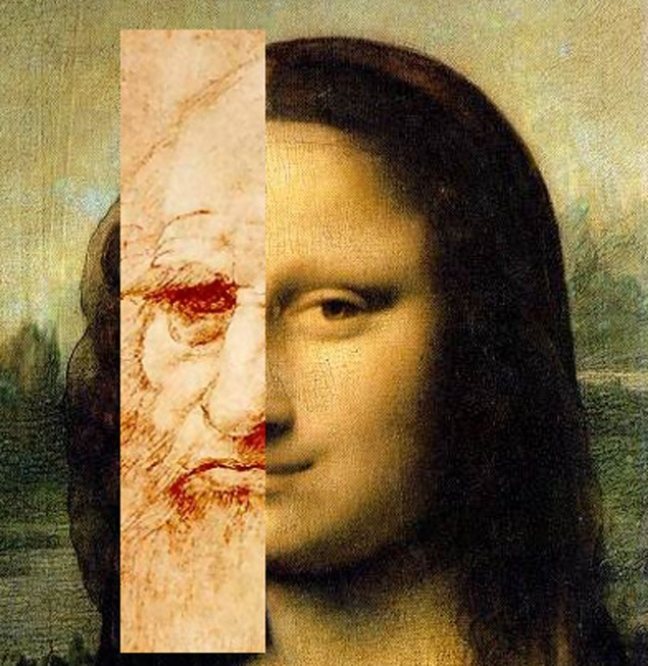
Scientists conducted an experiment. It is known that all people have one dominant eye, that is, the eye that predominates in binocular vision.
If each eye receives its own information, we only consciously perceive what is dominant. But the non-dominant eye sees what is stored in our subconscious. Using this knowledge, scientists tried to get study participants to experience this or that feeling.
They showed 43 participants two sets of simultaneously blinking images so that the dominant eye saw and recorded neutral expressions, while the non-dominant eye “saw” the flashes neutral, grimacing, or smiling faces that participants could only learn about subconsciously.
After viewing blinking faces, the researchers showed participants several variants of faces and asked them to choose the faces they saw.

When their non-dominant eyes saw a happy face, most participants thought the neutral face was smiling. The same was reported with faces with grimaces, as well as with neutral persons.
This means that if you see Mona Lisa after you've had a big fight with someone, you probably won't see a smile.
But if you're enjoying a trip to the Louvre, you'll see a mysterious smile.
“We are the architects of our own experience, we come into this world and just wait for all the information that comes in to be confirmed or denied,” says Dr. Siegel.