
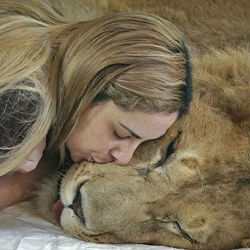
 Unbelievable facts
Wildlife advocates have repeatedly argued that keeping exotic animals as pets is dangerous not only for the animals themselves, but also for humans. There is plenty of evidence of this when attacks by such animals, or careless treatment of them, ended tragically for hapless owners. One of the latest similar incidents reported in the press and which once again confirmed the need to tighten legislation against those who keep exotic animals and sells them, took place in Zeyensville, Ohio, USA.
The incident that forced Ohio Governor John Kasich to sign an order effectively outlawing the unlicensed sale of exotic animals took place on October 18 this year. This is a strange act by a resident of Zanesville, a certain Terry Thompson, who decided to commit suicide, but before doing so, in an equally shocking act, released the whole your own private menagerie. Lions, tigers, bears, monkeys and other animals have escaped into the wild. The city authorities had no choice but to shoot them all before people were injured. As a result, about 50 animals were killed.
Statistics say that there is no place for a zoo at home!
According to information received from a special American organization, Born Free USA, which has been opposing the use of wild animals by private owners at home since 1990 About 1500 incidents involving exotic pets have been reported in the year. This organization not only keeps records of such events, but also tries to monitor the fate of each of these animals, registering whether the animal was handed over to the zoo, killed, or released into the wild.
In addition to these data, it is reported that 75 people died due to exotic pets during the monitored period. It is also stipulated that these data are far from accurate — the number of such incidents should be recorded on a larger scale, around the world. Moreover, we are talking not only about attacks that have caused the death of people, but also about the transfer of dangerous infections.
Adam Roberts, Executive Vice President of Born Free USA, said that reptiles, for example, can carry Salmonella, monkeys can carry the herpes B virus, etc. Both of these diseases are fatal to the human body. “No one should keep wild animals,” he said categorically. “The risk involved is not worth it.”
In fact, Born Free USA has a lot of chilling stories about exotic pets attacking people. So, just recently, on October 16 this year, a four-year-old from Texas was badly injured by a lion that… was kept at home by the boy's own aunt! Earlier, in September, in Ohio, an 80-year-old man was attacked by an almost 100-kilogram kangaroo on a farm where these animals were kept. And in the summer, in Nebraska, a 30-year-old man died a terrible death in the rings of his own python.
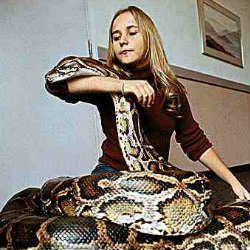 Adam Roberts reports that little has changed since 1990 — the average number of deaths per year from exotic pets remains stable. But as wild animals are becoming more accessible and more people are buying them to keep at home, the number of accidents has begun to increase.
Surprisingly, monkeys and other primates were recognized as one of the most dangerous (to keep at home) animals. They are more likely than other animals to grab their owners, and the precautions that their owners use are not as serious as in the case of predatory animals. Exotic snakes and other reptiles are in second place in terms of attacks. Since 1990, 443 attacks by such reptiles on humans have been recorded.
But what about seemingly harmless turtles? And here is the danger — turtles, like other reptiles, carry Salmonella. Born Free USA has recorded 8 serious cases of salmonella in children from domestic reptiles. Another serious case involves another rare animal, the kinkaju, which looks either like a raccoon or a ferret (the so-called chain-tailed bear). Its 37-year-old owner contracted blastomycosis, a disease of the skin and internal organs.
Is it the work of the owners themselves to save wildlife owners from these animals?
 Supporters of keeping wild animals at home argue that this way they make friends, and no one can deprive them of this right. “In most cases, it was the owners of such animals, their families, friends or trainers who voluntarily decided to adopt these animals,” says Zuzana Kukol, one one of the founders and head of the non-profit organization REXANO, which protects people's right to own exotic animals. — They voluntarily took this risk and are only exposing themselves to it, not society.”
The statement, of course, is controversial, but no one will dispute the fact that it is the owners themselves who should bear full responsibility for any incidents. REXANO believes that the ban on the ownership of wild animals will only lead to an increase in the number of illegal owners and worsening animal conditions.
In general, if you decide to adopt a wild animal, your choice will be limited to the conditions in which you live. For example, a two-room apartment is unlikely to accommodate a lion or a tiger. And the Nile crocodile is not the right company to take a bath. But even if you decide to have a turtle or chameleon, take the trouble to make sure in advance that none of your family members are allergic to such an animal, and the pets themselves will not have any infectious diseases.