
 Ecology
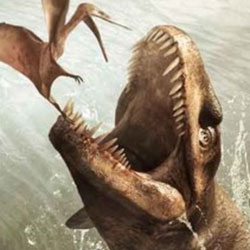
A 7-meter crocodile that ripped prey apart and another giant crocodile that sucked all the flesh out of its prey have been at the top of the food chain in the European seas for 150 million years back, researchers recently reported.
Huge prehistoric monster crocodiles — Plesiosuchus and Dakosaurus — were so voracious predators that their hunting methods can be compared to those of modern orcas, as well as ancient adores dinosaur meat.
“The skulls of these two marine crocodile species have something in common with the skull of the T. Rex dinosaur,” said Mark Young from the University of Edinburgh. “The largest known skull of the species Plesiosuchus The manselii was about 1.2 meters in length and was comparable in size to T. rex's skull.”
During their research, Young and his colleagues analyzed the fossils of two crocodiles that were discovered by paleontologists in England and Germany. Some of these crocodiles once lived in shallow seas that stretched across what is now Britain. At the same time, Archaeopteryx was flying over Europe, and giant dinosaurs like Diplodocus and Allosaurus roamed across North America.
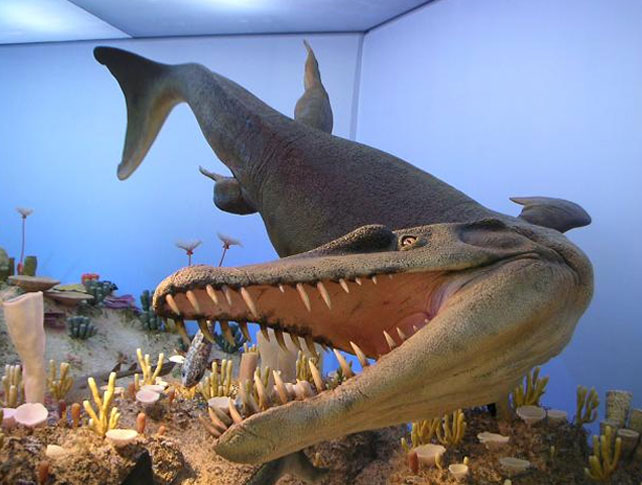
The researchers determined that the Plesiosuchus crocodiles were the largest members of the Metriorhynchid marine crocodile family. They were larger than modern saltwater crocodiles and larger than great white sharks, Young said.
Their teeth functioned like those of modern orcas. These crocodiles grabbed and ripped apart both large and small prey. However, the most interesting specimen was the Dakosaurus sucking crocodile. The features of the skull and jaw of this ancient crocodile, which reached a length of about 4.5 meters, make it clear that this animal sucked in prey, making it the only known sucking crocodile.
This method of feeding requires the animal to be able to open its mouth wide and create vacuum pressure, thus sucking the victim into the mouth. “We believe that Plesiosuchus preferred to feed on other marine reptiles, and Dakosaurus was omnivorous,” the scientists said. It is likely that the last crocodile could feed on fish and anything it could catch, including small Geosaurus that resembled a modern barracuda.
Scientists believe that modern orcas are also able to suck victims into their mouths. Young said that young orcas in captivity are able to create vacuum pressure in their mouths. Both prehistoric crocodiles and orcas could eat similar foods. These animals are not related, as orcas are mammals, but scientists believe that these common features are examples of so-called parallel evolution.
Parallel evolution is the evolution of similar external features, feeding mechanisms, or other behaviors in two different groups that are not related, in this case, such evolution may have been observed in crocodiles and mammals.
“This evolution of morphological traits in very distant related groups can tell us that vertebrates chose optimal methods of feeding underwater and had some limitations,” Young said. — For example, the method of biting in Dakosaurus and modern orcas is very similar. Over the past 10 million years, different types of sperm whales have also developed a similar mechanism.”
So far, no evidence has been found that one species of these giant crocodiles could attack another. Scientists believe that the English seas of the Dinosaur Age had different niches, so different predators ate different animals. Hunters never competed for food. Modern ocean systems are organized in a similar way, with animals such as whales, sharks, and dolphins sharing the same territory.
Young and his colleagues plan to continue their research to better understand the feeding mechanisms of these two species of giant crocodiles, as well as other marine predators.