
 Incredible facts
Sleepless nights can have a variety of consequences.
Sleeping less than a night or two can lead to a clouded, unproductive day, but it's usually not as dangerous.
N, when you don't get enough sleep regularly, you'll quickly begin to notice a number of undesirable health effects.
Sleeping an hour or two less than you should may result in:
Delayed reaction
Mood changes
High risk of developing various diseases
Worsening mental health symptoms
And what happens if you don't sleep all night or longer?
If you've been working on a project all night, studying for an exam, or have recently become a parent, you'll be familiar with this condition.
Our body needs sleep to function properly, and losing sleep is not just a minor nuisance, but can have quite serious consequences.
So how does our body react to lack of sleep?
Insomnia consequences
1 day
© RyanKing999
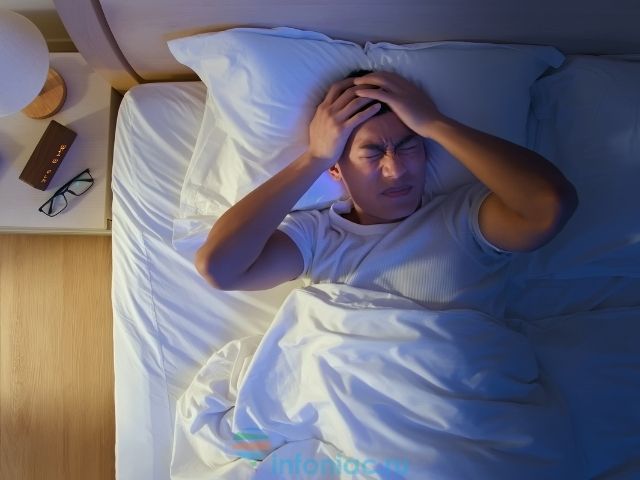
Being awake for 24 hours can affect you in the same way that poisoning does.
A 2010 study found that staying awake between 20 and 25 hours affects concentration and performance in the same way as blood alcohol levels of 0.10 percent. Many places consider you legally drunk at a blood alcohol level of 0.08 percent.
Needless to say, you shouldn't drive or do anything potentially dangerous if you haven't slept all day.
A sleepless night also has other consequences:
Daytime sleepiness
A vague state
Mood swings, such as being capricious or quick to temper
Trembling, muscle tension
Vision or hearing problems
1.5 days
After 36 hours without sleep, you will begin to notice more severe consequences for your health and body function.
Prolonged disruption to your sleep-wake cycle puts your body under stress. In response, the production of the stress hormone cortisol increases.
Hormonal imbalances can affect your body's typical response and functions. You'll notice changes in mood and appetite, increased stress, chills, and other changes in body temperature.
Oxygen consumption can also decrease when you're awake during this time.
Other consequences of not sleeping for 36 hours are:
Memory lapses
Decline in energy and motivation
Instability of attention
Cognitive difficulties, including problems with reasoning and decision making
Excessive tiredness and drowsiness
Difficulty getting things straight and not being able to find the right words
2 days
When you don't sleep for 48 hours, things get pretty bad. You can walk through the day in a blurred state with no idea what's going on.
The overall effects of sleep deprivation usually get worse. It may be even harder for you to concentrate or remember something. You may also notice how irritability increases and mood swings occur.
The effects on the immune system are also worse after 2 days. This increases the risk of getting sick, as the immune system cannot properly fight diseases as usual.
It may also be much harder for you to stay awake.
After 2 days without sleep, a person often has so-called microsleep periods.
Microsleep happens when you lose consciousness for a short time, from a few seconds to half a minute.
As a rule, you don't realize what's going on until you come to your senses, and often you wake up feeling a little confused and sleepy.
3 days

© Getty Images
If you stay awake for 3 days, strange things may start to happen to you.
There is a good chance that you will not be able to think about anything but sleep. It will be difficult for you to focus on conversations, work, even on your thoughts.
Even simple actions, such as having to stand up to find the right thing, will seem very difficult to you.
In addition to extreme exhaustion, you will notice heart palpitations, changes in mood, and problems with emotional regulation. It is not uncommon for depression, anxiety and paranoia to appear even after a few sleepless nights.
Lack of sleep during this period can affect your perception of reality:
To cause illusions and hallucinations
Makes you believe that inaccurate information is correct
Induce the so-called “hat phenomenon” that occurs when you feel pressure around your head
More than 3 days
Simply put, not sleeping for more than 3 days or longer is very dangerous.
The side effects mentioned above are getting worse. You may experience hallucinations and increased paranoia more often. After all, symptoms of psychosis can lead to a break with reality.
The risk of an accident while driving or performing potentially dangerous activities increases, as you will experience more frequent periods of microsleep.
Eventually, the brain will stop working properly, leading to functional organ failure and, in rare cases, death. In addition, the risk of accidents, falls and injuries increases dramatically.
How many people can live without sleep?
© Getty Images
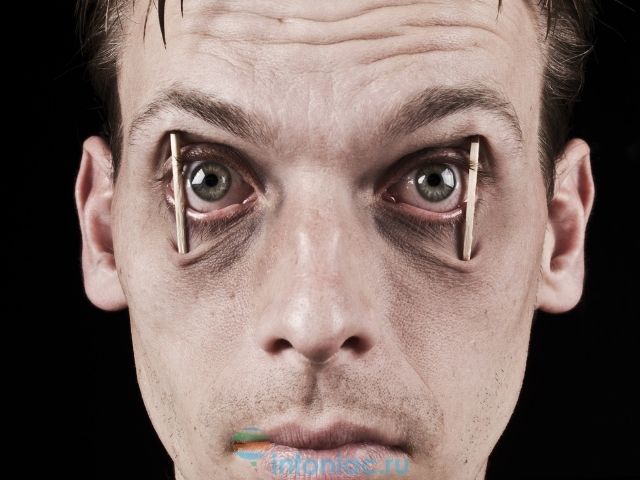
Some people can survive surprisingly long without sleep. One of the most famous studies on sleep deprivation took place in 1964, when 17-year-old Randy Gardner voluntarily deprived himself of sleep for 264 hours (11 days).
During the experiment, which was observed by the researchers, the teenager was still able to function, although his mood and concentration were impaired and he had periods of paranoia and hallucinations.
Randy's health did not seem to be affected: he could speak, play games, and perform a range of mental tasks.
When he finally fell asleep, he only slept 14 hours and 40 minutes, then woke up naturally, stayed awake for 24 hours, and then slept a normal 8 hours.
Since then, there have been numerous attempts to break this record, including Maureen Weston in 1977, who did not sleep 449 hours.
However, the Guinness Book of Records stopped recording these attempts so as not to encourage people to deprive themselves of sleep, as this is fraught with great health risks.
Animal studies do suggest that dying from sleep deprivation is possible. In the 1980s, the University of Chicago conducted a series of experiments on rats, and found that after 32 days of sleep deprivation, all rats died.
In a rare genetic disorder known as fatal familial insomnia, sleep becomes fragmented and disturbed to such an extent that a person cannot sleep at all. After all, prolonged lack of sleep is fatal after about 6 to 30 months.
The true limits of how long we can live without sleep are still unknown.
Research related to sleep deprivation has generally been suspended for ethical reasons.
However, lack of sleep causes deaths due to:
traffic accidents
workplace injuries
coronary artery disease
stroke
depressed
type 2 diabetes mellitus
chronic heart failure