
 Useful tips
Contents:
Disinfection with hydrogen peroxide
Use of peroxide hydrogen
Disinfectant soaking
Universal cleaner Hand
sanitizer at home
Storage of hydrogen peroxide
Measures precautions
Due to the coronavirus pandemic around the world, more and more people are stocking up on disinfectants.
However, in the face of their shortage, people are looking for an alternative to traditional cleaning products.
One such remedy is hydrogen peroxide, which has been a first aid for wounds and cuts for generations.
The material has an informational and reference function! Before using any products or services, you should consult a specialist!
Disinfection with hydrogen peroxide
According to the Center for Disease Control and Prevention, hydrogen peroxide kills fungi, bacteria, viruses, and mold spores.
It is a stable and effective antiseptic against viruses when used on hard, non-porous surfaces.
Hydrogen peroxide (H2O2) is a powerful disinfectant that kills bacteria like staphylococci and viruses including H1N1, SARS, and coronaviruses.
It is usually sold in the form of a 3% or 6% solution and can be used directly from the bottle.
This is due to the fact that hydrogen peroxide in its fully concentrated form is too strong for home use and is actually used as rocket fuel and bleaching and corrosive agent in production.
Hydrogen peroxide (H2O2) is a highly reactive substance and acts on microbes through oxidation. This process occurs when reactive oxygen atoms interact with electrons from other cells, resulting in the destruction of the cell walls that form bacteria.
The use of hydrogen peroxide for disinfection
When it comes to universal non-toxic cleaners, few things compare to a 3% hydrogen peroxide solution. It can be used to disinfect various surfaces.
Kitchen sink
Wet the sink surface. Then clean the sink with baking soda using a sponge. After you have wiped the entire surface, apply a 3% hydrogen peroxide solution to it and leave it for 5 minutes, and then rinse the surface.
Table top and cutting boards
According to experts, wiping the countertop or cutting boards with 3% hydrogen peroxide solution helps kill E. coli and Salmonella on a hard surface if left for 10 minutes at room temperature.
Be careful! If the countertop is made of marble or granite, hydrogen peroxide, although it will not cause harm, is not suitable for permanent use, as it can slightly damage the surface.
Read also: How to make a safe antiseptic (disinfectant spray) at home
Trash bin
After washing the bin with soap and water, spray a 1:1 solution of hydrogen peroxide and water in the container. Leave the bucket to dry in the sun for several hours. Hydrogen peroxide not only helps to clean the surface, but also kills germs in the trash can.
Refrigerator and dishwasher
Due to the fact that hydrogen peroxide is a non-toxic agent, it can be used to clean places where food and utensils are stored. Spray it on the outside and inside of the refrigerator and dishwasher, leave the solution for a few minutes and then wipe it off with a clean cloth.
Dishwashing sponges
Soak dishwashing sponges for 10 minutes in a 1:1 mixture of hydrogen peroxide and water in an empty bowl. Then rinse the sponges thoroughly.
Restroom
Hydrogen peroxide is effective against microorganisms, including bacteria, fungi, viruses and mold, making it an excellent toilet cleaner.
To clean the toilet, add 1/2 cup of 3% hydrogen peroxide solution to the toilet bowl to kill germs and add shine to the toilet surface.
Leave the solution for 20 minutes for greater effectiveness.
Mirrors and glass surfaces
Spray a 1:1 solution of hydrogen peroxide and water onto a glass surface, then wipe it with paper towels, a lint-free cloth or newspaper to avoid stains.
Shower cubicle
Mold easily forms in the humid environment of the shower cubicle.
To kill her without inhaling toxic bleach fumes, spray an undiluted 3% hydrogen peroxide solution and leave it for 30 minutes. Rinse the surface.
Door handles
Rub or spray the 3% hydrogen peroxide solution onto the door handles and leave for 5 minutes. Then wipe off the surface.
Floors
To clean and disinfect floors, you need to do the following:
Mix equal parts of water and hydrogen peroxide in a bucket.
Wipe the floors as usual and let them dry.
It is worth remembering the whitening properties of hydrogen peroxide, so it is best to first check its effect on colored and wooden floors before using it.
Disinfectant soaking
In addition to wiping hard surfaces, you can make a soaker.
Just fill the container with hydrogen peroxide and use it to soak children's toys, toothbrushes, and tooth retainers for 10-20 minutes.
Let them dry and use as usual.
Universal cleaner
Although hydrogen peroxide works great on its own, you can mix it with other home remedies to enhance its cleaning and disinfecting properties.
Try this tool:
Mix 1 cup of hydrogen peroxide solution and 2 cups of distilled water, add 2 teaspoons of lemon juice.
Mix everything in a spray bottle and shake.
Use this mixture to clean a wide variety of surfaces. Lemon not only gives a pleasant smell, but it also helps to get rid of dirt better.
Hand sanitizer at home
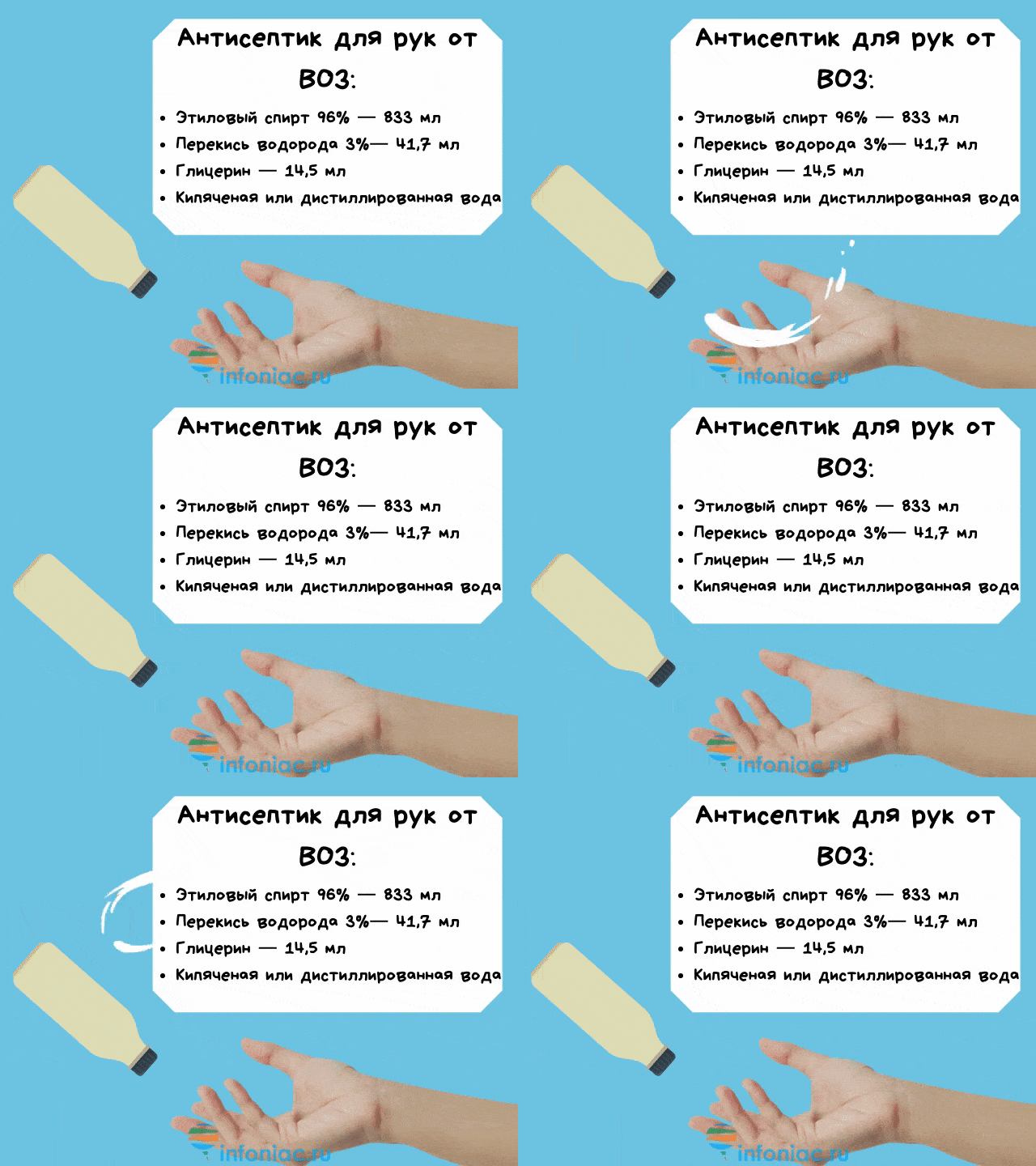
This antiseptic recipe was proposed by WHO. To make a hand sanitizer at home, you will need:
Ethyl alcohol 96% — 833 ml
Hydrogen peroxide 3% — 41.7 ml
Glycerin — 14.5 ml
Boiled or distilled water
Combine all ingredients and add them to a spray bottle.
Dissolve the mixture with water to the desired consistency. Shake gently and leave for 72 hours.
Apply an antiseptic to the entire surface of the hands, treating for at least 30 seconds.
You can also use another hydrogen peroxide hand sanitizer recipe:
₂ cup of at least 70% isopropyl alcohol
2 tablespoons hydrogen peroxide
¹ cup of liquid aloe vera
This antiseptic is convenient to take with you and use it to disinfect your hands if it is not possible to wash your hands.
Hydrogen peroxide storage
In order for hydrogen peroxide to serve as an effective disinfectant, it is important to store it properly.
Hydrogen peroxide breaks down when exposed to light, so it is sold in dark plastic bottles.
Store the hydrogen peroxide bottle in a cool, dry place to keep it stable for a long time.
Safety precautions
Hydrogen peroxide has many beneficial cleaning and disinfecting properties on its own. However, you need to be careful when mixing it with other substances.
For example, it is impossible to mix hydrogen peroxide with bleach in the same container, as well as hydrogen peroxide with white vinegar, due to the fact that such mixtures can cause undesirable effects.
However, you can wipe the surface first with hydrogen peroxide and then vinegar (without mixing!) , as a powerful tool for fighting bacteria and viruses on hard surfaces.