
 Incredible facts
It's no secret that bees are very beneficial insects, pollinating plants and flowers that give us a tasty and healthy product called honey. But few people know that bees can, for example, recognize people's faces.
This and many other interesting facts will be discussed later.
Bee venom
A bee venom toxin called melittin can prevent HIV from spreading in the blood. Melittin can even kill HIV by piercing the virus's protective layer. At the same time, the poison does not harm normal cells, leaving them safe and sound.
Scientists in St. Louis, USA hope that the toxin can be used preventively.
Bee venom can also relieve pain caused by rheumatoid arthritis. Researchers at the University of São Paulo, Brazil have found that molecules found in bee venom increase the body's glucocorticoids (an anti-inflammatory hormone).
Bees work hard
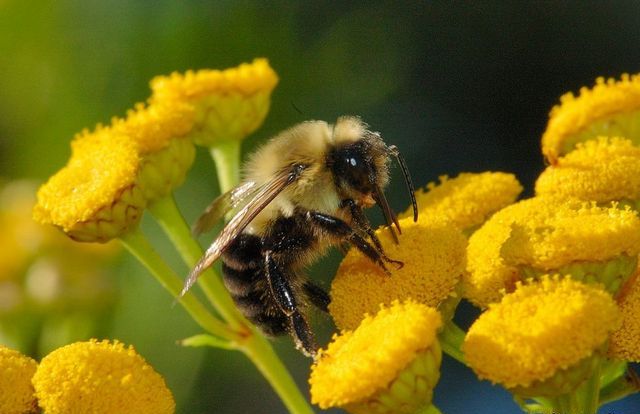
After the cold weather arrives, worker bees can live for nine months.
Read also: Bees understand art
But they rarely live longer than six weeks in summer. During this period of the year, bees literally work to the point of exhaustion.
A definite job for a bee
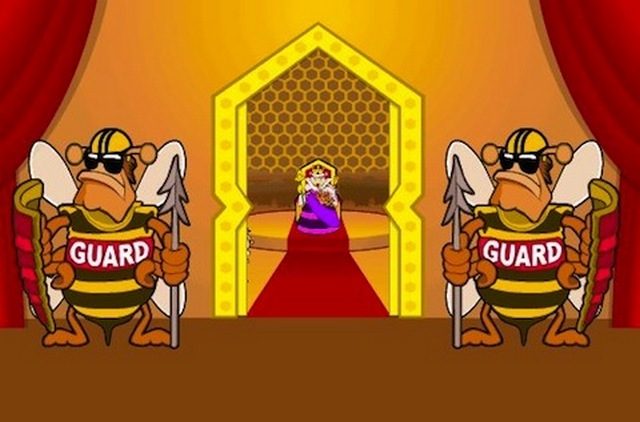
Each bee strictly performs only its specific duties. Scout bees are looking for new food sources. Soldier bees, which scientists only discovered in 2012, have been working as guards all their lives. There are also funeral bees, which are responsible for cleaning the hive from dead bees.
But there are also the most amazing individuals who can change their jobs over the course of their lives. At the same time, chemical changes occur in their brains.
Read also: Top 28 interesting and unusual facts
Bee brain

When bees begin to age their entire body, their brain avoids this. In fact, their brains are developing backwards. Imagine riding a bike that makes you feel younger and younger.
Some scientists believe that this discovery will help us slow down the onset of dementia.
Healing beehives
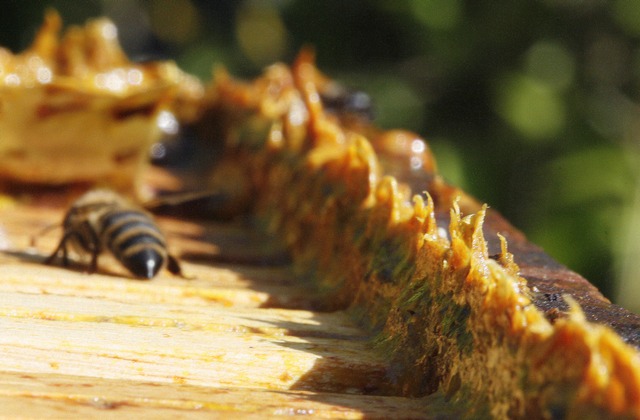
To strengthen their hives, bees use resin from a poplar tree and an evergreen tree called propolis. Propolis is a kind of glue for hives.
Although bees use it to store honey, humans use it to fight bacteria, viruses and fungi.
Research shows that propolis taken from hives can treat:
Herpes.
Stomatitis.
Sore throat.
Eczema.
Bees recognize faces
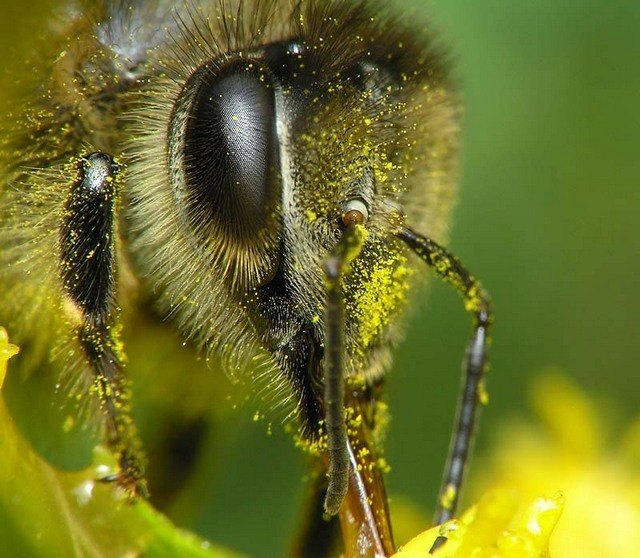
Honey bees are able to recognize human facial features. They see all the shapes of their faces: eyebrows, lips, and ears. This is called “configuration processing”, which is hoped to help computer scientists improve facial recognition technology.
Bees are individual

Even in hives, there are honest bees and walking bees. Researchers at the University of Illinois have found that not all bees are interchangeable at work.
Some bees are thrill-seekers. Others have timid behavior. In 2011, research found that bees can be pessimistic, thus proving that they can even have feelings to some extent.
Bees enjoy caffeine and cocaine
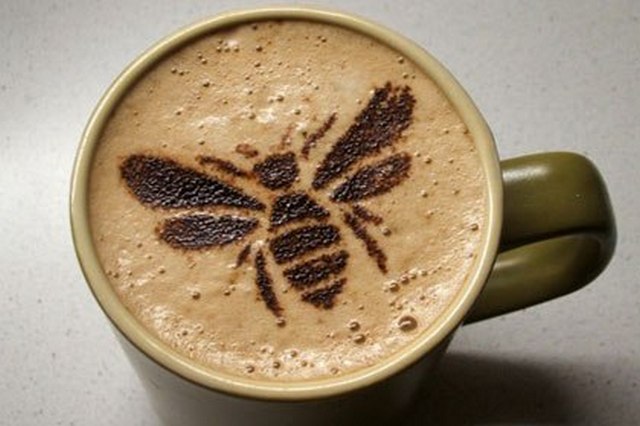
Nature did not create caffeine for pleasure. It actually protects plants by chasing harmful insects away and draws pollinators to it.
Scientists at Newcastle University have found that caffeinated nectar helps bees remember where the flower is, increasing the chances of a return visit.
While caffeine makes bees perform better, cocaine turns them into real liars.
Honeybees, when they return to the hive, announce hot nectar spots to others through dance. So scientists observed these bees, first applying cocaine to their backs. After that, the bees performed their communication dances, in fact, without the right to do so, thereby deceiving others.
By studying this behavior of buzzing insects, scientists want to better understand the disease of drug addiction.
Bees are like Vikings

Bees use the sun as a compass. But when it's cloudy, they navigate by polarized light, using special photoreceptors to tell where the sun is in the sky.
The Vikings could use a similar system: on sunny days, their navigation worked using sundials, but in cloudy weather, “sun stones” (pieces of calcite), which act on the principle Polaroid cameras helped them stay on course.
Bees – mathematicians

Imagine that you need to do some assignments. For example, you should visit six stores and they're all in six different locations. How do you calculate the shortest distance by visiting all six places? Mathematicians call this the “traveling salesman problem” and can even use a computer to solve it.
Read also: Gravity interferes with bee dancing
However, this is not difficult for bumblebees. Researchers at Royal Holloway University in London have discovered that bumblebees fly the shortest path between flowers. So far, they are the only known animals that can perform such tasks.
Bees are economical builders
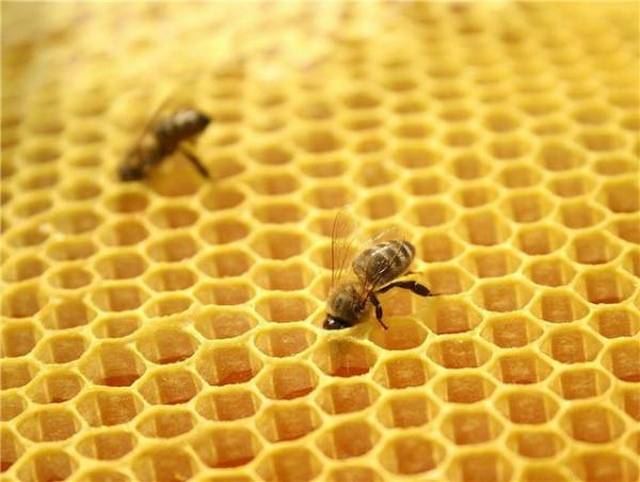
In 36 BC, Marcus Terentius Varro claimed that honeycombs were the most practical structures in the world. A century later, the Greek mathematician Papp strengthened the “cellular hypothesis” by making a similar claim.
And now, almost 2,000 years later, Thomas Hales wrote a 19-page mathematical proof showing that of all possible structures, honeycomb construction uses the least amount of wax.
It has already been proven that the most effective building structures are walls at an angle of 120 degrees, which are ideal hexagons.
Bees as serial killers
Serial killers act like bees. The murderers commit crimes close to home, but far enough away to avoid the suspicions of neighbors.
And bees collect pollen near their hives, but far enough away that predators can't find the hive. To understand how they define this “buffer zone”, scientists studied the behavior of bees and calculated several algorithms.
According to the researchers, the police should use a computer model based on the principle of bee behavior to search for criminals.
Bees create jobs

It is estimated that Americans, for example, consume about 130 million kilograms of honey each year. In addition, the USDA estimates that bees pollinate 80 percent of crops, which brings in more than $20 billion a year in the US alone.