
 Unbelievable facts
After the end of World War II, only three states in the world were called “superpowers” – the USSR, the British Empire and the United States of America. At the moment, only the US has retained this title, so, according to most experts in world history, America is the only true superpower. There are no strict rules about what makes a state a superpower, but there are some peculiarities of the definition that most scientists agreed with, including the need to earn this title.
Being a world leader in the fields of economy, culture and education, along with a strong military base, are the main features of a superpower. According to forecasts, a new superpower, Japan, was to appear on the world stage in the 1980s, but this forecast was not destined to be realized.
China is currently being considered as the next candidate for superpower, with many saying that China plans to take a leading position in the world. While some politicians and economists may believe that the country is plotting for world domination, the reality today is that China is engaged in a bilateral fight against The United States for most foreign interests. All these interests serve a specific purpose, but what they all entail is gaining control over foreign resources and goods, and the same applies to the military sphere.
An old English proverb says: “whoever dies with the most toys wins” (“whoever dies with the most toys wins”). Its main idea may well be applicable to the struggle between the US and China. Only in this case, toys should be understood as military bases, trading partners and rights to natural resources in foreign countries.
China has a serious problem — the population does not correspond to its resources and gross domestic product. China's 1.3 billion people do not have enough resources to take care of yourself. This has led China to start exporting its people, in a sense, by opening stores in other parts of the world. As an example, we can cite Africa, where over the past decade, China has been actively developing its presence, and we are talking about many countries, including Nigeria, Angola and others. During this time, more than 750,000 Chinese moved to Africa. Some experts say that this number is planned to be increased to hundreds of millions, thus solving the problem of using their own resources by using Africa's resources.
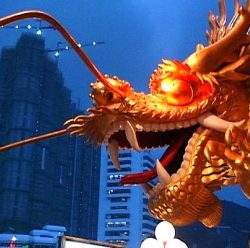 Air and sea trade routes are being strengthened between nations through major commodity transactions, labor, and military cooperation. Chinese private schools, embassies, and cultural centers are popping up in countries like Rwanda, Nairobi, and Angola. Angola even has an area called Chinatown.
In turn, African countries get the desired trading partner and assistant. Africa is also benefiting from new jobs and infrastructure development. Although trade has increased from 5 million yuan to 6 billion over the past ten years, Africa is losing more than gaining as it imports cheap Chinese toys and goods, and It exports oil and wood. It is known that about 70 percent of African timber ends up in Chinese ports, a figure that hints that massive deforestation is taking place. There is also evidence that mining sites run by China employ African workers who earn less than 1 yuan per day, which is 14 cents. Also, in some parts of Africa, there are Chinese communities that are limited to special gates, so black people are not allowed to enter there.
In addition, China is developing relations with Latin America, becoming Brazil's first trading partner (bypassing the US) and the second partner after the United States to Argentina, Costa Rica, Chile, Peru and Venezuela. With species like these and with a population of over a billion people, it's no surprise that global financial news focuses primarily on China. Is China about to become a real superpower?
The battle for others' interests
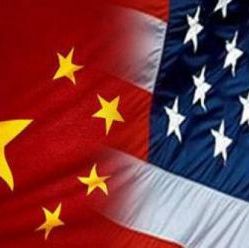 Experts note that despite the fact that China has already “taken root” in places such as Africa and Latin America, it still lags behind the United States in terms of foreign policy interests. China has officially overtaken Japan, the world's second largest economy, but its economy is still only half of the US economy.
The fact that many Chinese goods are of very poor quality is another reason why many believe that China is destined to remain a “great power” rather than rise to the ranks of superpowers. America's educational and cultural influence is also far ahead of China. The US entertainment industry is developing, state sports are the most popular globally, and the American educational system is the most emulated worldwide.
Despite China's best efforts to introduce its way of life in Africa and Latin America, cultural barriers are unavoidable. Even in Africa, where China has achieved a great deal, the US has so far benefited from trade relations, even though Africa accounts for only 2 percent of US global trade. China is also Africa's third largest oil exporter, after Europe and the US.
In addition, there is no evidence that Africa is fully satisfied with its relations with China. Chinese companies in Africa are rated as having the worst working conditions in the world. The hospital in Luanda (the capital of Angola), built in 2006 by the Chinese, was closed four years later due to concerns about structural instability and collapse. The Chinese military supplied its share of weapons to Africa and Latin America, but its actual military presence is still severely limited.
Most economists believe that while the US may be vigilant about China and its global strategies, it is in the US interest that China's economy remains strong and resilient. In addition to the global economic influence that China has on the world, it is currently the main investor in US Treasury securities ($840 billion).