
 Science
Most people, more than 90 per cent, prefer to use their right hand for the most difficult tasks. Scientists have been trying to figure out why this asymmetry exists for several decades. Why don't we have both arms and motor cortex when we have the same control over both arms?
A study conducted at the University of Aberdeen in the UK found that the explanation may be due to activities that require us to use both hands, which influences what right-handed people choose their right hand.
Gavin Buckingham, a researcher at the Brain Research Center at the University of Western Ontario in Canada and his supervisor Dr. David Carey, asked left-handed and right-handed people reach the first pair of objects with both hands at the same time, and immediately after that to reach one target with only the nearest hand. Before participants reached for objects, one hand was exposed to short vibratory pulses, prompting them from which side the target would appear and which hand to reach. In some cases, the impulse was applied to the wrong hand, which meant that participants had to hold back the urge to reach for the wrong hand to perform action with the right hand.
Right-handed people had more trouble coping with the wrong clue, when they worked on their right hand, making more mistakes, and thinking for a long time to suppress the wrong choice, as if their right hand had already been chosen in advance to perform a task where both hands took part. Left-handed people did not have this asymmetry, which suggests that they are initially less biased to choose one hand.
The results indicate that right-handed people mostly focus on their right hand during tasks that require both hands. Scientists explain this behavior by the fact that the choice of hand is associated with the specialization of the hemispheres. Many left-handed people have a developed right hemisphere, which weakens the typical bias towards choosing a dominant left hand.
Right or left handed?
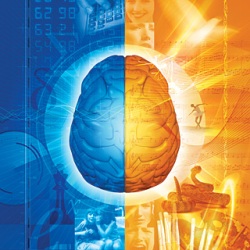 Both hemispheres of the brain are almost identical for the most part, processing the same information, and data travels from one hemisphere to the other through one large neural pathway. However, some tasks, such as language processing, tend to take place in one hemisphere. For most people, linguistic information processing takes place in the left hemisphere. For left-handed people, this can actually happen in both hemispheres.
Another area of specialization concerns sensory data processing. Usually, data from the right side of the body (right gas, right ear) goes to the left hemisphere for processing, and data from the left side of the body goes to the right hemisphere. After all, the brain combines processing results from both hemispheres, and as a result, we consciously see and hear.
Research confirms that in people who choose the left hand, the brain is adapted to simultaneously process information by both hemispheres.
What does this mean? This suggests that left-handed people have a slight advantage over right-handed people in sports, games and other activities in which a person is faced with a lot of incentives, where you need a quick one information processing and quick response. Experts also believe that left-handed people achieve better mental performance at an older age, when the brain's processing of information begins to slow down.