
 Events
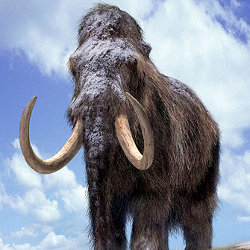
The last mammoths that roamed our planet disappeared about 10,000 years ago. This, however, does not mean that they will never repeat their march across the earth. Perhaps in five years we'll be able to see them firsthand, thanks to cloning.
Research in this area began back in 1997 at Kinki University, Japan. Then scientists obtained samples of mammoth skin and muscle tissue, which were preserved in the permafrost of Siberia. However, the experiment failed at that time: most of the cell nuclei were damaged by ice crystals, and this idea was left until better times.
The study was further stimulated by the work of Dr. Teruhiko Wakayama from the Center for Developmental Biology. Then the scientist was able to clone the mouse using mouse cells that had been frozen for 16 years.
Now, using the results of Wakayama's work, Japanese scientists have developed their own methodology for obtaining DNA from frozen cells, which has made the cloning process itself possible. This time, tissue samples will be taken from mammoth carcass stored in a Russian laboratory.
And how will the mammoth appear?
The team leader, Professor Akira Iritani from Kyoto University, says that almost everything is ready for the experiment. According to their plan, nuclei from mammoth cells will be introduced into an elephant egg, from which its own nucleus will first be removed. The purpose of such manipulations is to create an embryo containing mammoth genes. Then the egg will be injected into an elephant, which, if all goes well, is carried out by a mammoth.
Last spring, Minoru Miyashita, a professor at Kinki University, joined the study and asked national zoos to donate eggs from deceased elephants, as well as scientists from Russia and the United States.
If scientists manage to create a cloned mammoth embryo, Miyashita and American scientists, specialists in the field of in vitro fertilization, will be responsible for transplanting the resulting an embryo in an African elephant. If all goes according to plan, the mammoth will be born in 5-6 years.
Professor Iritani adds that after creating an embryo and before transplanting it into an elephant, scientists will have to decide whether to show it to the public or not. They must also figure out how to raise a mammoth, and after birth, scientists will be able to study the animal's genes to understand why they died out.