
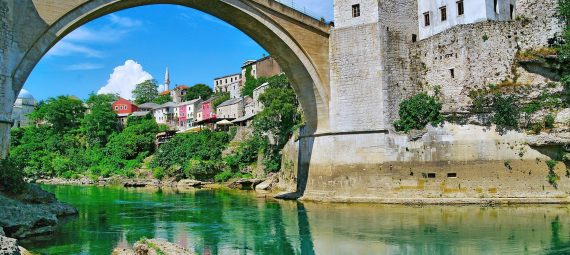
Mostar is one of the most cozy and unusual European cities, which you should definitely look into. Most often, he is undeservedly devoted to just one day, but it is better to stay here for a little longer to feel the whole atmosphere of this amazing place. There are beautiful mosques, colorful markets and historical manors side by side with abandoned buildings (the city still has not survived the Bosnian War, which happened here almost 25 years ago), and the famous Old Bridge reigns over all this.
Hostels
Hostels and other budget accommodation options are slowly starting to appear in Mostar, so don’t expect anything decent from them. In principle, they are all similar to each other, including the fact that in each of them you can find a friendly host who will tell you everything about his hometown.
Culture
Mostar is both history, religion, and nature. Choose the direction that interests you the most – and off you go. Basically, all the sights are concentrated in the center – the Old Town, so they can be slowly explored in one or two days.
Everyone starts exploring Mostar from the Old Bridge – a kind of symbol of the city, spread over the Neretva River. The bridge is also unique because it connects two different parts of the city, on the east side is the Muslim part with mosques, on the west – the Christian part with churches and churches.
After the Old Bridge, you can visit the Crooked Bridge. According to historians, it was on it that the architect Khairuddin trained before building his masterpiece. The bridge was destroyed after a flood in 1999, but three years later it was restored with the support of UNESCO.
You can walk further to the Turkish House of Kaitaza (Gaše Ilića bb), which was built in the XV century. This building is an exhibit that will tell you about the times when Mostar was under Turkish occupation. The house has been owned by one family for many centuries and today people still live in it. The house is open to the public, it has preserved authentic household items, traditional clothing, books in Arabic and much more.with the support of UNESCO.Then you can walk to the Turkish House of Kaitaza (Gaše Ilića bb), which was built in the XV century. This building is an exhibit that will tell you about the times when Mostar was under Turkish occupation. The house has been owned by one family for many centuries and today people still live in it. The house is open to the public, it has preserved authentic household items, traditional clothing, books in Arabic and much more.
Where to eat
There are quite a few eateries and bakeries in Mostar, which are also called “ashchinitsa”, where you can have a snack. Most often they serve chevapchichi, pitas, bureks, as well as grilled fish and meat dishes.
Additional info
Almost all the bridges of Mostar are covered with small pebbles – river pebbles, so it’s best to wear comfortable shoes without heels.
Take with you clothes that will cover your legs and shoulders. This will be needed when visiting mosques, as well as Orthodox and Catholic churches.
Most often in Mostar you will have to pay in cash, in many places they accept euros.