
 Unbelievable facts
Watch video If you're too lazy to read
Watch video, If you're too lazy to read
An adult brain contains about 86 billion nerve cells (or neurons). Throughout life, for various reasons, we gradually lose neurons (scientists say that the process of nerve cell death begins by the age of 20-25, while after 40 years it gains enough high revs).
Watch also the video: Neurogenesis – growing neurons
Why do we need new neurons?
It is neurons that are extremely important for learning, thought processes, the volume and quality of memory, mood and positive emotions.
By generating nerve cells on your own, you can not only prolong youth, but also prevent the serious consequences of neurodegenerative diseases: Parkinson's disease, Alzheimer's disease, Huntington's disease, multiple sclerosis, in which the nervous system is affected, and cognitive and behavioral abnormalities develop.
New neurons are also necessary for healthy people, who, by stimulating neurogenesis, can significantly improve their body condition, learn more information and prevent memory problems in old age!
Can neurons be grown?
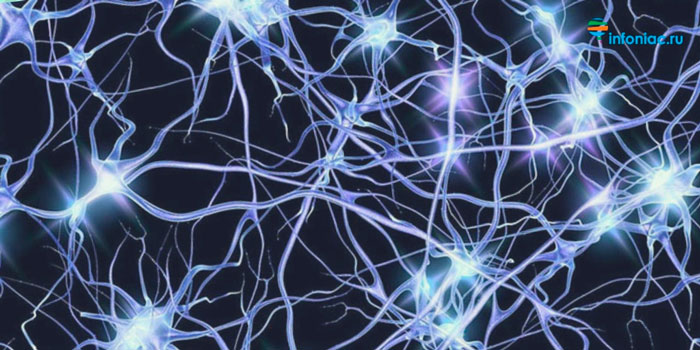
For many years, neuroscientists have given a negative answer to this question: nerve cells do not regenerate.
But recent studies suggest that new neurons are being formed in the adult brain (to be precise, in the hippocampus). This phenomenon is called neurogenesis.
For example, Swedish researcher and neurologist Jonas Friesen from the Karolinska Institute has calculated that every day in the hippocampus (the gray mass in the center of the brain responsible for memory, emotions and learning) about 700 new neurons are produced.
Simple math: 700*365=255,500 neurons per year. It's not enough, isn't it? Especially compared to $86 billion!
But that's not all! Neuroscientist Sandrine Thuret argues that in 50 years of life, all nerve cells we have since birth are replaced by neurons formed in the adult brain.
And again, let's resort to mathematical calculations:
50*365=18,250 (days).
18,250*700 = 12,775,000 (neurons).
The question is, where did 86 billion neurons go?
Despite the controversy of theories regarding the quantitative formation of new neurons in the hippocampus, it cannot be ruled out that the creation of each new nerve cell is extremely important, since the cessation of neurogenesis leads to the suppression of a person's psychological state, and this is fraught with depression and even psychosis.
In addition, additional neurons, regardless of their number, strengthen connections between nerve cells, thereby increasing the brain's ability not only to process but also to store information.
It is also interesting that even a damaged brain can produce neurons, and in an enhanced mode. This conclusion was made by scientists from the University of New Zealand Auckland, who studied people with Huntington's disease, which is characterized by reduced mental abilities and impaired coordination of movements.
The study revealed that the generation of new neurons occurred as intensively as possible in the most affected tissues. Unfortunately, the number of new nerve cells formed is not enough to stop or cure the disease.
BUT! Knowing the conditions and factors that control neurogenesis and stimulate this process, scientists expect to find methods to help restore a sick or damaged brain!
Read also: Our brain is dying: these 10 tips guarantee its long life
How to grow neurons at home?
Neuroscientists from around the world are actively researching neurons derived from human embryonic stem cells.
However, neuroscientist Sandrine Thuret says that we ourselves can contribute to the generation of new neurons and the self-healing of the nervous system.
Factors contributing to neurogenesis
1. Training

Read daily, as reading involves all types of mental activity. When reading the book, we think, look for cause-effect relationships, and turn on our imagination.
Learn foreign languages: it has been proven that polyglots are much less likely to suffer from senile dementia, and in case of Alzheimer's disease, they develop symptoms 5 years later.
Learn to play a musical instrument: motor skills are closely related to the functioning of the brain, it stimulates its activity and increases neurogenesis.
Travel and meet new people, discover new facets and opportunities.
Learn mnemonics, which is a set of techniques that make it easier to remember large amounts of information. This kind of brain training will enhance neurogenesis.
2. Running

Research conducted by Sandrine Thuret found that the hippocampus of a mouse with no wheel in its cell formed much fewer new neurons than a mouse whose the cage was equipped with such a running device.
It can also be said that moderate physical activity in general also contributes to neurogenesis, since during exercise, the level of cortisol (the stress hormone) decreases and increases testosterone levels.
3. Sexual activity
The results of experiments conducted on rats showed that male pheromones activated the female reward system, as a result of which neurogenesis was also activated. However, it is impossible to experimentally confirm such an effect on humans, so it is not possible to speak with 100% certainty about such a relationship.
In addition, sex reduces stress levels (the latter in turn reduces the formation of new neurons). Not to mention the fact that during sexual intercourse, levels of serotonin and oxytocin, neurotransmitters that stimulate neurogenesis, increase.
4. Meals

To stimulate neurogenesis, follow these rules:
Increase the time between meals.
Enrich your diet with foods that contain flavonoids, including blueberries, dark chocolate, onions, garlic, spinach, citrus fruits, strawberries, walnuts.
Regularly eat fish that contains omega-3 fatty acids: salmon, halibut, sardines, fatty herring, mackerel, tuna.
Pay attention to the texture of the food you eat: Japanese scientists have shown that soft foods slow down neurogenesis, while hard foods that require thorough chewing, on the contrary, activates.
5. The sun

Fifteen minutes of daily sunbathing is enough to provide the body with the necessary amount of vitamin D, which affects the production of serotonin, which has a positive effect on the formation of new neurons.
Read also: 10 little tricks to help you become smarter
Factors that slow down neurogenesis
1. Age

With age, for physiological reasons, the rate of neurogenesis slows down.
2. Polluted air
The brain needs oxygen to function properly. If we inhale exhaust gases and industrial dust for a long time, the brain experiences oxygen starvation and changes that prevent neurogenesis.
3. Alcohol

Ethanol damages brain cells, thereby causing brain disorders and weakening the formation of new nerve cells.
But the good news is that drinking red wine, which contains resveratrol, has been shown to help new neurons survive. Therefore, during feasts, give preference to good red wine, while keeping in mind the sense of proportion.
4. Smoking and drugs
Comments are unnecessary. So let's go straight to the next point.
Read also: 14 terrible consequences of lack of sleep
5. Sleep deprivation

During sleep, our body not only rests, but also recovers. Lack of sleep disrupts hormones, reduces mental activity and slows down neurogenesis.
6. Stress
Stress (especially chronic stress) slows down neurogenesis and negatively affects the survival of new neurons.
7. Depression

It has been experimentally found that many drugs prescribed for several months for depression stimulate neurogenesis in rodents. In addition, when neurogenesis was blocked in mice, the effectiveness of antidepressants decreased. Based on this, it was suggested that depression can be triggered, among other things, by a slowdown in neurogenesis.
According to the results of clinical studies using imaging techniques, it was found that patients with chronic depression have a smaller hippocampus compared to healthy people.
8. Drugs

Neurogenesis can be significantly slowed down or stopped altogether due to the use of anticancer drugs, which Sandrine Thuret has associated with depression that develops after cancer treatment. Her conclusion was based on the fact that after the restoration of neurogenesis, depression in cancer patients went away.
9. Inadequate nutrition

Fatty and high-calorie foods, enriched with saturated fats, slow down the formation of new neurons.
The conclusion is that we are not able to globally influence neurogenesis, but we can independently stimulate this process by following the simple recommendations above.