
 Unbelievable facts
The death of loved ones is a dark period of life, a review of old photos and things. But now, in an age where so much of our lives is happening online, what is happening to the digital world of a person who is no longer with us?
By the time Facebook's generation gets old and gray, they'll probably be able to follow their entire lives through a million Twitter updates, thousands of photos on Flickr, and many hours of videos on YouTube. When a person dies, should their online presence also die? What should happen to all that personal information that has been accumulated over so long?
Richard Banks believes he has an answer to this question. He works as a designer at Microsoft, and his Cambridge-based team is currently working on the concept of digital memories and how, even when a person is gone With us, it will still be possible to see it in the digital world.
He talked about how his grandfather's death a few years ago inspired him to think about the future of his loss. “After he left, I inherited a suitcase full of photos from his life. Inside, I found about 200 prints of his life from different periods, and all the photos were carefully arranged in envelopes.” “It made me think about what I'm going to leave for my kids to remember.”
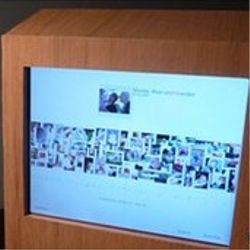
As a result, he has created several devices that work independently of a computer or other Internet device, and are a “traditional album” of photos and memories. The photos stored in this album are displayed on an interactive touchscreen. “If you touch any digital photo, you're immediately transported to that person's world,” explains Banks.
“Then we see photographs of a particular period in a person's life, mixed with various postcards, videos and notes.” Bensk hopes that his digital memory device will survive many subsequent new technologies, that it will be as important to people as his grandfather's old suitcase of photos became to him.
The task is also made easier by the fact that we now increasingly prefer to store the information we need in the virtual world rather than on the hard drive. “I suppose a person just realizes that physical storage limits have their own dimensions, such as DVDs and CDs, so in my opinion, most of these are physical restrictions will eventually fade into oblivion as we store more and more information online.”
This, however, suggests another question. Wouldn't there be too much data? If the created device stores every person says on the Internet, then a suitcase of 200 precious photos can suddenly become a vast collection of meaningless data.
“I think that in this case, a computer will work, which will be able to set certain parameters for searching and clearing information, for example, select photos by date they were posted or by people, marked on the photo, etc.,” explains Banks.
Mysteries of the Afterlife
Our internet persona can offer anyone a very candid look at our personal and friendly relationships. But at the same time, there is a risk that a person begins to share too much that should not be done. Abigail Sellen is also working on this project. It says we should start thinking now about what information about us might remain online after we're gone.
“A lot of the information available may actually be quite personal. So if you keep this information, do you think your loved ones will feel comfortable when they encounter it?” Sellen argues that the issue of discovering the secrets of a deceased loved one is nothing new, but the archive of emails and other similar information may be misinterpreted.
“In the past, we might probably have been concerned about your grandfather's paper love letters when we ran into them while sorting through his stuff. In that case, you would know he kept them for probably something important to him.”
In the future, we may have to spend a lot of time online to clean up our online lives, as we used to write our wishes on paper and burn secret love letters our departure will be presented to family and friends.