
 Technology
Someday, all cars on the roads will be connected to each other, they'll share traffic information, connecting us. This way it will be possible to avoid collisions on the roads and, perhaps, accidents will become memories of the past. But even if new cars were equipped with these tools tomorrow, it would be decades before every car on the road would be connected to a wireless system. Researchers at the Massachusetts Institute of Technology (MIT) have chosen a different tactic – they have begun modeling human driving behavior to create algorithms that can help computerized machines predict the behavior of a human driver.
To study patterns in human driving, for the first time, a team of researchers had to divide vehicle motion into two main parts: acceleration and deceleration. Using on-board sensors — a computerized intelligent transport system — they first determined the position of another vehicle. The number of transport positions on the roadway can be any and each of them can last for a different period of time.
The computer assesses various factors and data about where the driver is accelerating or slowing down. The algorithm filters all this, giving a good idea of where the vehicle can be followed.
Equipped with on-board sensors, vehicles quickly calculated areas where two cars could theoretically collide. In identifying the potential actions of the second vehicle, the former acted in such a way as to avoid an area where the risk of a collision was highest.
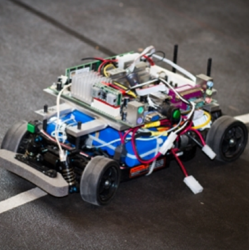
To test the system, the Massachusetts Institute of Technology team built two miniature cars, one equipped with on-board sensors, the other controlled by a person. About a hundred experiments were carried out. As a result, clashes were avoided in 97 cases.
Of course, to be more convincing, all this should happen in the real world, where there are more cars and more participants — pedestrians and cyclists, for example. But these studies are important for other reasons as well. If we're really going to learn to live with robots, we don't just have to know their next moves. To some extent, they should also be able to predict our next steps.