
 Events
Content:
In fact, astronomical spring will come on March 20
Why is day equal to night?
Terminator crosses the North and South Poles
The sun crosses the celestial equator
How to identify the vernal equinox by great ancient monuments
Other events March 20, 2020 years: the conjunction of Jupiter and Mars
In 2020, the vernal equinox will be on March 20. This is the first day of the new astrological year. On this date, the Sun enters the sign of Aries.
But what do we know about this natural phenomenon? Day equals night, right? We assure you that you don't know everything about the vernal equinox. After all, it is not for nothing that this natural phenomenon was taken into account when building the great structures of antiquity — the Cheops pyramid, the Mayan pyramids and Stonehenge.
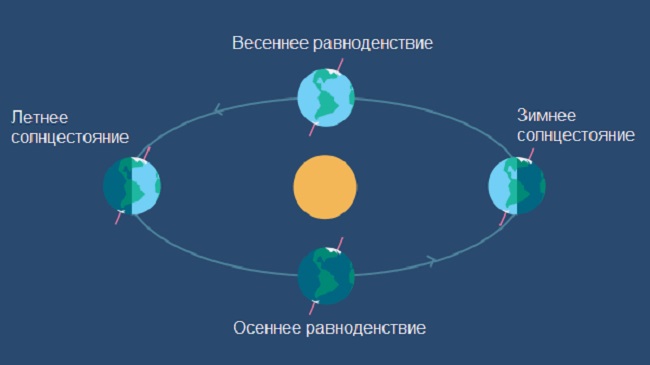
© TimeAndDate
What will happen on March 20th:
An astronomical spring will come.
The day will be equal to night.
The sun's rays will be directed perpendicular to the Earth's axis.
The sun will cross the celestial equator.
The terminator will cross the poles.
In fact, astronomical spring will come on March 20th
Although spring officially begins on March 1, from an astronomical point of view, it begins on the vernal equinox. In other words, spring will begin on March 20 this year. Since ancient times, this day has been the start of the sowing campaign.
Why does day equal night?
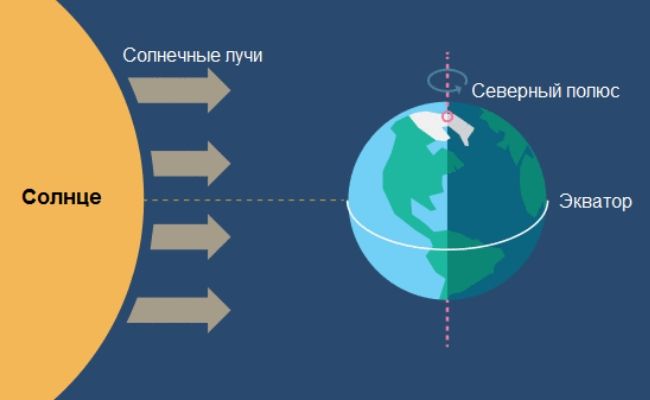
Everyone knows that at the equinox, day equals night. And this is true regardless of where in the world you are (with the exception of the poles). The difference in the length of day and night creates an inclination of the Earth's axis by 23.44° to the perpendicular of the ecliptic (orbital plane).
© TimeAndDate
Now try to include spatial thinking. Mentally draw a straight line from the center of the Sun to the Earth's center After the vernal equinox, from the point of view of a resident of the Northern Hemisphere, the Earth's axis of rotation creates an obtuse angle from this right angle. And after the autumnal equinox day, the angle becomes sharp. It is only at the moment of equinox that the Earth's axis is perpendicular to this straight line. Therefore, on the equinox day, the Sun will illuminate the Earth's Northern and Southern Hemispheres in exactly the same way.
The terminator crosses the North and South Poles

© Photo Images/Canva
On March 20, the terminator will cross the Earth's poles. Have you already imagined how a killer car from the future as everyone's favorite actor crosses the North Pole? In fact, when it comes to our planet, the terminator is the boundary between day and night. For an observer from space, it is particularly visible, and in fact represents a line separating the illuminated and dark parts of the Earth. It is on the day of the equinox that the terminator crosses both poles and moves exactly along the meridian. On the rest of the year, the terminator moves at an angle to the meridians and does not cross the poles (which is why day and night last for six months at the poles).
Read also: The lunar calendar of everyday life: favorable days for different things to do in March 2020
The sun crosses the celestial equator
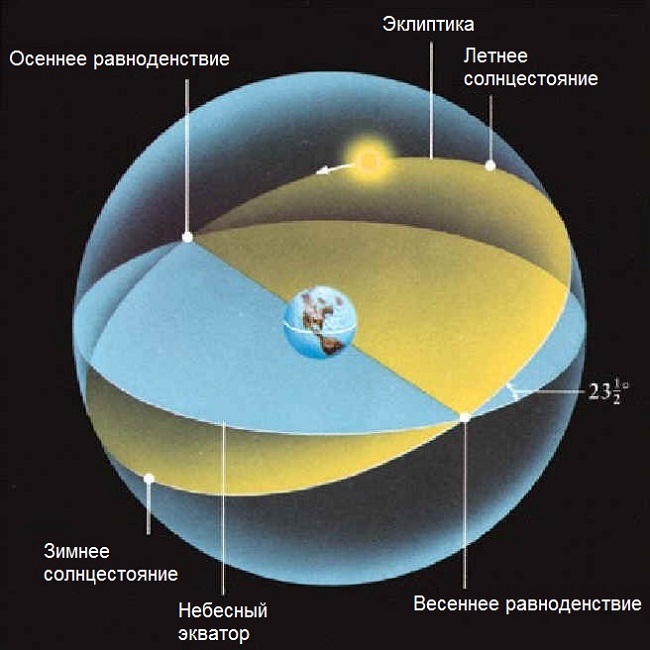
You might be surprised to learn that the equinox is not really a day, but just one moment that lasts for a split second. In fact, the equinox on March 20, 2020 will come at 6:50 a.m. and 36 seconds Moscow time. It is at this moment that the center of the Sun will cross the celestial equator. But first things first.
© WSU
On the day of the equinox, the Sun crosses the celestial equator. An incomprehensible term again? We suggest re-enabling spatial thinking. Imagine a line crossing the sky just above the Earth's equator—this is actually the celestial equator. If Earth had rings like Saturn's, they would be right at the celestial equator. Now, on the equinox, the Sun moves directly along the celestial equator (in fact, the star crosses it at a slight angle, but the naked eye will not notice it). That is why at the Equator at noon on March 20, the Sun will be exactly above your head, in the geometric center of the sky, and light will fall perpendicular to the Earth, at right angles. Residents of the equator observe the same thing on the autumnal equinox.
An interesting fact! At the equator, the length of day and night does not change all year round — that is, a day lasts exactly 12 hours, and the same length is night. However, since the onset of the day starts from the moment the upper part of the Sun appears above the horizon (not its center) to its full sunset below the horizon, it turns out that the day still lasts for 14 minutes longer than night.
Read also: Lunar calendar for cutting hair by day for March 2020
How to identify the vernal equinox by the great monuments of antiquity
© Getty Images Pro/Canva
In ancient times, people attached great importance to the trajectory of the Sun's movement across the sky. And it wasn't just fun. The vernal equinox served as a signal for the start of the sowing season. It is not for nothing that in many cultures this day was considered the beginning of spring, and not March 1 at all.
The famous ancient Egyptian Sphinx looks exactly at the place of sunrise on its vernal equinox.
The edges of the Cheops pyramid are concave inward, but this can only be seen from a bird's eye view. However, at sunrise of the vernal equinox, the southern edge of the pyramid is only half illuminated at first, and only after a few seconds it is fully illuminated. It is believed that during ancient Egypt, when the pyramid was covered with white limestone, this effect created an amazing light stop.
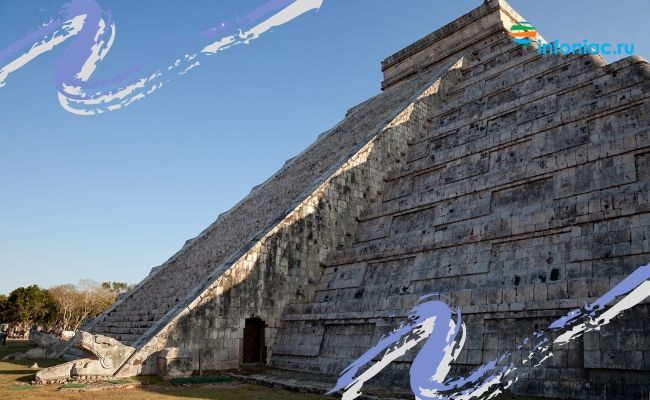
The Kukulkan pyramid in Chichen Itza (the capital of the Mayan Empire) is built in such a way that on the vernal equinox, the play of light creates the image of a giant snake sliding down from the top pyramids to the ground.
On the vernal equinox, the ancient Toltecs gathered at the Pyramid of the Sun to recharge their divine power. This ritual has been preserved to this day.
Read also: Numerology forecast for 2020: What awaits you according to your date of birth
Other events on March 20, 2020: the conjunction of Jupiter and Mars
If you look in the Southwest direction 1-2 hours before the equinox, on a flat terrain and away from the city lights, you will be able to observe a rare astronomical phenomenon – the connection of the planets Jupiter and Mars. In fact, the planets will not be fully connected, but will only come very close to each other. This event takes place only once every 20 years. Therefore, the next time you will be able to observe it as early as 2040.