
Among the art museums there are places where the works of old masters are exhibited, and museums of modern art.
The latter specialize in trends that appeared in the second half of the 19th century and are still developing: impressionism, expressionism, abstractionism and others.
In this article I will tell you about the famous museums of different countries, where the works of our contemporaries and masters who worked in the late 19th — 20th centuries are presented. Most of them are located in capitals or megacities, but there are also places for which they specifically go to small provincial cities.
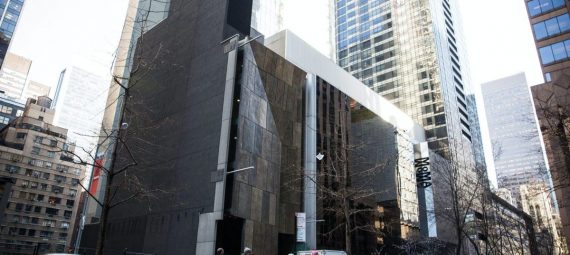
MoMA Museum of Modern Art
Museum address: USA, New York, Manhattan, West 53rd Street, 11
MoMA opened in 1929 and became the first museum in the United States dedicated to contemporary art. The collection contains 200 thousand paintings and other art objects created since the end of the 19th century. Different styles are represented here: Impressionism, Cubism, Fauvism, surrealism, pop art and others. The museum houses paintings by Paul Gauguin, Kazimir Malevich, Rene Magritte, Piet Mondrian, Frida Kahlo and other great artists.
Many of the works in the collection are iconic for their authors and art history. One of the most famous paintings by Vincent Van Gogh — “Starry Night” is on display here. The melted clock in the painting “The Permanence of Memory” by Salvador Dali is perhaps the most recognizable image created by the artist. Pablo Picasso’s “The Maidens of Avignon” is a symbol of the birth of Cubism. In 2007, Newsweek called this work “the most important in the history of art in the last 100 years.” Also at MOMA, you can see the triptych “Water Lilies” by Claude Monet and one of the versions of “Dance” by Henri Matisse — the second is kept in the Hermitage in St. Petersburg.
Today MOMA is one of the most famous art museums in the world.
The museum has many works by American artists who defined the development of art in the 20th century. For example, Andy Warhol’s “Campbell’s Soup Cans” and Roy Lichtenstein’s “Drowning Girl” are among the most significant works of artists. Also here you can see “The World of Christina” — the most famous painting by Andrew Wyeth. He depicted on it his neighbor, who could not walk because of illness.
In addition to paintings, the museum exhibits sculptures by Richard Serra and Jeff Koons, works by famous architects and designers — Antonio Gaudi, Le Corbusier, Ludwig Mies van der Rohe.
In summer, a Sculpture Garden with Picasso’s Goat and other exhibits is opened for visitors.
MoMA’s temporary exhibitions often become events that are talked about many years later. For example, in 2010, Marina Abramovich’s famous performance “In the Presence of the Artist” took place here. For 736 hours Marina looked into the eyes of the museum visitors who sat down at the table opposite her. One of them was the artist Ulai. Abramovich was connected with him by joint projects and romantic relationships, but by that time they had not seen each other for more than 20 years. Marina burst into tears during their unexpected meeting.
Another high-profile event was the “Big Orgy” by Japanese artist Yayoi Kusama in 1970. She arranged a performance in the Sculpture Garden, but the event was not coordinated with the museum management. MOMA employees tried to expel the participants of the project — naked boys and girls who kissed each other and with the sculptures of the garden. At that time, Yayoi was drawing red peas on them — her trademark.
There is a section on the museum’s website where photos from five thousand temporary exhibitions that have been held since 1929 are posted.
What they write in the reviews on Tripadvisor: “I either categorically like this museum, or I also categorically dislike it. I belong to the first category.
The expositions change: I was here on the Russian avant—garde, on the Impressionists, different and at different times – full of delight. And Picasso, naive art and some others left completely indifferent. Often there is something small, but very interesting, up to individual works.
There is a good, even excellent bookstore on contemporary art, architecture, design. They constantly conduct lectures, screenings, and screenings. If you plan to visit the museum more than three times a year, it is better to apply for membership: it gives you the right to enter the museum early, and you will also be sent invitations to interesting events.
It is worth visiting the cafe: they are delicious and original food there. Andy Warhol’s famous painting “Campbell’s Soup Can” hangs on the wall at the entrance.
Tate Modern
Museum address: Great Britain, London, Bankside, SE1 9TG
“Tate Modern” is one of the galleries of the Tate group, where they exhibit a collection of art from the 16th and 21st centuries. Tate Modern is dedicated to the 20th and 21st centuries. The gallery was opened in 2000 in a former power station building on the banks of the Thames. It was empty, but it was a pity to demolish: this is the project of architect Giles Gilbert Scott — the creator of Waterloo Bridge and red telephone booths in London.
The turbine hall and boiler rooms of the power plant were converted into an exhibition space, while the industrial interiors were preserved. In 2016, another building resembling a pyramid was opened — the Blavatnik building.
At the first exhibition, the gallery presented exhibits of contemporary art from different cities of the world. Critics took the new museum negatively, but now Tate Modern is one of the most visited in the world. His collection includes paintings, sculptures, multimedia and other art objects of modern genres.
In most museums, the exposition is arranged according to the chronology of the creation of works. The peculiarity of “Tate Modern” is the thematic principle. Even at the time of the museum’s opening, the collection was divided into sections: “Nudity, action, body”, “Still Lifes, objects, real life”, “Landscape and Environment”, “History, memory, society”. Now they keep the same approach, but the topics of the sections change periodically.
The permanent exhibition of the museum includes “The Crying Woman” by Pablo Picasso, “Metamorphoses of Narcissus” by Salvador Dali, “Dynamic Suprematism” by Kazimir Malevich, “Madonna” by Andy Warhol and other famous paintings. Tate Modern also presents a copy of Marcel Duchamp’s “Fountain”, a cult work of the ready-made art direction that turns everyday objects into art objects. The urinal with the inscription R. Mutt turned Duchamp into one of the most influential artists of the 20th century.
Tate Modern hosts several temporary exhibitions at the same time. Over the years, the works of famous contemporary artists have been shown here: for example, one could see a huge sculpture made of steel and red polyvinyl “Marsii” by Anish Kapoor, the installation “Sunflower Seeds” by Ai Weiwei. There were 100 million porcelain seeds scattered on the floor, symbolizing the inhabitants of China.
Where to study Contemporary art online
In the gallery there is a cafe with panoramic windows, offering excellent views of the Thames, the Millennium Bridge, St. Paul’s Cathedral. And on the tenth floor of the Blavatnik building there is an observation deck — an outdoor terrace with a 360-degree view.
What they write in the reviews on Tripadvisor: “We visited the Tate Modern Museum of Modern Art. A very diverse and interesting exposition: there are masterpieces of impressionism by Claude Monet, and the avant-garde, and other trends. I remember the playing column from “Grundig”. If anyone doesn’t know, “Grunding” was the most popular brand of radio and tape recorders in the 1970s. I also liked the Soviet period — a collection of photos of metro workers, representatives of Art Nouveau not recognized in the Union.
Admission to the main exhibition is free, so you can systematically study the samples of Art Nouveau in a few visits.”
The Museum of Modern Art in the Georges Pompidou Center
Museum address: France, Paris, Place Georges Pompidou, 4E
The Georges Pompidou Center is a cultural and public space in a huge glass building. In addition to the Museum of Modern Art, it houses the Institute for Research and Coordination of Acoustics and Music, a library, an industrial design center, concert and exhibition halls.
The Museum of Modern Art occupies the third and fourth floors. It contains about 120 thousand works: paintings, graphics, photographs, installations. Among the most famous exhibits are paintings “Romanian Blouse” by Henri Matisse, “Portrait of journalist Sylvia von Harden” by Otto Dix, “New York” by Pete Mondrian, “Moon Woman Cutting a Circle” by Jackson Pollock, “Blue 2” by Joan Miro, “Frame” by Frida Kahlo, “Engaged and the Eiffel Tower” Marc Chagall and other works.
The sculptures presented in the museum are also interesting. For example, Yves Klein’s “Tree” is the largest work of the artist, which he created shortly before his death. This is a blue sponge that he invented. The shade has since been called the artist’s name — “international Klein blue”.
The Pompidou Center considers the project of Joseph Beuys “The Plight” to be another masterpiece of its collection. The viewer finds himself in a cramped space upholstered with felt, and plunges into complete silence, which is emphasized by a silent piano with a closed lid.
It is convenient to follow the announcements of events on the center’s website. In the spring of 2022, there were exhibitions of works by American sculptor Charles Ray and French fashion designer Yves Saint Laurent, a retrospective of German photographer Jochen Lempert.
In the Georges Pompidou Center there is a game room for children, where they sculpt from plasticine or build structures from metal parts on magnets. Stravinsky Fountain is located in front of the center building: bright figures move along the pool to the composer’s music and release trickles of water.
What they write in the reviews on Tripadvisor: “A perfectly organized place for all lovers of modern art, which means the art of the 20th century. In the spacious halls, Cezanne, Chagall and Warhol comfortably coexist. You can go around all the floors at one time only with coffee breaks.
Pleasant surprises are always waiting on each floor: for example, we got to the demonstration of old black-and-white films “The Lost World” and “King Kong”. Of course, not just like that, but together with interesting exhibitions closely related to these classic tapes.
Recommendation: a museum that you want to return to right at the exit.