
 Events
Content:
What is a supermoon?
Will we see the pink moon?
Why is the moon so big or small?
The moon used to be huge
The fourth full moon of 2020 will take place on April 8. However, it won't just be a full moon, it's a supermoon! On April 8, at 5:35am Moscow time, we will see the largest and brightest moon in 2020. Various sources claim that the moon will be huge and… pink. But why will our satellite grow and turn pink?
What is a supermoon?
© Getty Images Pro/Canva
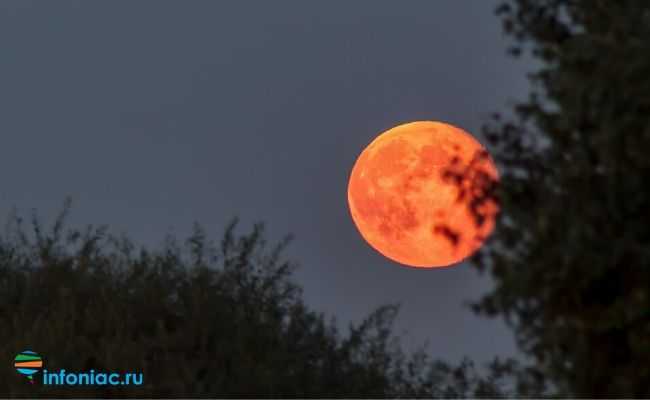
To begin with, the Moon rotates around the Earth not in a circle, but in an elongated orbit — an ellipse. When the Moon is as close as possible to us, it is about 360,000 km away. That's why it looks bigger and brighter. If it is in the full moon phase at that moment, night sky lovers have the opportunity to enjoy the supermoon.
However, when the Moon is as far as possible from Earth (407,000 km), it appears smaller and dimmer from Earth — a phenomenon called a micromoon.
Some numbers: During a supermoon, the moon is 14% larger and 30% brighter than during a micromoon.
In the early morning of April 8, the Moon will be particularly close to Earth, at a distance of 357,000 km. This will be the first full moon of astronomical spring (which came on March 20, the vernal equinox). It is from this full moon that the Easter date is calculated.
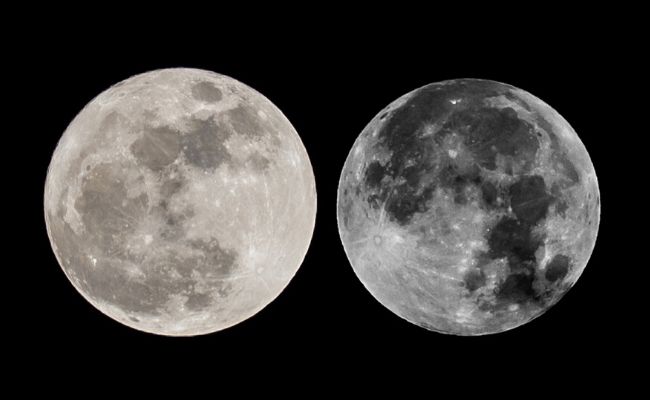
Despite the fact that the moon during the supermoon will be larger and brighter than usual, this is not so easy to notice. You can see a clear difference if you take a picture of the moon during a normal full moon and a supermoon, and then compare the photos.
© CoffmanCmu/Canva
In the photo, you can see a supermoon (left) compared to the Moon during a normal full moon (right).
Will we see the pink moon?
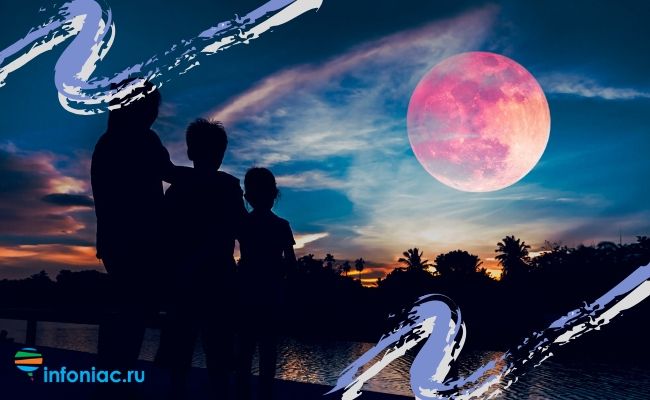
It would be very romantic to admire the pink moon in the night sky. But in reality it will be the usual bright yellow color. So why do they call it pink?
© kdshutterman/Canva
The first full moon after the vernal equinox is sometimes referred to as the “pink moon”. In fact, “pink moon” is an expression that Europeans have adopted from North American Indians. The Indians named it that way because it was at this time that the ground was covered with pink flowers of creeping phlox. Native to North America, these beautiful little flowers evenly cover entire fields all the way to the horizon in spring, creating a unique pink glow against the full moon.
Read also: Supermoon Secrets: 7 Surprising Facts About The Big Moon
Why is the moon so big or small?
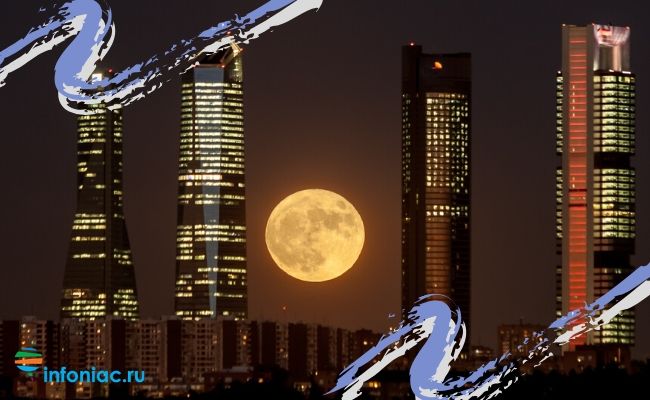
© Getty Images Pro/Canva
Everyone has probably noticed at least once in their life that when the moon is low above the horizon, it is unusually large. And after a few hours, when our satellite rises high into the sky, it becomes noticeably smaller. But the supermoon clearly has nothing to do with it — the Moon flies around the earth in 29.5 days, and in a couple of hours it can't get so far from Earth. The answer is simple: it's actually a visual illusion.
In fact, the Moon, being close to the horizon, seems large due to the presence in view of other objects (trees, houses, relief elements). And it's very easy to test this: take a regular school ruler and, keeping it at arm's length, measure the size of the moon above the horizon. And then when the moon rises high into the sky (and supposedly becomes smaller), measure it again and you'll see that its size remains exactly the same.
The moon used to be huge
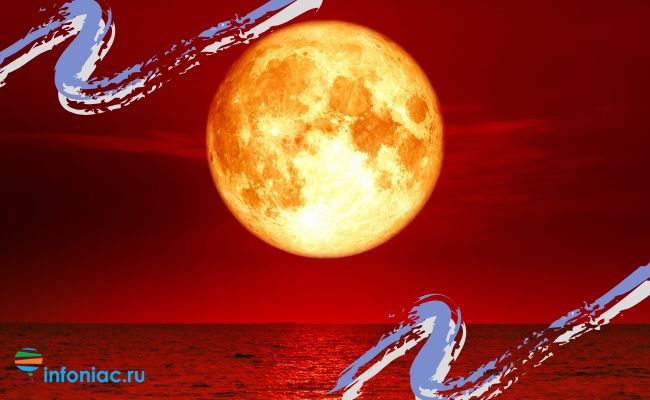
© Getty Images/Canva
Human life is so short! And the moon we saw when we were young will be exactly the same when we're 80. However, this is not entirely true — in fact, the moon will shrink! This is because it is gradually moving away from Earth. But it happens so slowly that the human eye will never notice it.
Read also: The lunar calendar of everyday life: favorable days for different things to do in April 2020
The question is: if the Moon moves away, does it mean that it was once closer to Earth? Yes, and much closer! Billions of years ago, the distance to the moon was 10 times less than it is now (about 40,000 km). Back then, our satellite was much larger and occupied a good part of the night sky. We never dreamed of such a supermoon! On the full moon, it was light at night, almost like during the day. However, unfortunately, there was no one to observe this beauty — in those days, neither humans nor even dinosaurs existed, and only the simplest bacteria — the ancestors of everything — could admire the giant moon alive on Earth.