
 Unbelievable facts
Parents love to imagine what their future child will look like.
Will he inherit mom's eyes or daddy's nose? Are there any specific traits we get from each parent?
Genetics is an interesting and very complicated thing. A child receives 23 chromosomes from the mother and 23 from the father, and there are many options for how they will fit together and what the end result will be.
Read also: 15 physical features men subconsciously look for in a woman
Although the genetic influence is generally equivalent on the part of both parents, many scientists have come to the conclusion that the father sometimes has a greater influence than the mother.
1. Eye color
© rajjawa/Getty Images
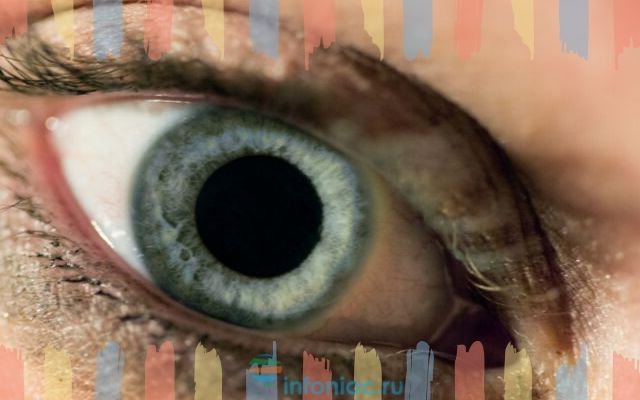
Dark eye color, such as brown and black, is dominant, while light eye color, such as blue, is recessive.
Usually, a child inherits the parent's dominant eye color. For example, if dad has brown eyes and mom has blue eyes, then the baby is likely to be brown-eyed.
But this is not always the case. If a father has a recessive eye color, such as blue or green, the child is more likely to inherit the father's eye color.
2. Dimples on the cheeks

© Rohappy/Getty Images
What could be more beautiful than dimples on his cheeks, and if your father had dimples, it is likely that the baby will be born with dimples just as cute.
Cheek dimples are a dominant feature, and their appearance is related to the location of the muscles on the face.
3. Fingerprint pattern
© SEInnovation/Getty Images
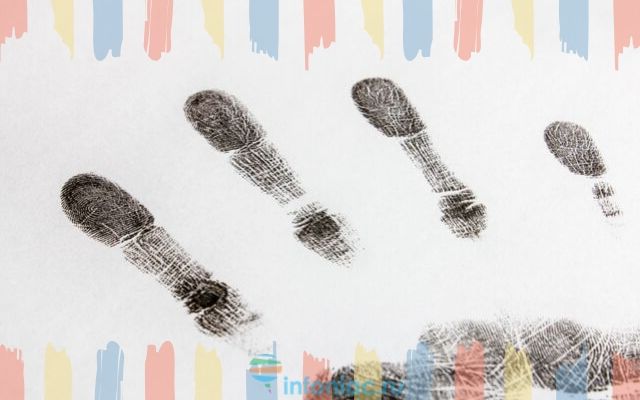
Each person has their own unique fingerprints, and they are not repeated in parents and children. However, there is a genetic predisposition for fingerprints.
Although the fingerprints of fathers and children are never the same, they are very similar. Look at the baby's hands and you'll see similar curls or arches on the father.
4. Face symmetry

© ClosertoInfinity/Getty Images
Genetics plays a big role in what facial features, or the ratio of these traits, your children will develop.
Children tend to inherit their father's facial symmetry, and if you look at your son or daughter clearly see his father, there's a reason for that.
5. Child height

© evgenyatamanenko/Getty Images
A child's height is influenced by the genes of both parents, but the father plays a big role in how tall or short a child will be. If the father is tall, the children will also be tall, maybe not as tall as the father if the mother is short, but nonetheless.
There is a method that helps calculate the approximate height of a child. To do this, print the average height of the mother and father (mother's height+father's height) :2 and then add 5 cm if you have a boy, or subtract 5 cm if you have a girl.
6. Baby weight

© Czanner/Getty Images
Weight is largely determined by genetics, and there is a link between the weight of parents, especially the father, and the weight of children when they grow up.
Interestingly, a father's weight can influence a baby's birth weight. Thus, if the father's genes are expressed during pregnancy and fetal development, then the mother's genes may be suppressed to some extent.
7. hair

© Marina_Di/Getty Images
As with eyes, dominant and recessive genes have a major influence on hair color.
Dark hair is dominant, and if your father has dark hair, you are also likely to have dark hair.
Moreover, a father's genes play a crucial role in what the baby's hair texture will be like. If the father has curly hair, it is unlikely that the child will have straight hair.
8. Lips
© pecaphoto77/Getty Images
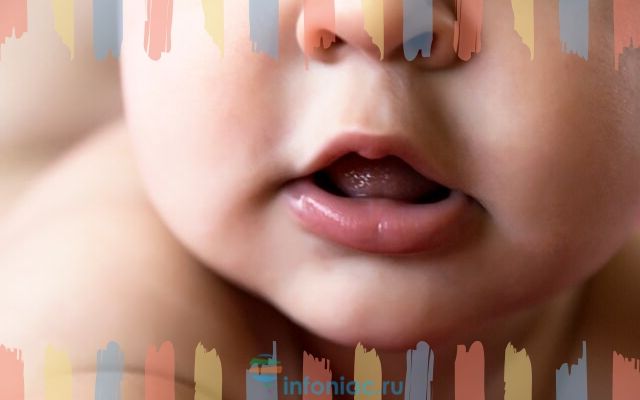
When it comes to lip shape and size, a father's genes can significantly influence this trait. Full lips are a dominant feature, and if a father has full lips, the child is also likely to have full lips.
9. Dental problems
© alexandramalyck
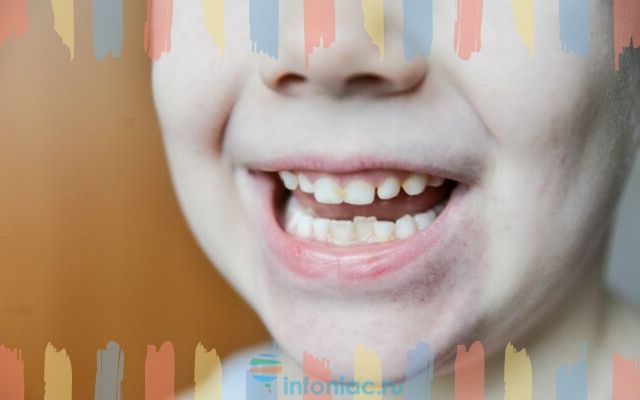
Unfortunately or fortunately, the structure of the teeth, as well as the problems associated with them, is a hereditary feature. If the father had bad teeth, then the child will probably also have to face problems.
Did you know that there is a gene responsible for the appearance of chips between teeth? If your father had a gap between his teeth, don't be surprised if you inherit one.
10. Risk appetite

© nikitabuida
If a father likes to take risks, this can leave an imprint on the identity of future children. It is believed that a person's personality is to some extent predetermined from birth.
For example, there is a gene that is responsible for the search for novelty and encourages a person to engage in risky behavior. A person who is adventurous is likely to have inherited this feature from his father.
11. Sense of humor

© RimDream/Getty Images
Although there is no specific gene responsible for a sense of humor, there are a number of genes that determine the propensity for wit.
Of course, a sense of humor is a social trait, and if parents love to make fun of each other and laugh, then the child will also be fun.
12. Intelligence

© Goodshoot/Photo Images
A child's intelligence potential is also more determined by genetics, namely the father's intelligence.
Also read: 13 unexpected signs that you are very smart
Some experts believe that there are a number of genes that are responsible for a high level of intelligence, or so-called “genius genes”. So if your dad is very smart, consider yourself lucky.
However, recent studies try to refute this claim by showing that intelligence is inherited from the mother. According to a study conducted on mice, intelligence genes are transferred to the X chromosome, “turning off” the father's genes.
13. The nature of sleep

© Syda Productions
You've probably seen a child and his father sleeping in the same positions more than once. Perhaps this is due to the fact that sleep patterns are determined by the father's genetics. If dad sleeps soundly and deeply, it is likely that the baby will sleep the same way.
If the father is an owl or suffers from insomnia, these characteristics can also be inherited by the child.
14. Light sneezing syndrome

© mandygodbehear/Getty Images
Stay healthy! If you sneeze while looking at the Sun or bright lights, you are most likely to have light sneezing syndrome.
This syndrome is also genetically determined and is dominant. So if your dad had sneezing syndrome, chances are you'll have one too.