
 Unbelievable facts
It is said that a person feels death is approaching. At this tragic moment, someone finds the strength to joke, someone says goodbye to relatives and asks for forgiveness, and someone simply leaves this world.
We present to your attention the last words of people who have left their mark on history.
Words before you die
1. Archimedes (circa 287 BC – 212 AD)
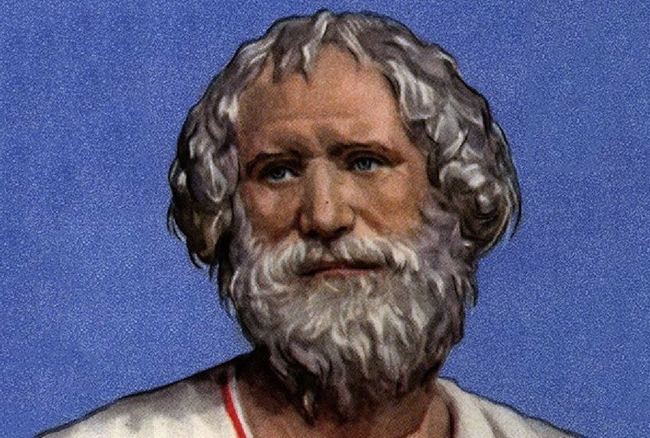
Don't trample my circles.
Archimedes is an ancient Greek scientist, mathematician and mechanic, the founder of theoretical mechanics and hydrostatics. Archimedes died during the siege of Syracuse – he was killed by a Roman warrior (despite instructions not to touch the scientist) at a time when the scientist was engaged in finding a solution to his problem.
Read also: Celebrities who were shocked by predicting their own death
2. Isaac Newton (1642 – 1727)
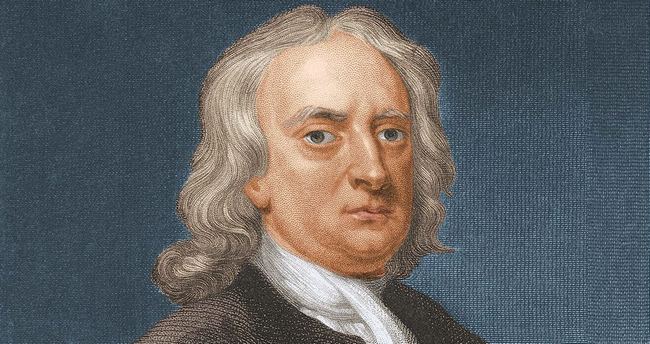
I don't know how the world saw me. To myself, I always seemed like a boy playing on the seashore and entertaining myself looking for beautiful pebbles and shells, while a great ocean of truth lay unexplored before me.
Isaac Newton is an outstanding English scientist, one of the founders of classical physics. Newton's biography is rich in every sense of the word. He made many discoveries in physics, astronomy, mechanics and mathematics. It was he who explained the law of universal gravitation. He died on March 20 (31), 1727, in Kensington. Death occurred in a dream. Isaac Newton was buried in Westminster Abbey.
3. Ludwig Van Beethoven (1770 – 1827)
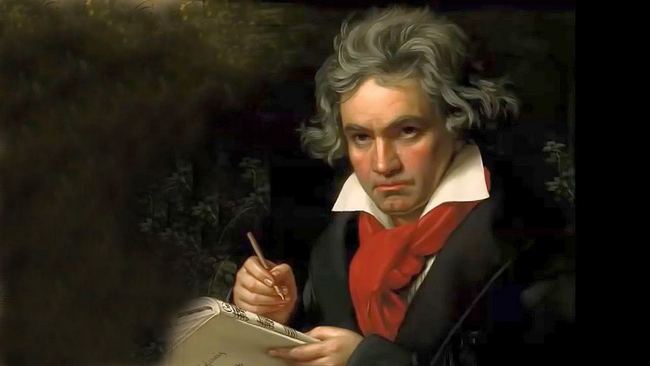
Cheers, the comedy is over.
Ludwig Van Beethoven is a famous deaf composer who has created 650 pieces of music that are recognized as world classics. The life of a talented musician is marked by a constant struggle against difficulties and adversity. The talented composer died at the age of 57, on March 26, 1827. In 1826. Beethoven caught a cold and developed pneumonia. Pulmonary disease was accompanied by stomach pain. The doctor incorrectly calculated the dosage of the drug, so the malaise progressed every day and the composer was bedridden for 6 months, after which he died.
4. Leonardo da Vinci (1452 – 1519)
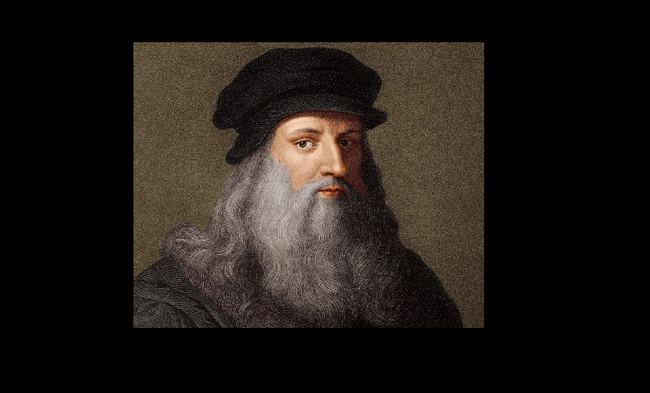
I insulted God and humanity because my creations did not reach the height I wanted.
Leonardo di ser Piero da Vinci is a Renaissance artist, sculptor, inventor, painter, philosopher, writer, scientist, polymath (universal person). Modern researchers have concluded that the probable cause of death of the artist is a stroke. Da Vinci died at the age of 67 in 1519. At the time of his death, the master was in Clos Lucé Castle near Amboise, where he spent the last three years of his life. In accordance with Leonardo's will, his body was buried in the gallery of the Saint-Florentin Church. Unfortunately, the master's grave was ravaged during the Huguenot Wars.
Farewell words
5. Andrey Mironov (1941 – 1987)
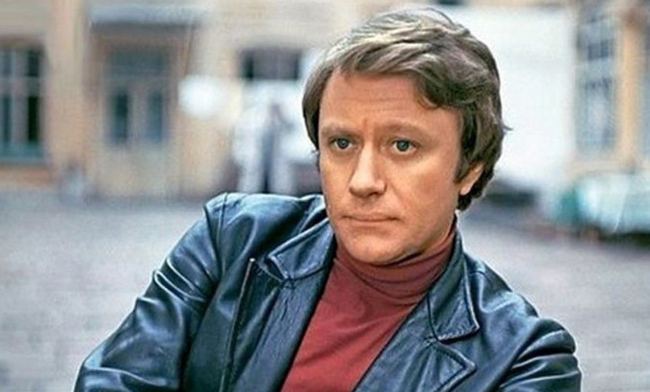
Head… head… my head.
Andrey Mironov is Honored Artist of the RSFSR (16.10.1974) and People's Artist of the RSFSR (18.12.1980). He has been acting in films since 1962. He performed as an artist and singer on pop and television. He died at the Riga Opera House before he finished reading his final monologue in Beaumarchais's play Crazy Day, or The Marriage of Figaro. The actor died on August 16, 1987 from a brain hemorrhage (he had a congenital cerebral aneurysm). Andrey Mironov was buried on August 20, 1987 at the Vagankovo Cemetery in Moscow.
6. Aleksandr Sergeevich Pushkin (1799 – 1837)
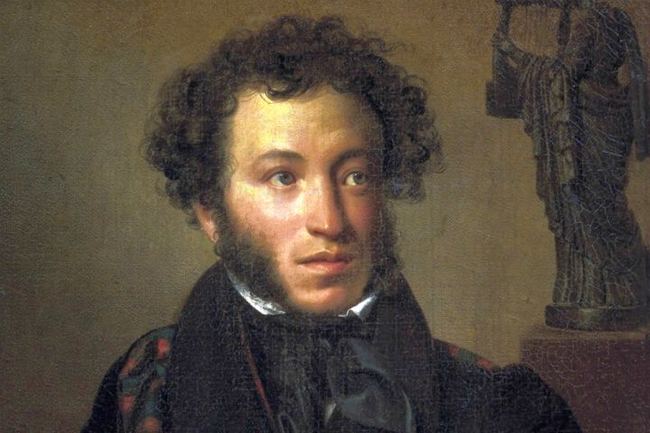
Life is over, it's hard to breathe… it's pressing…
Alexander Sergeevich Pushkin is a beacon of Russian literature, and many great works have been published from his pen. He was also a polyglot and knew many foreign languages. In addition to creativity, Pushkin had two other major hobbies — women and gambling. The poet participated in two dozen duels. In most fights, Alexander Sergeyevich's friends managed to reconcile the duelists. The first duel took place when Pushkin was still a lyceum student. The last 29th duel was fatal for him. On February 8, 1837, Pushkin shot in a duel with Dantes, was mortally wounded and died on February 10 at his home on the Moika River.
Read also: Scientists have explained what happens to a person's soul after death
7. Anton Pavlovich Chekhov (1860 – 1904)
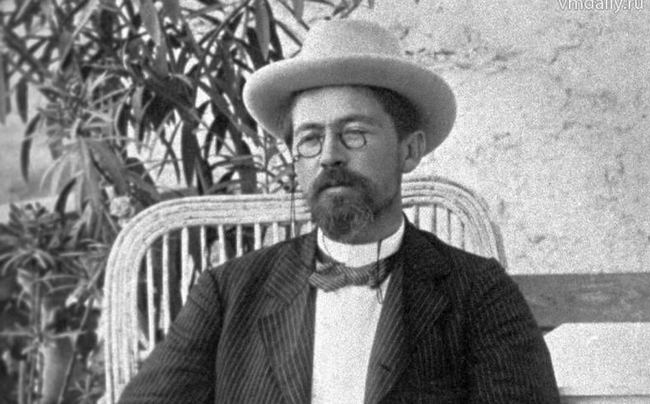
It's been a long time since I drank champagne.
Anton Pavlovich Chekhov is a great Russian writer, talented playwright, academician, and physician by profession. The most important thing about his work is that many works have become classics of world literature, and his plays are staged in theaters around the world.
Chekhov has been suffering from tuberculosis since high school. In the summer of 1904, Chekhov went to a resort in Germany. Before his death, the writer himself asked for a doctor for the first time in his life and ordered him to bring champagne. When the doctor came, Chekhov said to him in German: “Ich sterbe” (“I'm dying”). Then he took a glass, drank champagne to the bottom, lay down on his side and went to eternity. On July 9 (22), 1904, Anton Pavlovich was buried next to his father, behind the Assumption Church of the Novodevichy Convent.
8. Mikhail Yurievich Lermontov (1814 – 1841)
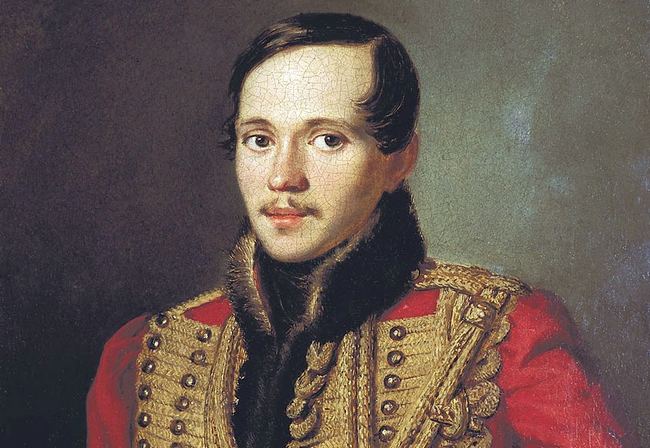
I'm not going to shoot this fool.
Mikhail Yuryevich Lermontov is a great Russian poet and novelist, as well as a talented artist and playwright, whose works had a huge impact on writers of the 19th and 20th centuries.
He has had three duels in his life, the last of which was fatal. Mikhail Yuryevich Lermontov was killed in a duel that took place in Pyatigorsk. The poet was returning from exile, and on the way he met his old friend Nikolai Martynov. They had a quarrel, as a result of which Martynov challenged the poet to a duel, where he died. He was only 26 years old.
9. Saltykov – Shchedrin (1826 – 1889)
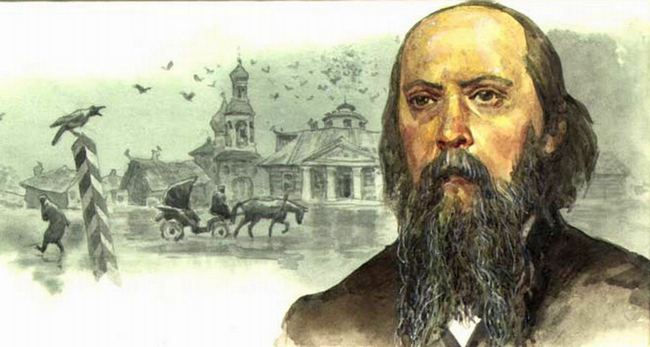
Are you stupid?
Mikhail Evgrafovich Saltykov-Shchedrin is a Russian realist writer, critic, author of sharp satirical works, known under the pseudonym Nikolai Shchedrin (the writer's real name is Saltykov).
In the last years of his life, Saltykov-Shchedrin suffered from rheumatism and frequent colds, and went abroad for treatment. Mikhail Yevgrafovich died on May 10, 1889 in St. Petersburg and was buried next to Ivan Turgenev. The writer greeted death with the question “is that you, stupid?”
10. Oscar Wilde (1854 – 1900)
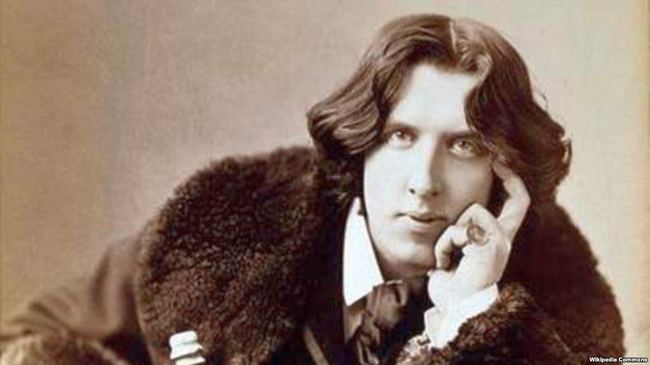
Murderous coloring! One of us is going to have to leave here.
Oscar Fingal O'Flaherty Wills Wilde is an Irish-born English writer, critic, philosopher, and aesthete; he was one of the most famous playwrights in the late Victorian period. Meningitis took the poet's life on November 30, 1900. He was buried in the Bagneau cemetery in Paris, but after a while his remains were reburied at the Pere Lachaise cemetery.
Oscar Wilde was dying in a room with tasteless wallpaper. His impending death did not change his attitude towards life. After the words: “Deadly coloring! One of us is going to have to leave here,” he left.

American poet Walt Whitman once said: “The last words are certainly not the best examples of what we have said in life – they do not have their former splendor, lightness, passion; life, finally… But they are immensely valuable, as they sort of sum up all our chatter in all our previous lives.”