
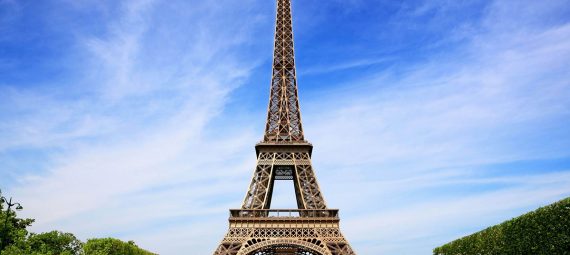
The Eiffel Tower is one of the most iconic landmarks in the world and is recognized as a symbol of Paris, France. It is a wrought-iron lattice tower located on the Champ de Mars in Paris, and it was named after its designer, Gustave Eiffel. The tower was constructed in 1889 for the World’s Fair, which marked the centennial celebration of the French Revolution. Since its completion, the Eiffel Tower has remained an important symbol of engineering and architecture, and it is visited by millions of people every year.
The history of the Eiffel Tower dates back to 1884 when the French government organized a competition for the design of a tower to be constructed for the 1889 World’s Fair. The winning design was submitted by Gustave Eiffel, who was a prominent French engineer and architect. Eiffel was already well known for his work in constructing metal bridges and railway stations, but the Eiffel Tower was to be his greatest achievement.
Construction of the tower began in 1887, and it took two years to complete. The tower stands at a height of 324 meters, making it the tallest structure in Paris. At the time of its construction, it was also the tallest structure in the world, a title it held until 1930 when the Chrysler Building was completed in New York City.
The Eiffel Tower was not initially popular among Parisians, who saw it as an eyesore and an example of industrialization ruining the city’s beauty. Some even called it “a giant factory chimney.” However, the tower’s popularity quickly grew among tourists and visitors to the city, who were fascinated by its innovative design and engineering.
One of the reasons why the Eiffel Tower has remained significant over the years is its role in the development of modern architecture and engineering. The tower was a groundbreaking achievement in the field of engineering and showed that metal could be used to create structures of unparalleled height and beauty. It also demonstrated the potential of iron in construction, which would later be used to build other famous structures such as the Empire State Building and the Golden Gate Bridge.
The Eiffel Tower has also been an important symbol of France and Parisian culture. It has been featured in countless movies, books, and photographs and has become a must-visit attraction for tourists visiting Paris. Its image is synonymous with love and romance, and it has been the backdrop for countless marriage proposals and wedding photos.
The tower has undergone several renovations and updates over the years to ensure its safety and longevity. In 1985, the first floor was transformed into a glass-walled space with a museum, gift shop, and restaurants. The second floor features an observation deck, and the third floor has the highest observation deck in Europe.
In conclusion, the Eiffel Tower is a world-renowned landmark that has captured the hearts and imaginations of people around the world. Its history and significance cannot be overstated, and it continues to be a testament to the power of engineering and the beauty of architecture. Whether you are a tourist visiting Paris for the first time or a seasoned traveler, the Eiffel Tower is a must-see attraction that is sure to leave a lasting impression.