
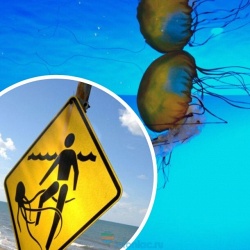
 Unbelievable facts
Almost 200 species of jellyfish are known to live in the seas and oceans of our planet.
While most are safe, some species contain highly toxic sting cells that have serious consequences for humans, including unbearable pain and even death.
Many jellyfish can cause mild to severe reactions if they sting.
Jellyfish are marine creatures of the Chirping type, along with corals and sea anemones. The jellyfish is 95 percent water and 5 percent solid, but it lacks the complex systems found in most animals.
There is very little chance that you will encounter one of the deadliest jellyfish. However, knowing about their existence will remind you to wear a protective suit while diving or snorkeling.
In the event of a burn, urgent medical attention should be sought to avoid serious harm caused by these poisonous jellyfish.
And one more warning: don't urinate on the bite.
1. Sea Wasp Cubojellyfish (Chironex Fleckeri)
© Alvaro E. Migotto/Wikipedia
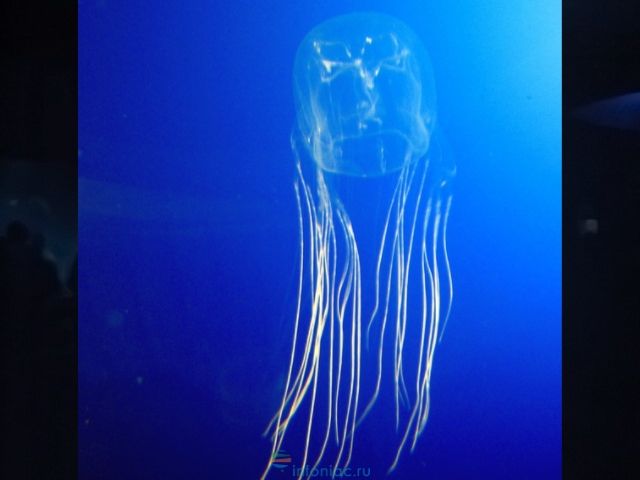
The Chironex fleckeri cube jellyfish, also known as the Sea Wasp, is one of the most dangerous jellyfish in the world, not only because of its deadly poison.
This huge jellyfish is almost invisible, which makes it very difficult to detect it. They prefer to hunt during the day in shallow waters, which means they are much more likely to meet her on the beach.
Cubojellyfish venom is considered to be the strongest of all jellyfish species. A dose just the size of a grain of salt can kill an adult male. After a bite, a person experiences terrible pain and an excruciating burning sensation. If you do not seek medical help in time, cardiac arrest and death may occur.
It is considered to be the world's deadliest jellyfish, killing about 63 people in Australia over the past 80 years, to name only known cases.
A cubojellyfish can be recognized by its pale blue, almost transparent color and its quadrangular, domed head. Each corner of the dome head contains 15 tentacles that grow up to 3 meters.
Where it lives: The cube jellyfish lives mainly in the coastal waters of Australia and New Guinea, as well as in the Indo-Western Pacific Ocean.
2. Chiropsalmus jellyfish (Chiropsalmus Quadrigatus)
© Wikipedia
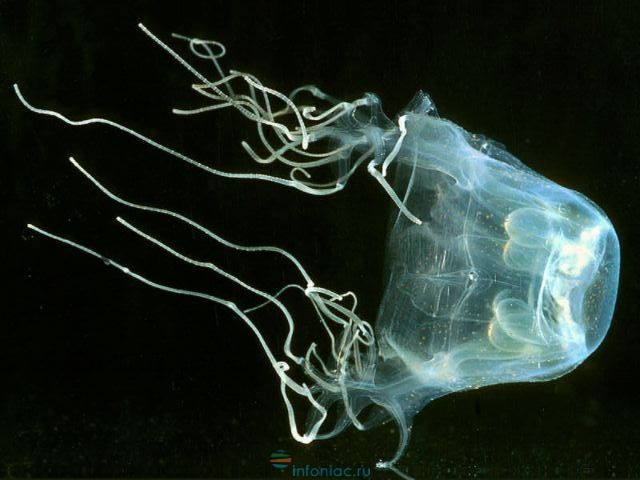
This cubojellyfish species is a smaller version of the Sea Wasp. But despite its tiny size, it is fraught with a very dangerous poison.
The bite of the Chiropsalmus Quadrigatus jellyfish is very painful and can be fatal in some cases. After a burn, cardiac arrest, cessation of breathing with acute pulmonary edema may occur. The distinctive features of the jellyfish are the branches on the four sides of the dome and the seven long flat tentacles that grow from each branch.
Scientists believe that unusual tentacles are better suited for catching fish than crustaceans and other jellyfish, which are usually prey for these creatures.
Where they live: They live in the Indo-Pacific region and the Western Atlantic Ocean, as well as the Japanese prefecture of Okinawa, where people encounter these jellyfish every year, where they It is called a “hub”.
3. Irukanji jellyfish (Carukia barnesi)
© Wikimedia
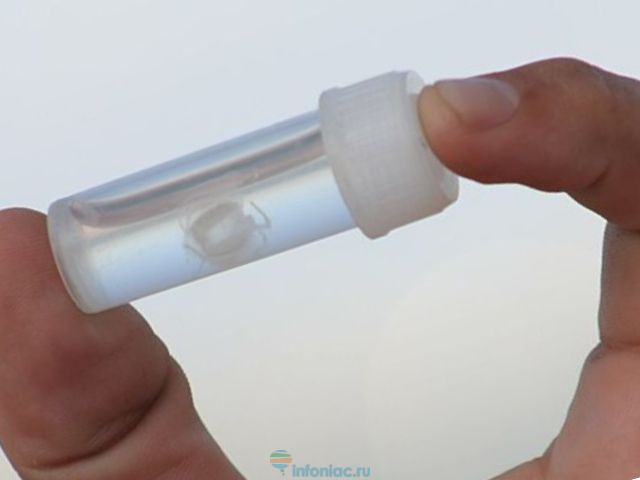
The tiny irukanji jellyfish is another jellyfish you can't joke about. Its size is small, no larger than an adult's finger, and its transparent body poses an incredible danger to people. You can feel stung without even knowing the culprit of your troubles.
Jellyfish venom is considered one of the most powerful animal toxins. It's more than 100 times more powerful than cobra venom. In addition, this jellyfish is characterized by the fact that it has poisonous cells not only on its tentacles, but also on its dome.
A jellyfish that evokes a sense of impending doom
A jellyfish bite leads to what is known as Irukanji Syndrome, in which the victim feels tremendous pain that can last up to 12 hours. The condition is accompanied by a burning sensation on the skin, nausea and vomiting, painful stomach cramps, as well as cramps in the legs and arms, heart problems and a strange psychological symptom in which a person feels doom.
Patients bitten by irukanji believe they will die and are so sure that they beg doctors to die. However, being bitten by this jellyfish does not mean imminent death. Despite the fact that this is by far one of the most dangerous types of jellyfish in the world, people usually survive by contacting a doctor in a timely manner and receiving treatment that includes many painkillers.
Where it lives: It used to be thought to be only found in Australian waters, but recent sightings have been reported in Florida, Japan, Thailand, and even the British Isles. This has raised growing concerns about the possible spread of this deadly jellyfish.
4. Fire jellyfish (Morbakka Fenneri)
Morbakka fenneri jellyfish is also known as the Fire Jellyfish for its powerful sting. This is another species of cubojellyfish, slightly larger than those on this list, measuring about 10 cm in length, about 5 cm in diameter and a solid body with bright pink protrusions at the top. It has four ribbon-like tentacles that are about a meter long.
The larger size of this jellyfish allows a person to determine the source of the bite. Although a bite can be very painful and causes Irukanji syndrome, it is generally not life threatening.
Where it lives: It lives in calm Australian waters and harbors off the coast of Queensland, preferring the warm waters of the north.
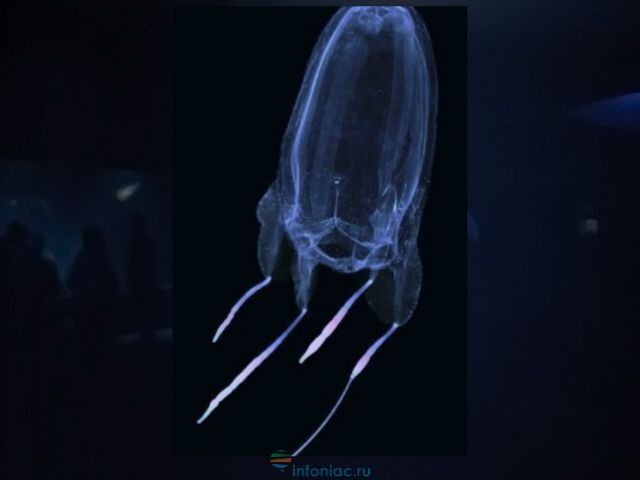
5. Alatina Alata Jellyfish
© Wikimedia
Another species of cubojellyfish, also called Sea Wasp, was formerly known as Carybdea alata.
Compared to other species, the bite of this jellyfish is not so strong, but there is no need to deny some discomfort and discomfort.
After a jellyfish bite, its victims usually treat the affected area with vinegar and apply a hot and cold compress to reduce pain and swelling. But, given that this species is a cubojellyfish, its bite can trigger Irukanji Syndrome, so you need to be vigilant and seek medical help in time.
Where it lives: It is found primarily off the coast and bay of Hawaii and other parts of the Pacific Ocean, as well as off the coast of Pakistan in the Arabian Sea.
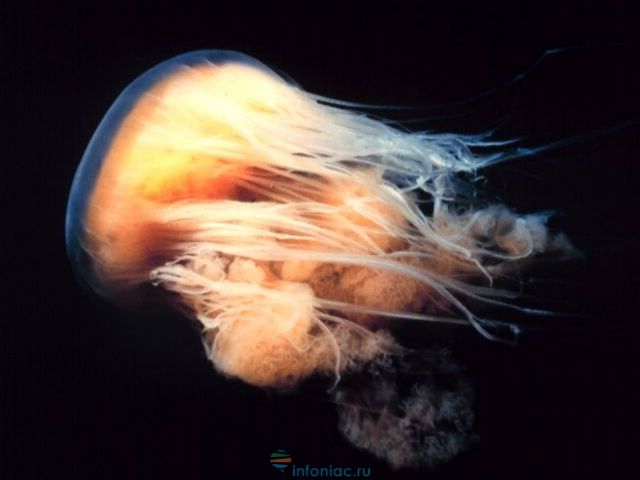
6. Jellyfish Cyanea capillata
© Dan Hershman/Wikimedia
This species of jellyfish, which is also called the “Lion Mane” for its size, is considered one of the largest.
The maximum diameter of the dome is 2 meters, and the largest representative was 36 meters in length. The tentacles of this giant, used by him for predatory purposes, can stretch up to 30 meters.
Contrary to popular belief, the bite of this jellyfish is not fatal. In most cases, if you are not allergic, it causes temporary, if severe, pain and redness at the site of the bite.
However, it all depends on whether you have touched several tentacles or accidentally bumped into the body of a jellyfish (in which case it is recommended to see a doctor). In rare cases, a severe sting can cause panic and result in drowning.
Where they live: They live in the North Pacific and Atlantic Oceans, including the Arctic Ocean.
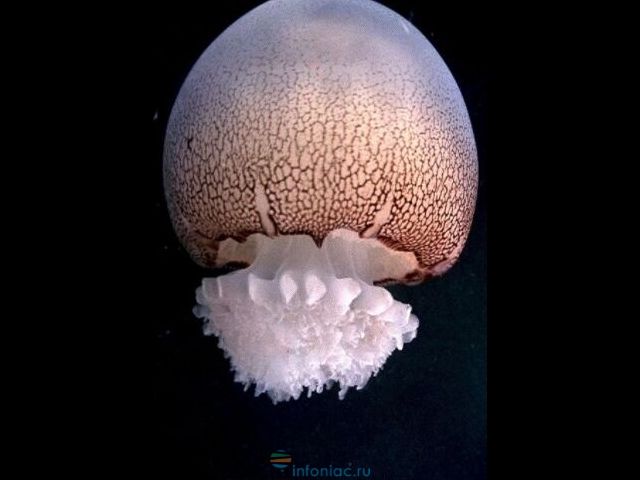
7. Cannonball Jellyfish (Stomolophus meleagris)
© Wikipedia
Another jellyfish that many people mistakenly believe is fatal. It is often referred to as the “Cabbage Head” for its characteristic cannonball and dome shape.
The jellyfish is mostly harmless and feeds mainly on animal plankton, and very rarely stings humans. However, we must remember that these inhabitants produce toxins that can cause heart disease in humans.
Where it lives: This species of jellyfish lives in the western Atlantic Ocean and in the east-central and northwestern Pacific Ocean.
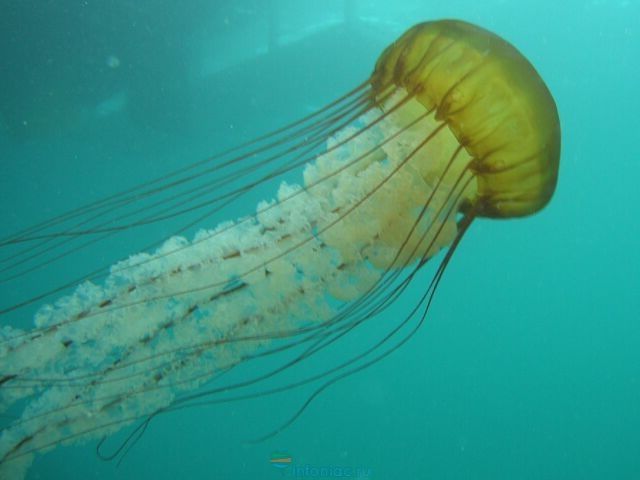
8. Sea nettle (Chrysaora fuscescens)
© Ed Bierman/Wikipedia
This type of jellyfish is also called “Sea nettle”. The physical characteristics of jellyfish differ depending on their habitat, but they can be recognized by their golden brown dome, which reaches up to 1 meter.
The jellyfish has 24 long and thin tentacles that stretch for 4.5 meters.
The Sea Nettle bite is quite poisonous, causing severe pain, but, fortunately, the bite rarely threatens human life.
Where it lives: It prefers to swim in open waters of the Pacific, Atlantic and Indian Oceans.
9. Portuguese boat (Physalia physalis)
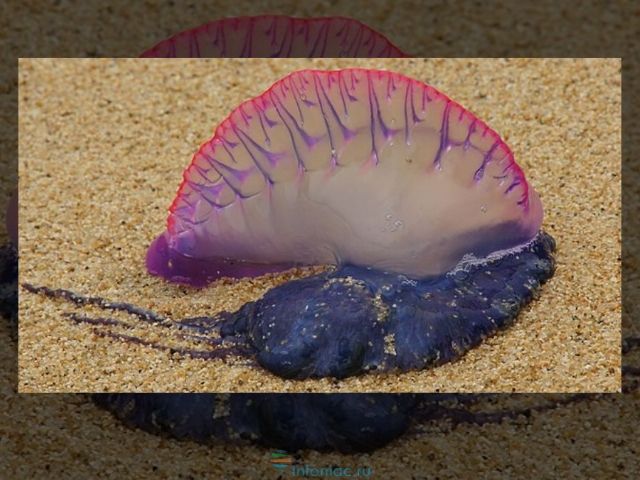
© Biusch/Wikipedia
This is a truly dangerous marine life. It is interesting that this is actually not a jellyfish, but a so-called “physalia”. What is even more strange is that it is even difficult to call it an animal, as it is more of a colony of organisms.
Perhaps for this reason, it was called the “Portuguese boat”, where the organisms that inhabit it look like a crew. You can recognize a creature by its characteristic scallop at the top, which is the bladder. It acts as a float, protruding above the water surface like a sail. Most often, colonies are purple or pink, and less often blue.
The stinging, venom-filled stinging cells in the tentacles of the Portuguese Boat can paralyze small prey. Separated tentacles and even dead members of this species on the shore can sting just as painfully as living ones, remaining poisonous for several hours or even days after death.
The bite causes unbearable pain, leaving lash-like scars on the skin that last for 2-3 days, although the pain usually subsides after a few hours. In rare cases, if the poison enters the lymph nodes, it causes symptoms similar to allergies (laryngeal edema, heart failure, inability to breathe).
Where it lives: It lives in the Atlantic, Pacific and Indian Oceans.
10. Nomura jellyfish (Nemopilema nomurai)
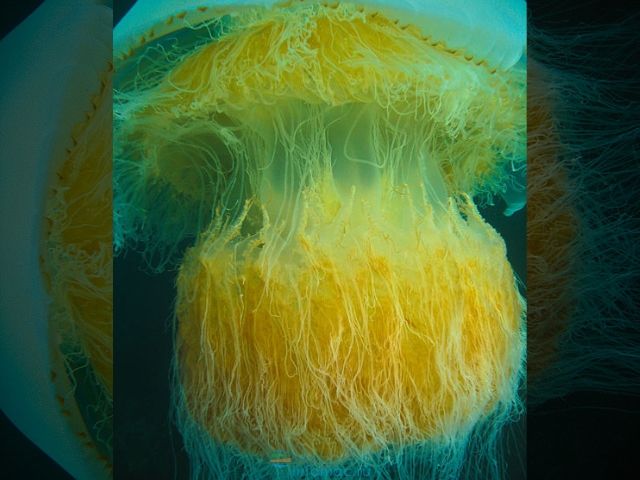
© Janne Hellsten/Wikipedia
This is one of the very large cornerot jellyfish species, whose parameters are comparable to Hairy cyanea. They grow up to 2 meters in diameter and weigh up to 220 kg.
It is very difficult to get rid of this species of jellyfish, because in case of danger, nomura releases billions of spermatosides and eggs that are attached to corals and stones, of which favorable conditions grow even more jellyfish.
A jellyfish bite is very painful, but usually not fatal. For all this time, 8 deaths have been recorded.
Where they live: They live mainly in waters between China and Japan in the Yellow Sea and East China Sea.
11. Tripedalia cystophora jellyfish
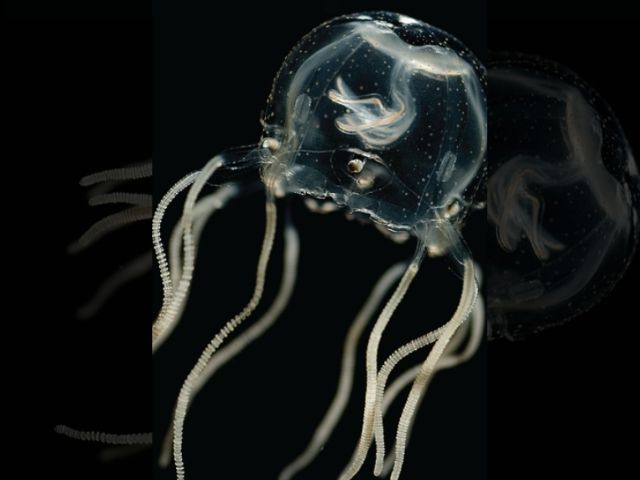
© Wikipedia
Measuring about 1 cm in diameter, this tiny cube jellyfish is incredibly poisonous. It has a complex visual system consisting of 24 eyes, each with its own function.
Where it lives: It lives in the tropical mangrove lagoons of Central America, hiding at the roots of trees to hide from predators.
12. Eared aurelia (Aurelia aurita)
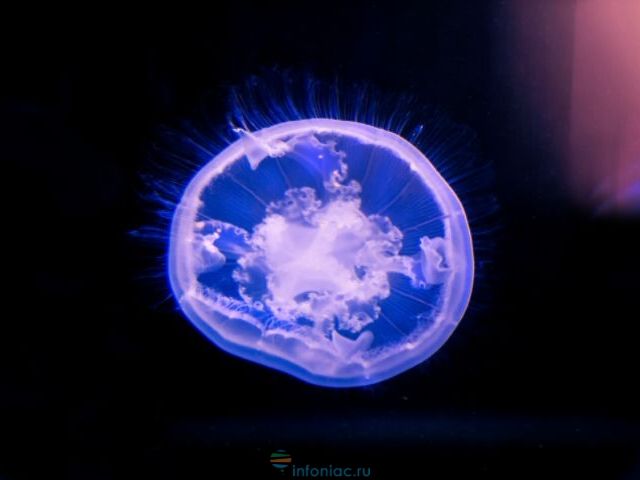
© Kylee Ewert/Getty Images
This jellyfish might not be on this list. Long-eared aurelia is very common, and if you have ever visited an aquarium or seen a jellyfish, you have most likely encountered this species.
These are transparent jellyfish measuring 25-40 cm in diameter, characterized by a pink or purple “flower” with four petals in the center. The long-eared aurelia uses tentacles to hunt carnivorous prey, mainly plankton and other small animals. The species only lives for a few months (maximum six).
They do not sting and cause mild irritation, and are on the list only because their danger is often exaggerated.
Where it lives: They live along the eastern coast of Northern Europe, the western Atlantic coast of North America, as well as in the Black Sea and the Mediterranean Sea.
Do all jellyfish sting?
There are several thousand species of jellyfish, and about 300,000 jellyfish are yet to be discovered.
Not all jellyfish cause burns. Of those that sting, only a small part are really dangerous to people.
Most burns occur while swimming, if you accidentally bump into a jellyfish in shallow water, step on it or parts of it ashore, or pick it up. Long-distance swimmers are most at risk.
Are jellyfish poisonous?
That depends on what you mean by “toxic”. Many jellyfish sting but are not life threatening. Some bites are very painful, but jellyfish are considered poisonous if they contain toxins that cause real and long-term harm.
One of the most dangerous are cubojellyfish living in the Indo-Pacific region, whose poison is extremely powerful. These jellyfish can sting in close proximity even if you haven't touched them, and their venom is life threatening.
How to avoid being bitten by a jellyfish?
Look out for signs on the beach that warn you about jellyfish.
Try not to touch jellyfish, even if you think they're not dangerous or they've been washed ashore and dead, as some jellyfish can still be poisonous.
If you see a jellyfish in the water, swim away from it, as jellyfish tend to swim in groups.
Wetsuits usually protect against jellyfish bites, although exposed skin such as hands, face and legs can be prone to burns.
Jellyfish bite symptoms
You may feel burning pain, itching, and rashes and blisters may appear.
Some people may experience nausea, vomiting, diarrhea, abdominal pain, numbness or tingling, and muscle cramps.
Allergic reactions to jellyfish are quite rare and can cause swelling, chest tightness, difficulty breathing, and anaphylactic reactions.
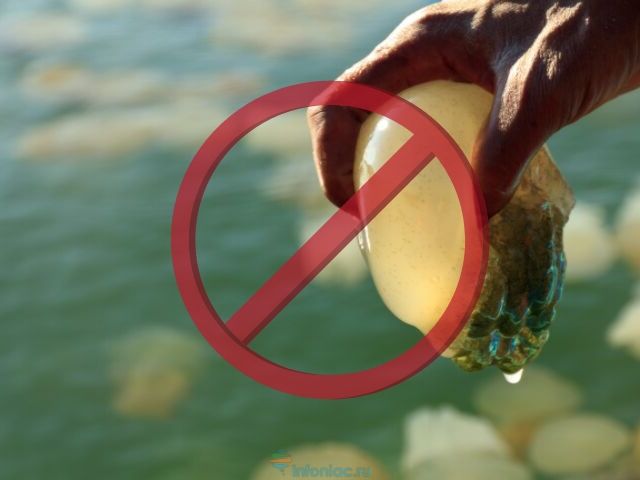
Can I urinate on a jellyfish bite?
Under no circumstances should you urinate on the site of a jellyfish bite. The contents of your bladder can range from acidic to alkaline. If your urine is alkaline, it will produce even more toxins and make your condition worse.
What to do if you get stung by a jellyfish
© Chainarongnakin/Getty Images
Remove any remaining tentacles as soon as possible without touching them with your bare hands. Use a stick, tweezers or gloves for this purpose. If you use clothes or towels, don't use them afterwards.
Rinse the area thoroughly with sea water to remove as many toxic cells as possible. Do not use fresh water, as this will only allow the venom of the remaining parts of the jellyfish to penetrate more.
After washing, soak or wash the bite area with vinegar for 30 seconds. This will prevent stinging cells from producing toxins.
Do not rub the burn site, as toxic cells may remain on the skin that you can damage and sting your hands.
After removing the tentacles, soak the affected area in hot water (around 40-45 C) for about 20 minutes. If you don't have a thermometer, make sure the water is hot but not scalding.
If an allergic reaction occurs, take an antihistamine and consult a doctor.
If eyes are affected, wash them with saline.
What don't you need to use?
You may have heard of folk remedies for a jellyfish bite. However, many of them have not been proven effective, and may cause more harm than good.
Do not use:
baking soda
tight bandage
urine
alcohol
fresh water