
 Unbelievable facts
2010 will be remembered not only for natural disasters and catastrophes, but also for scientific breakthroughs. The Chinese news portal Xinhuanews has identified three of the most important scientific discoveries that will change a person's life and worldview in the future.
Artificial life
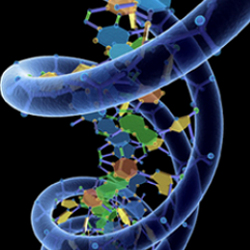
On May 20 last year, American scientist Craig Venter announced that he and his colleagues have created the first multiplying functioning cell controlled by a synthetic chromosome. This discovery could serve as proof of the principle that a chemically created genome can function in a host cell, creating a self-replicating cell, that is, artificial life . The researchers plan to create bacterial cells that will help accelerate the production of vaccines and dietary supplements, and will participate in the process of absorbing greenhouse gases.
$28 million and 15 years of work have been spent on research, and not everyone is happy with the results. It was suggested that the results of the study could be used to create chemical weapons, or they would lead to an environmental disaster. According to critics, this scientific achievement opens Pandora's box.
Others believe that the significance of the discovery is overestimated, that Venter did not create a new life form, but simply copied an existing genome. In any case, the Rubicon has already been crossed on this issue.
The Big Bang at the Hadron Collider
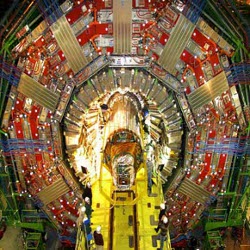 Last March, scientists from the European Organization for Nuclear Research collided beams of protons at a record energy level of 7 trillion electron volts. This is how a program aimed at finding answers to questions about the origin of the universe began. The experiment was conducted at a 4 billion euro hadron collider located in a 27-kilometer tunnel near Geneva.
Seven months later, when the collider recreated the Mini Big Bang, a new phase of research began. This time, instead of protons, scientists used lead ions. According to researchers, the matter that appears after the collision of ions is similar to that which existed at the dawn of the universe. The temperature of the subatomic nuclei that appeared during the experiment was a million times higher than the temperature of the solar core.
Taking into account the incredible results of the experiment, scientists are going to “search” for dark matter and Higgs particles (an elementary particle that exists only in theory so far).
Youngest black hole
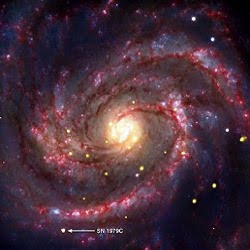 In mid-November last year, NASA officials announced that astronomers had discovered a black hole that is still considered the youngest in outer space. It is believed to be the remnant of the supernova SN 1979C, located in the M100 galaxy 50 million light years away. This supernova was first spotted in 1979.
This discovery provides scientists with an opportunity to observe the development of a black hole from an early stage. In addition, astronomers are hoping to understand how many black holes there are in our galaxy and beyond.
Researchers believe that the black hole is now 5 times the mass of the Sun, and the supernova that gave it “life” was 20 times larger than the Sun.