
 Unbelievable facts
Spanish scientists have found that when a person lies, the temperature of the tip of his nose rises.
They named the new phenomenon the “Pinocchio effect” after the famous character in the book “Pinocchio” by writer Carlo Collodi about a wooden man who wanted to become a real boy and whose nose was lengthened each a time when he lied.
The Pinocchio effect or the nose as a lie detector
Researchers at the University of Granada discovered a new effect when they observed volunteers using thermal images. At the same time, the tip of the participants' nose warmed up when they were anxious about lying.
Although a person can get rid of the effect, it will take a lot of mental stress to cool their nose.
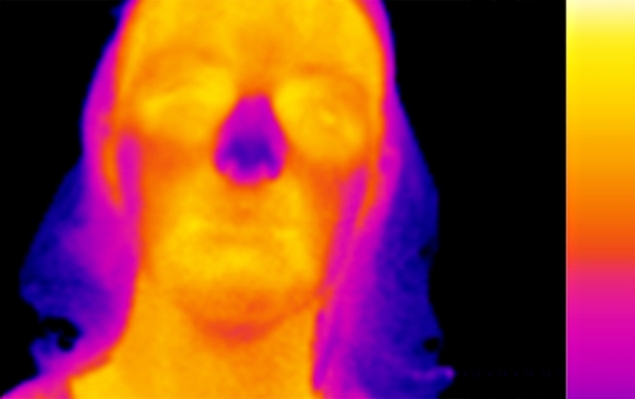
So why does this happen? Scientists have explained that when a person lies, it causes changes in the insular area of the brain, which regulates body temperature.
In addition, experts have found that the body temperature of some parts of the body changes depending on mood. In addition to the nose, changes are also observed in the body temperature of the orbital muscles of the inner corners of the eyes.

Using thermal images, you can also find out whether men and women experience sexual arousal and desire. Thermal imaging cameras show that when sexually aroused, the body temperature in the chest and genital area rises. The study also found that women and men get aroused at the same time, although women denied this fact.
Other signs of lying
Most people lie at least once or twice a day. However, you do not need to have a lie detector with you to determine that a person is deceiving you. Here are a few signs that can help you identify a liar:

Looks you in the eye a lot
Contrary to popular belief, a liar doesn't avoid eye contact. People tend to cut off eye contact and look at objects that are not moving to focus and remember. Liars may intend to maintain eye contact to appear more genuine.
Frequent breathing
A liar usually begins to breathe more often. At the same time, a series of short breaths and exhalations are replaced by one deep one, and the mouth may be too dry.
Voice changes
Changes in voice pitch, stuttering, coughing may indicate that a person is lying. Also, a liar may start speaking too fast or slower than usual.
Unusual body language
If a person often taps his foot, makes fussy movements with his hands, lifts his shoulders, turns away from you, touches your face (chin, nose) with his hands, in other words, acts restlessly – maybe he's hiding something or not saying something. You should also pay attention to redness, pallor, or frequent blinking.
Questionable claims
If a person makes statements that contradict each other, that are inconsistent and do not sound plausible, there is reason to suspect that person is lying.
Protects a lot
Sometimes, when a person lies, he becomes too defensive, refusing to answer questions.
Repetitions
If a person cheats, they start using the same words over and over, as they try to memorize phrases to persuade the other person.