
 Useful tips
School time is just around the corner, thousands of first-graders will soon cross the threshold of school for the first time, some will enter fifth grade, and some will reach the home stretch.
These days, not only students who are going to face a bright but difficult period in their lives are worried, but also their parents are worried about how to instill in a child a love for school, whether to interfere in his school affairs, how maintain warm relations in the fight against difficulties that arise along the way?
In this article, we will tell students how to take warm and vivid memories out of school life, how to overcome obstacles on the school journey, work on themselves and relax for fun, how not to lose yourself and how not to fight with your parents.
And we will tell parents how to come to a compromise, give up pressure on the child and build a trusting relationship with him — this is the key to his success and your pride.
Tips for students
For many students, school remains a sometimes difficult but pleasant period in life — first love, best friends, interesting teachers, and people remember this period with a sincere smile. However, sometimes it happens that a child does not get along with someone in the team, has difficulty waking up in the morning and is reluctant to attend classes.
If you're one of those kids, the following tips are for you, maybe some of them can help you take a fresh look at school or understand exactly what's bothering you and how you can fix it.
Perhaps it's not about the school itself, but that you don't have enough rest, you don't believe in yourself, or you have an unloved subject that ruins the whole experience. Don't despair — this can be changed for the better.
Keep track of your health

© Zurijeta
It's no secret that if a person has problems with sleeping, eating, posture due to constant sitting, he does not talk about a good mood, let alone a good study, and Speech — the student gets tired quickly, remembers information poorly, is constantly distracted by discomfort and cannot concentrate on work. If this is about you, it's time to think about your health. At first glance, this advice seems trivial and at the same time difficult to implement, but in fact it is very important.
First, take care of your diet — even if you can't eat three meals a day, be sure to have breakfast, drink tea and take snacks with you to school — fruits, nuts, sandwiches.
Sleep at least eight hours — this way your body will recover faster and better, but most importantly, go to bed before 22:00 and you will get enough sleep even when you get up early. Do your homework at the table, not in bed or on the sofa — this will insure you against back problems, which, especially at a young age, occur quickly and significantly affect the quality of life.
Reduce backpack weight

© Zurijeta
Undoubtedly, when choosing between a bag and a backpack, it is better to give preference to the second one, because it reduces the risk of back problems when worn daily, because the weight is distributed evenly. At the same time, if a child wears a backpack weighing several kilograms every day, this practice will not have a positive effect on his health. That is why if you understand that your backpack is too heavy for you, you need to reduce its weight.
First, don't take anything extra with you — non-school items will be waiting for you at home, but you'll notice how much lighter your backpack is.
Secondly, thick notebooks, for example, 96 sheets, allow you to store notes in one place for a long time and not lose them, but they weigh a lot — imagine how much your backpack will weigh if inside There will be five such notebooks.
Notebooks and smaller ones can be sewn or glued together later so as not to lose important notes, but the contents of your backpack will be much lighter.
If school management and teacher allow, and you also have an e-book, textbooks can be downloaded in electronic format and carry one e-book instead of carrying five each day -six textbooks with you. If there are a lot of textbooks and you are walking, this is a big load on your back.
To alleviate parental anxiety, it is worth clarifying that e-books, unlike phones, tablets and other gadgets, do not have the functions of installing games and accessing the Internet in its usual way understanding — you can go online to download another book, so don't worry — your child will not be distracted.
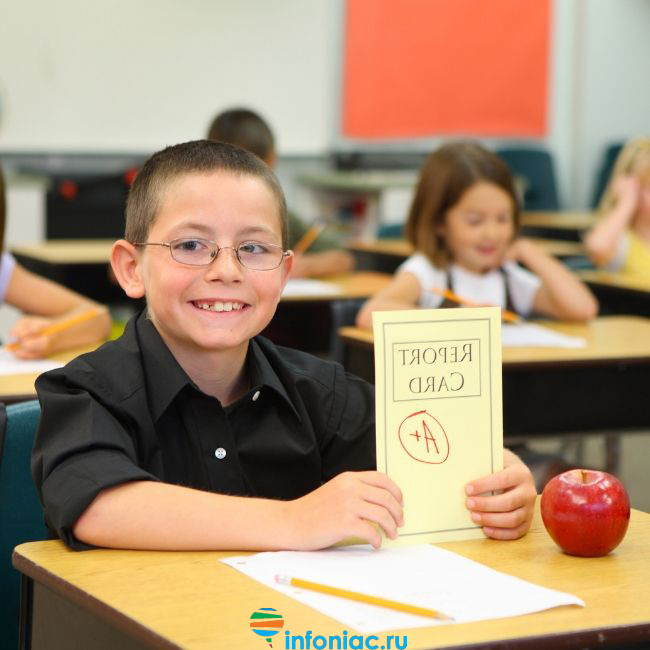
Repeat before bed and in the morning
© lewkmiller/Getty Images
Even if you think that you have already learned the poem properly and are well prepared for the test, after the break, you should still repeat the material two more times — just before going to bed. This is necessary for better memorization — in the evening, after repetition, you will most likely go to bed if you have repeated the material outside.
However, it is unlikely that you will continue to watch TV, read books, or have lively conversations with anyone else.
The absence of unnecessary information after repeating the material is the key to memorizing it.
In the morning, when you wake up, repeat it again — your brain, which has taken a break from yesterday, is not yet filled with unnecessary information, will quickly remember the necessary lines and rules.
Take breaks

© Zurijeta
Even excellent students and diligent students should sometimes take a break from rules, examples and tasks — moreover, this is simply necessary, otherwise a young body may not withstand constant stress. This does not mean that you should completely forget about studying, distracted by other things.
This means that between studying subjects and doing homework, you need to take short breaks of 30-40 minutes. It is worth remembering that a change of activity is not exactly a vacation, and the opinion that alternating literature with mathematics can provide you with a good rest is wrong.
During these breaks, when doing homework, you can draw, listen to music, dance, play, or just lie on the sofa. Sometimes allowing yourself to be distracted from work and do nothing is also good for the body.
The main thing is to return to work after such a vacation. It will be difficult, but if you overcome laziness and start doing homework and studying the subject again, it will be much easier for you than before you rest, because your brain will not be overstretched.
Too good is not good either

© Zurijeta
Everyone knows that if you start learning texts, tables, poems and information in advance and often, they will be remembered and you will succeed in class. However, it should be remembered that it is not worth overloading the brain with information, even if it is useful — nothing good will come of it.
If you have been studying a poem for hours and realize that you already know it very well and will be able to give a good grade, or realize that you have learned the rule or additional information and you will be able to brilliantly show your knowledge, but at the same time you are worried that you did not do enough — forget about your worries.
If you understand that you simply can't learn more today, your thoughts are confused by too much information, your language becomes braided and lines change, although half an hour ago everything was great — this a bell that signals that it's time to pause or stop altogether.
If you have read and learned the material well enough before, it will not get away from you.
Process and visualize material

© Zurijeta
There are different people — some are better at memorizing by ear, some by writing information on paper, and some by presenting it in pictures.
If you're the first type and you're better at listening, download audiobooks, read rules, poems and information out loud.
If you are the second type, then when learning a poem, write it down several times on paper. Important — do not print, but write. This way you will not only remember the information that is relevant at the moment, but also easily remember it later, even after a while.
If you're the third type, don't be afraid to take the time to sort out and visualize the information you need. First, it will give you the opportunity to understand the material more deeply and determine whether its meaning has reached you. Secondly, many people remember information from vivid pictures — for example, by sketching scenes or words from texts and poems. Talk to parents

© Valerii Honcharuk
If you are already in high school, you may have had a problem at least once when you and your parents misunderstood, demanded too much, or vice versa, absolutely ignored your school life.
Remember that this should not be the case, and perhaps your parents did not do this intentionally, but there was a lack of communication with you. Feel free to go to your parents after school, tell them how your school day was, and ask them how they are doing at work or at home.
Most parents will respond to such an interest in their day's success and a desire to share their experiences — at least they will understand that communication with them is important to you, and you would like them to reciprocate.
Remember that parents, although they love you more than anything else in the world, also sometimes get tired and overlook important things. Don't be mad at them — come over, hug them and suggest going out together on weekends, like going to the movies. You will soon notice how your relationship will change for the better.
Do your homework on time

© ClaudioValdes/Getty Images
Surely many of us have at least once in our lives faced a situation where there is a catastrophic shortage of time and you do not have time to do anything.
Many people have the same problem at school, and often this is not because you don't really have enough time, but because you don't properly allocate it — you're distracted by phone, TV and much more, as a result, you do not have time to do your homework efficiently or have a good rest.
One of the most important time-related tips for students is to do their homework on time. This not only disciplines and teaches you to take responsibility, but also helps you save time.
Doing your homework on time for a weekend, such as Friday or Saturday, you leave yourself a lot of free time, do not get distracted by anything and ensure a relaxing weekend without an unpleasant feeling that you have not finished something and you still have to work.
Relax during breaks
It would seem that this is too banal advice, and all children even without it rest during breaks. However, many people forget that spending time on social networks or playing games on the phone at your desk is not a good rest that will help you stay alert and energetic all day long.
In order to really relax at recess, go out to the courtyard, if you have one, get some fresh air, chat with friends, and have a snack. If it's warm outside, late spring or early autumn, leave the classroom and ask your teacher to ventilate the room. Remember that both body and mind should rest.
You can do exercises without disturbing anyone. Stretch your legs, arms and back. Of course, there are physical education classes at school, but they are not held every day, and not everyone attends them. You can do a few sit-ups, wave your arms, turn your feet and hands several times — in general, stretch your body so that it does not suffer from sitting in a hard chair for a long time.
Learn for yourself

© Bronwyn8/Getty Images
One of the main keys to successful study not only at school, but also at the university and beyond is the realization that you need training and education, and you should study only for yourself .
After all, self-development is not created “for show”, but so that you can improve knowledge and skills that are useful for life.
Remember that in a difficult situation, parents or teachers will not always come to your aid, and you will have to apply your previous knowledge yourself. And you can do this only if you study not to avoid being scolded at home, but so that you can remember important knowledge and skills that may be useful in the future.
Also read: 15 interesting facts you didn't know about Japanese schools
The right advice for students Don
't be afraid to ask questions

© Robert Kneschke
Many people, even in adulthood, are afraid to ask unnecessary questions, not to mention teenagers, who often care about what others think about them. Children, for example, do not hesitate to ask questions, they are interested in everything, and this is very important, because this is how they get to know themselves, the world, and draw some conclusions about how everything works. And with age, they stop asking questions — they are afraid to ask too much or look stupid.
However, this approach to life is wrong — you should not be afraid to look stupid, because asking questions, getting to the point, understanding the material, learning new things is not a shame, but, on the contrary, very important.
Don't be afraid to ask teachers or parents if you don't understand or are interested — an explanation or answer to a question will help you understand yourself, understand a topic, or even change your way of thinking. Who knows?
Translate a text or poem
If you once learned a poem or text in a foreign language, but could not remember it, not understanding why it is so difficult, one simple life hack will help you.
Instead of trying to remember the sound of words, translate the entire poem or text so you know both the meaning of the words and the general meaning of the text, paragraph or stanza, sometimes even the line.
Knowing the translation and meaning of the text will make it much easier for you to remember what you're talking about. This will help you focus on the information you are transmitting and you, for example, if you are retelling the test not verbatim, will be able to improvise if you forget previously memorized words.
Don't be afraid to ask for help

© fasphotographic/Getty Images
School years for many teenagers are sometimes overshadowed by internal feelings, problems at school or with peers, and a teenager does not always have the strength to admit this to anyone. Maybe he has trouble making friends, doesn't trust adults, or he just doesn't want to appear weak.
However, it is worth remembering that emotions and asking for help in a difficult situation are completely normal, and there is nothing to be ashamed of.
Often a person cannot cope with difficulties on his own, in which case he has every right to report this and ask for help from more competent people. If you understand that you are not coping with a problem yourself, ask your parents or teacher for advice and ask how you can get out of this situation.
Don't just read, watch

© Alena Ozerova
In most schools, during the summer, students are asked to read certain books that they will have to complete during the year. Often this list is quite long, and not all students like it, because everyone has different tastes. You can't oppose the program, but what if it's very difficult to remember what is happening in a work that is not exciting?
The solution is simple — many of the works of the school curriculum have been made into films or TV shows, and often quite interesting and memorable. Watching them along with reading the work will not only allow you to better remember what is happening in the work, but will also help you analyze and dive deeper into its meaning and reveal it from a new perspective.
Perhaps, when you look at the piece with a fresh look, you will realize that it is much more interesting than you thought before.
Don't stop at the school curriculum

© Goran Bogicevic
Sometimes you can learn interesting things from the school curriculum; it can encourage you to learn more information.
However, the school curriculum cannot cover all important aspects of life and explain to you exactly how our world works, because a few hours a week is not enough to draw conclusions about different physical phenomena, mathematical terms, or the human body.
But you can do it yourself when you're not at school. To fully develop, learn to live and explore the world, you should not focus only on the school curriculum — study topics you are interested in on your own or with friends and parents.
Read encyclopedias, watch movies, ask questions. It is impossible to know everything, but it is possible to know a lot — self-education in your spare time will bring you closer to this.
Give in to your parents sometimes
Many teenagers often have a period when they feel like the whole world—including their parents—is against them. Most often, with age or when a teenager comes into life, the right person who proves to him that there is always someone to talk to and who to ask for help. But during this period of life, many students do not understand their parents, do something to spite them, are rude and close themselves.
You can't blame them for this — they really often face misunderstanding, which causes a response and not always a pleasant reaction.
In this situation, both sides must take a step towards reconciliation. Parents must understand that the child is in a difficult situation and needs support. And students should be a little less categorical towards their parents — do not rush to dare and do anything to spite. Understand the situation together and come to a compromise.
Tips for parents of students
Now let's move on to advice for parents of schoolchildren of any age, because family disagreements are often not due to the child's fault, but due to misunderstanding and carelessness of parents. Perhaps some of these tips will open your eyes to the characteristics of a student's behavior that you did not pay attention to before, or help you build a trusting relationship with him.
Don't exaggerate or dramatize

©
andreaortizg/Getty Images
Undoubtedly, a bad mark in the diary is unpleasant and to some extent spoils the overall picture, especially if the child is trying hard and studying well.
You can ask him why this happened — listen to the teacher's version and always the child's version — his words also matter. Help him correct the marks and advise him on how to avoid this situation next time — no more.
Do not dramatize, do not blame your child for failure, do not instill in your child the idea that ideal grades are of paramount importance in life — this is not so. No marks can be more important than the health of the child and his loved ones, and cannot be more important than warm, trusting relationships in the family.
At the school stage, they are important for maintaining responsibility and for monitoring learning outcomes, although assessments do not always show the child's real level of knowledge.
A child should understand why he needs to study hard and what poor grades lead to, but do not forget that if you have a choice between health, strong family relationships and ideal grades, you should choose the first two options. The marks will be forgotten, but childhood experiences will not.
Teach your child responsibility and independence

© Yuganov Konstantin
Many parents believe that they should not teach their child basic things — a teacher will do it for them. This opinion is erroneous and often leads not only to distrust between children and parents, but also to the child's problematic behavior at school. And do not forget that there are many children in the class, and the teacher is alone, and he does not always have the opportunity to give your child as much attention as you think he needs.
Before sending your child to school, make sure that he knows how to tie shoelaces himself, has no problems communicating with others, if the child is healthy, he speaks clearly and can report that he needs and what he cares about.
Also, teach your child responsibility. Explain to him that it is important to be able to be responsible for your actions — hurt or unpleasant someone, rude, pushed — you should apologize. If a weak person is offended, intercede, inform the teacher about it, if a conflict arises, if possible, solve it with words, if you promise, you must try to keep your promise.
Children are not always able to express themselves very clearly, but the idea that words must be used first will make him much more aware in the future.
Talk to your child

©
LightfieldStudios/Getty Images Pro
If you notice unusual behavior in a child who has not been observed before, if he becomes withdrawn, does not tell you anything and avoids communication at all, this is not a reason to think that it will pass by itself, this is a cause for alarm.
This does not mean that you should ask a student or his friends for details of his life, monitor him. This means that you need to start communicating with him — unobtrusively at first.
Ask him how he's doing, how his day went. Spend more time together — go for a walk, go to the movies, go to the theater, play sports together, arrange cozy evenings at home. Show your child that they can trust you and that you are interested in helping them. Show him that it's okay to ask for help and that you won't judge him no matter what happens.
In the lives of most schoolchildren, and especially teenagers, many things happen for the first time — growing up, the first two, the first fight, the first disagreements with the teacher, the first love in school — and often the child does not know how to react to them, how to solve problems, because he has never encountered them before. And, most likely, he is afraid to tell you about them, expecting a negative reaction.
In such a situation, you need to be persistent, but not violate the student's personal boundaries — find out carefully what happened. If your child has opened up to you, let him know that you will help solve his problem, not make it worse. Talk to your child and you won't miss anything important.
Read also: The world's 15 most dangerous ways to school
For parents before school
Remember personal boundaries

© Creativa Images
No matter how surprising and unusual it may sound to you, a schoolboy is a little person with his own feelings, experiences and thoughts. And he has the right to personal space.
If he doesn't have his own room because you have a small apartment or your children share a room, make sure everyone has their own workspace — whether it's a personal desk or part of a large desk so that children can do their homework at any time, and can arrange their part any way they want.
Also, teach children to knock and knock on their own before entering. This will teach your child to respect both their own and your personal space. You should not break into your child's room, especially when he is doing homework, drawing, writing a poem — this can not only confuse him, but also embarrass him, because children often do not like when someone is standing above their souls, reading an unfinished poem, or looking at an unfinished drawing.
In addition, if your child has friends or first love at school, give him time and he will tell you everything himself. You should not interrogate him — this can frighten him off.
Remember that all people tend to consider next steps, and if a teenager has changed something at school, but you have not noticed a worsening in his condition, then you should not embarrass him with questions yet. If these changes are positive, sooner or later he will tell you everything himself.
Don't leave in a difficult situation
© Stockbroker
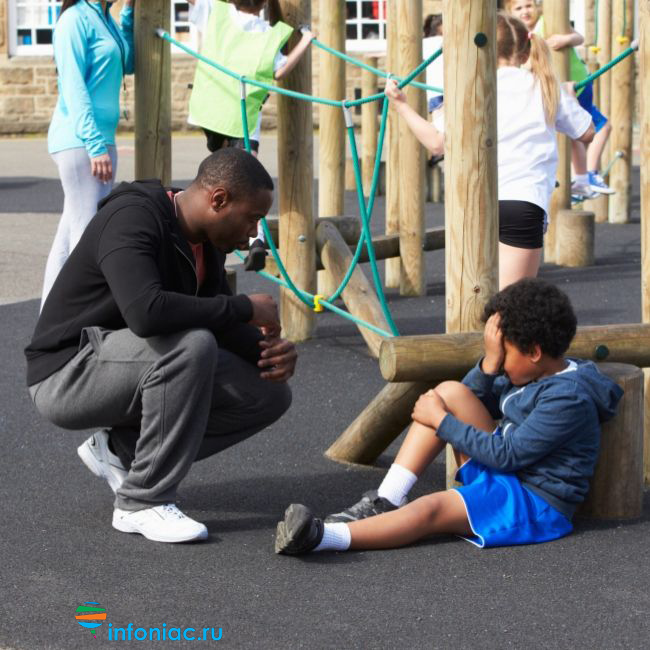
School is not a second home for all children, with friends and vivid memories. Many people do not have warm and trusting relationships in the team, many are bullied and insulted at school by high students or simply stronger classmates. If you find out that your child has problems at school – don't force him to solve the problem on his own. Students are not always able to cope without the help of teachers and parents.
Leaving him alone with his problems, you risk losing not only his trust, but also significantly worsening your child's health.
In case of bullying or other problems at school, talk to your child. If possible, if these problems have already had a detrimental effect on him, take your child to a good psychologist – communication with a specialist will not harm him. Talk to the teacher yourself, with the parents of the offenders, make sure that they influence the offenders and inform them that such actions have negative consequences.
If parents and teachers don't want to take your point of view, change schools. This can also cause stress for the child, but it will cause him to recover faster than from bullying. Never leave your child alone with problems – he may not be able to cope on his own. And most importantly, trust him.
Grow up

©
Lum3n.com/Pexels
We all live in the 21st century, which means that progress does not stand still. School curricula are already very different from what they were twenty years ago, but sometimes they are not modern enough. The language is developing and changing, and there are new proofs in mathematics, new experiments and discoveries in physics and chemistry, and new technologies in the field of computer science.
Of course, it is impossible to keep track of everyone, but you can try to keep up with the times, especially if you are raising a new generation. If you remember something from the school curriculum and can, in case of a problem, guide your child to the right solution of the problem or can explain why a word is spelled this way and not another, this is great. However, in the age of modern technology, we should not limit ourselves to school knowledge gained many years ago.
If you want your child to study well and know a lot, set an example for him. Study school topics with him, help him study additional topics on topics of interest to him. The key word is “help” rather than “do for him.”
Watch together programs about scientific discoveries, animals and many other interesting things. Read educational magazines about science and travel. This will not only help your child learn the school curriculum more easily, but also bring you closer together — because you will understand what he is learning and how to help him with it.
Remember the child's abilities

© Sunny Studio
Undoubtedly, for most parents, their children are the best in the world. However, we should not forget that children are living people who also have limits and activities that they are not interested in and will never be interested in.
Forcing them to do things they are not interested in is not the best solution if you want to preserve your child's health and warm relations between you.
If your child doesn't like math, it's not necessary to send him to a math-oriented school. If you don't like drawing, don't send him to art school. Ask him what he likes and what he'd like to try.
If he likes foreign languages, send him to a language class. Playing guitar is playing music. But if your son or daughter is not interested in violins or flutes, he will not become a musician, and your desire to make him something he will never be will only result in a bad attitude, misunderstanding and mistrust in the future.
In addition, if he goes to extra classes or workouts, do not load the child so that he does not have even five minutes a day to himself.
Make sure that he has free at least a couple of days a week after school in front of all clubs and sections so that he can hang out with friends, read literature he is interested in, watch TV, after all. You should not take away your child's childhood — everything should be in moderation.
Tips for parents of younger students
Help, don't do together
Sometimes a child in elementary school cannot cope with his homework on his own — he was inattentive in class, listened, or maybe listened carefully, but did not understand everything.
In this case, if he asks for help, help him — even if you don't remember the material from your time at school, find it on the Internet or ask knowledgeable people if there are any nearby, It won't be difficult.
The main thing is to help, and do not do the task for him. Explain the topic again, determine what exactly is required in the task and explain to the child in simpler words. Don't raise your voice if your child doesn't understand the first time. Thus, by helping him come to an answer on his own, you will develop his independence and ability to analyze.
Read together

©
JackF/Getty Images
If you notice that your child is reluctant to read material given to him at school, read it with him. In the evening, for example, before going to bed, sit down and read aloud together. Some can be read by you, and some by a child. Alternatively, you can simply read books to your child at night.
Thus, he will associate reading works given at school not with obligation and homework, but with a pleasant time with his family, with comfort and imaginary characters, that you can revive together.
Watch together

© DAPA Images
This advice is inextricably linked to the previous one, because many of the works and fairy tales that children play in elementary school have been made wonderful films and very interesting cartoons that will make the work is more colorful and memorable, and will help the child fully imagine the characters described in the book.
If you send a student to watch a movie based on a school work, it is unlikely that he will wait patiently until the end and watch it. If you grab popcorn, cookies and something to drink and sit down and watch together in the evening, it's bound to get sucked in.
And if after watching you retell the content of the film together and ask what the child understood, he will definitely remember this joint viewing.
Talk to the teacher
Students, especially elementary school students, may misunderstand teachers, mix things up, or simply forget about the information they need to give their parents. In addition, neither they nor parents are able to fully conclude about academic performance.
In this case, parents should talk to their children's teacher in person from time to time.
This is necessary in order to keep abreast of all important events in the class, learn firsthand about the child's results and progress in learning, consult on issues of interest, and just be on Connecting with someone who spends a lot of time with your child and can alert you if they find any negative changes in their behavior or mood.
Take part in class life

©
AlotOfPeople/Getty Images
Many parents think that organizing class activities and trips is easy, so other parents can do it themselves and without help. However, this opinion has nothing to do with the real situation.
Organizing a quality event or a trip to nature is a very laborious process.
That is why, in order not to stand aside, but to be able to learn the nuances of preparation, possible changes, and contribute to your child's school life, join parents, who are responsible for classroom activity.
During the discussion, be restrained, listen to options, and find compromises. Keeping up to date with the latest class events and participating in discussions, and helping organize is a great opportunity to get closer not only to your child, but also to his friends' parents.
Be an example

© Yuganov Konstantin
Most children, learning the basics of independent life, repeat the actions of their parents — they learn how they communicate with each other and with others, ways to solve problems, and much more another one.
That is why if you want your child to grow up to be independent, responsible and understanding, do not do it for him, but do it together, treat each other with respect.
Show your child how important it is to study at any age — read with him, watch useful programs. Show him how important it is to maintain your health — walk with him in the fresh air, run, play football, ride a bike. If you force your son or daughter to exercise, while occasionally leaving home, the result will not immediately meet your expectations.
The child goes to first grade
Sometimes change the situation

© Valerii Honcharuk
If you notice that your child's mood has deteriorated significantly for no particular reason and later found out that the child is simply tired — from the environment, study, environment — do not consider that fatigue will go away by itself and the child will cope without your help. This is not always the case.
Try a change of scenery — take your child to nature, take a walk together by the river or by the lake, and if possible, take a vacation. If there is a nature reserve near your home, take your child there, show him the beauty of nature, and invite his friends with you. A change of scenery often gives people strength and improves their mood, especially if they are close to them at this time.
Connect with other students' parents

© Odua Images
Your child's school and classroom, if you're lucky, is where they'll spend most of their youth.
This is the place where he'll meet his first love, possibly loyal friends for the rest of his life. Therefore, your child's class, if he has a good relationship with his teacher and classmates, should be treated accordingly — with warmth and respect.
If your child is happy to chat with classmates, talking to their parents is a great idea. First, if you have problems in the classroom, you, knowing your parents, will be able to solve the problem or come to a compromise. Secondly, maybe the parents of your child's classmates will become your friends for years to come, and this is undoubtedly important.
Don't expect too much
Great things always start small, and we should never forget that.
Remember that your child won't achieve outstanding results on the first day of school. Give him time, and the results will soon be visible, because in order to reach certain heights, you need constant practice and support.
Plus, even if you think your child is the smartest and most capable child in the whole world, he's also human, and he might not be able to do things the way you want them to. Some people have their limits, some are tired of working. Believe in your child, support him, but do not immediately demand outstanding discoveries from him, do not put pressure on him, and understand failures. With this approach, a positive result will not be long in coming.
Stay close

© Valerii Honcharuk
This tip is probably the most important in the entire article. Even if your child is independent and, as you think, independent, do not let his development take its course.
Children, especially those who are faced with school grades, failures, successes, and a new environment for the first time, need parental warmth, even if they don't show it.
Take an interest in his achievements, his attempts, show that his friends are your friends, that he can trust you, and that you can also have fun and productive time with you. Even if you do not want to impose excessive care on your child and are afraid that it will close, stay close. If he is in a bad mood and you have determined how to solve the problem, but the child is still worried about something, and you do not want to pressure him with questions and care, hug him silently. Such a hug can easily replace any words.