
 Science
Man has invented and will always invent. But how useful are inventors doing? Sometimes, looking at human activity in this field over the past decades, there is a feeling of disappointment.
Indeed, it seems like the best minds on our planet are just inventing the latest lethal weapons; going out of their way to create robot soldiers; at best — are looking for new ways to create cryptocurrencies.
Of course, the above activities, which spend unimaginable resources comparable to the budgets of many countries, have the right to life. But what is the social value of such inventions? What is the good goal?
However, don't rush to lose faith in humanity! We bring to your attention ten useful inventions that, although they did not make their inventors fabulously rich and famous, helped make this world a better and a little kinder.
Good deeds
Dolphin tail prosthesis

For a female dolphin named Winter (that is, Winter), life since childhood was not sugar. When she was only about three months old, she became entangled in crab nets. She was rescued from the trap by fishermen, who nicknamed the dolphin Winter (this happened in winter).
Winter was assigned to a marine veterinary hospital for rescued marine animals. However, it was too late — the nets disrupted blood circulation in the caudal region, which caused Winter to lose not only her caudal fin, but also two vertebrae.

This is usually a fatal injury for any dolphin. However, Winter not only went out in a new aquarium house, but was also taught to swim again, despite the absence of tail fins. At the same time, the dolphin needed to learn new ones with the remnant of its tail — sideways, like a shark, as opposed to its more familiar way of moving up and down.
However, the unnatural movements worsened Winter's health as she began to develop scoliosis. The story of a disabled dolphin was heard on the radio by a specialist at an American orthopedic clinic, a prosthetist named Kevin Carroll.
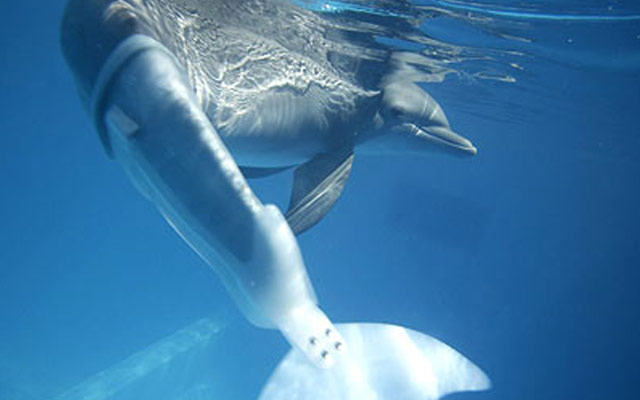
Kevin managed to attract the interest of the dolphin and his colleague, a prosthetist named Dan Strzempka (who, by the way, experienced amputation himself). The men offered their free help in creating a tail prosthesis for Winter.
Initially, marine aquarium workers were suspicious of the men's initiative, but later accepted them to their team. The prosthetists were also introduced to a team of coaches who taught Winter how to swim again.

After trying several options, experts have developed the most suitable prosthesis for Winter — a new artificial tail made of silicone and plastic. Also, a special gel was developed to mitigate the friction that occurred when the prosthesis came into contact with the dolphin's body.
This invention helped not only the dolphin: everything that happened prompted American director Charles Martin Smith to shoot the film “A Dolphin Story”. This movie, in turn, inspired many disabled people around the world (including children).
Dolphin rescuers Kevin Carroll and Dan Strzempka continued their activities at the orthopedic clinic. But people all over the world began to use the Winter gel for their prostheses specifically for their prostheses.
Spoon for people with limb tremors

While working on his dissertation, engineer Anupam Patak simultaneously collaborated with the
United States Military Research Laboratory. He was looking for ways to eliminate gun shaking in the hands of fleeing soldiers.
Patak managed to create a small-sized technical device that dampened vibration when driving. However, the engineer came to the idea that his invention could have potential benefits for another group of people — patients suffering from Parkinson's disease who have tremors in the extremities.
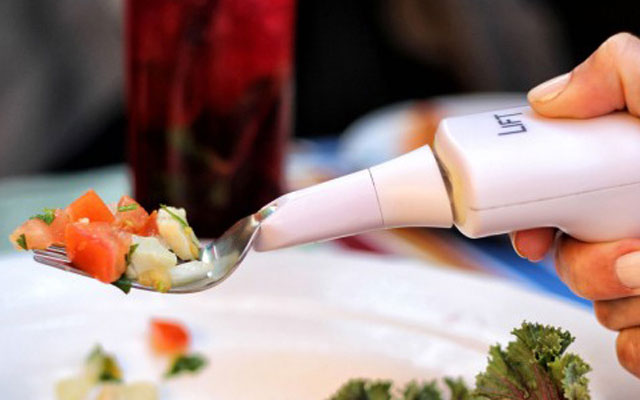
For such people, even the simple process of eating is a huge problem: their hands are so shaky that they can't even hold a spoon to their mouths so as not to splash or scatter it content.
Patak finalized his invention and soon his technology for making special spoons that could be used for hand tremors appeared on the market. Patients with severe symptoms of Parkinson's disease are now able to eat on their own.
Liftware Steady smart spoons, which use Pataca's hand tremor technology, are now on sale. These spoons can dampen up to 70 percent of vibrations, allowing most people with hand tremors to eat without any problems.
This technology was bought by Google, which even managed to reduce the cent on finished products. In addition, the company has created a second product, the Liftware Level spoon, which allows people with limited hand and hand mobility to eat.
This works in such a way that the spoon blade itself constantly maintains a horizontal position (of course, food up), regardless of how unpredictable hand movements may be a person.
Thousands of people around the world suffering from various diseases have already appreciated the enormous benefits of this invention. Now these people can eat on their own, are not ashamed of their ailments, feel more confident and enjoy eating.
Turtle rail tunnels
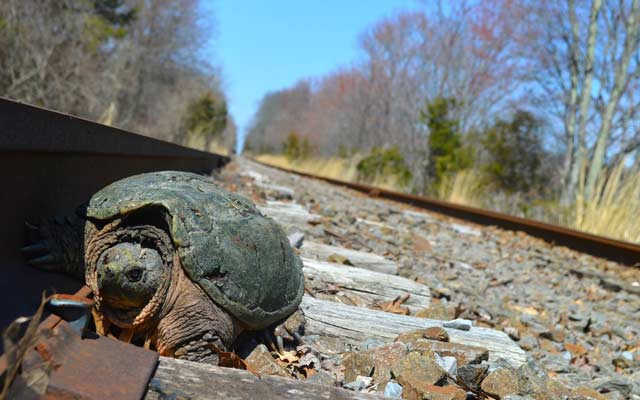
What should you expect if a Japanese high-speed train intersects with a slow crawling turtle? Until recently, nothing good for the turtle or the train.
Not far from the Japanese city of Kobe, located off the coast on Honshu Island, turtles crossing railway tracks were sometimes trapped between rails, unable to get out on your own.
They could crawl between the sleepers until they were run over by a train, or until they got into a turnout at the junction of railway tracks, where they also ended their lives being crushed at translating arrows.
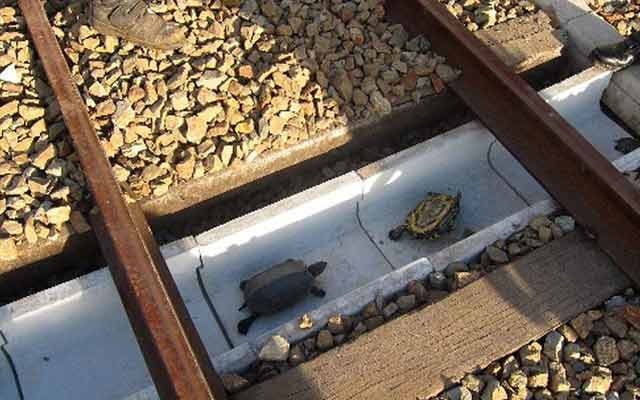
This caused problems not only for turtles, but also for trains and passengers; it is known that in the period from 2012 to 2013, turtles were caused by 13 turtles on the above-mentioned section of the railway train service disruptions.
To end this “confrontation” between turtles and trains, Japan's railway company West Japan Railway Co. came up with a fairly simple solution, with preliminary support Suma Aqualife Park Aquarium in Kobe.
Read also: 10 animals and plants that people saved from extinction
Engineers have developed the so-called turtle tunnel, which is a ditch with concreted walls that runs right under the switch point (where a tapering rail is adjacent to frame rail).
If railway personnel find turtles trapped in the ditch while inspecting, they remove them from there and hand them over to the aquarium. Employees of the railway company have already noted the effectiveness of this solution, recommending it for all railways that have a similar problem.
New inventions
Edible packaging for beer and other beverages
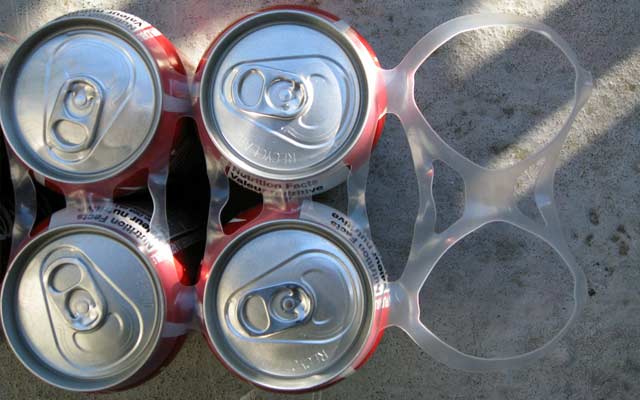
Plastic and polyethylene packaging pose a serious threat to our planet both on land and in the ocean. A real rotting island, consisting of 80,000 tons of decaying plastic, floats in the oceans.
This island is three times the size of France, posing a mortal threat to the world of marine life that comes across it. The island is a trap for them, in which they can die in the garbage.
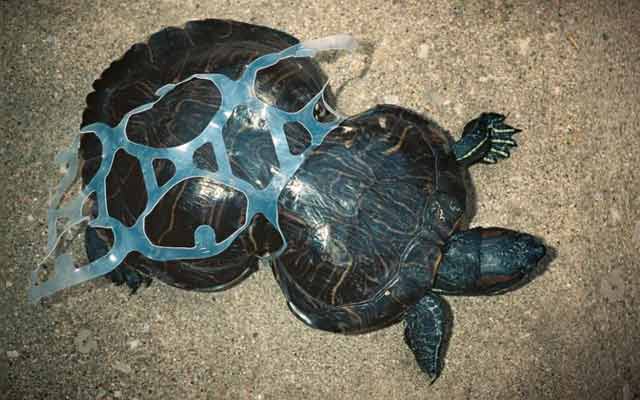
So-called Six-Pack rings packaging (ring-shaped packaging for six cans of cola, beer or other drinks) makes up a small part of this floating waste. However, it is one of the most dangerous and even lethal traps for marine life that fall into it.
Consumers around the world have long been warned to cut this package into pieces before disposal, but we don't always follow these warnings. And then engineers came up with a biodegradable Six-Pack rings package.
This type of packaging is the best guarantee that marine life will not become victims of human irresponsibility. The packaging consists of environmentally friendly six rings made from waste (wheat and barley) from certain industries. That is why it is biochemically degradable.
Even if such garbage does not end up for processing by special enterprises, it, once in the ground or in water, can decompose on its own within a few weeks (unlike plastic); the packaging will not harm animals even if they swallow it, as it is edible.
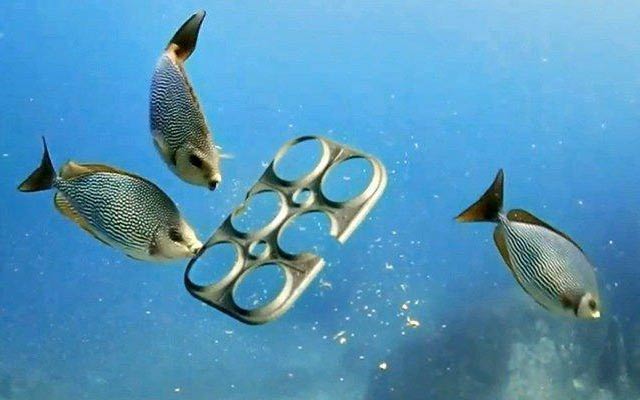
The commercial debut of this package took place in 2018. The American company Saltwater Brewery, Florida, has begun packing its beer jars in biodegradable, edible Six-Pack rings.
Already, by mid-2018, E6PR, which produces such packaging, is working to improve it and increase production. It is planned to supply Six-Pack rings packaging to all breweries that wish to purchase it.
PARO therapeutic robot
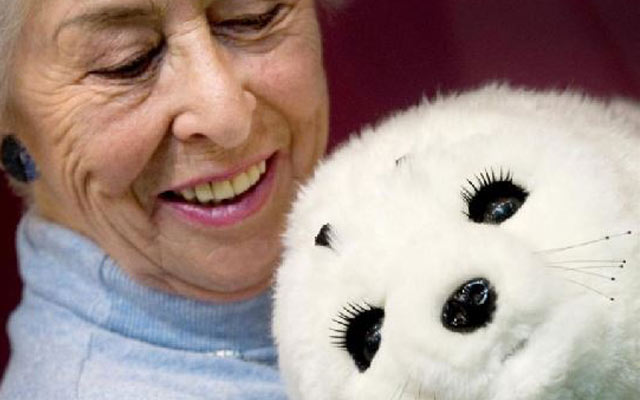
PARO, a therapeutic robot that looks like a baby Navy SEAL, became surprisingly well known thanks to American actor and comedian Aziz Ansari, appearing in his popular project — Netflix television series Jack of All Trades.
PARO is a creation of Japanese engineers. This robot is widely used in treatment and rehabilitation centers for the elderly and in hospitals, as PARO improves patients' health due to the effect of so-called zootherapy (animal therapy or pet therapy).
As befits a trained animal that is part of this type of treatment, PARO responds to the user's voice and movements, responding to them with its own voice and the movements of the fur seal.
PARO, unlike real animals, does not need food, sleep or bathing. It does not have patient favorites; it will not cause allergies and can be used even with patients whose unpredictable behavior may put their own health at risk during pet therapy with real animals.
As a result of one study conducted at a rehabilitation center for the elderly, it was found that those patients who interacted with PARO for one hour twice a week (at within 12 weeks), they almost stopped complaining about loneliness during the study period.
For some people, using robots instead of animals for animal therapy has caused a negative reaction. Opponents of this method of therapy began to say that it is faceless and devoid of spiritual warmth. However, experts do not agree with this.
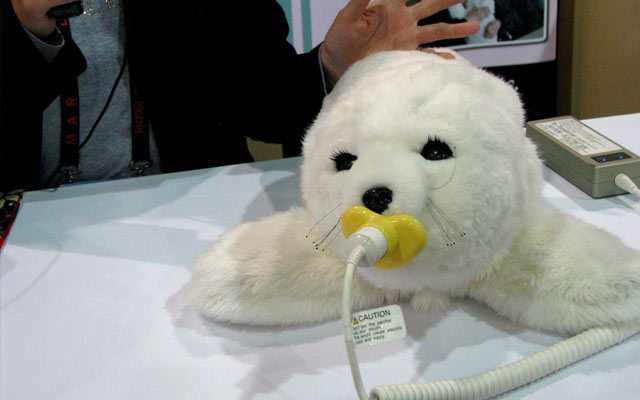
They believe that patients get enough live warmth by communicating with each other and the staff of clinics and centers. The arguments include the results of another study, according to which patients with dementia, after sessions with PARO, become less anxious, more sociable, and even help others patients.
Pugedon equipment for recycling and feeding stray animals
The Turkish company Pugedon has set itself the goal of solving two problems with one blow: to advertise the processing of waste (used products) for their secondary production and feed stray cats and dogs.

To this end, the company's engineers have developed a special Pugedon container machine, which is equipment the size of a large refrigerator. This equipment is installed on the streets and is powered by solar panels.
When someone puts a plastic bottle into one of the holes in the machine, a mechanism is triggered that supplies food for stray animals into a special container. There is also a container with water in this container.
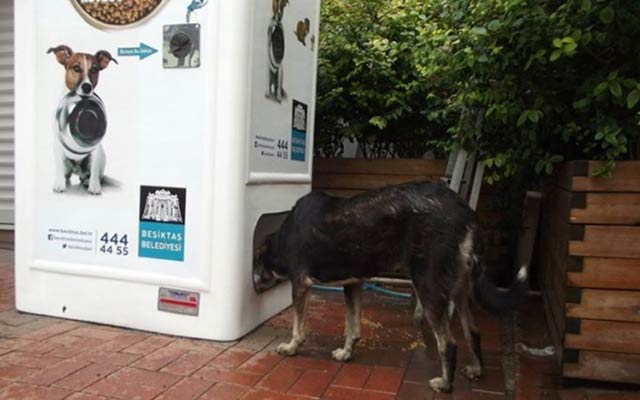
Anyone passing by can empty their plastic bottle before throwing it away by pouring the remaining water into another special hole in the machine. Water is stored in a special container and then fed into another container from which the same stray animals can drink it.
This project makes a profit from the sale of secondary materials crushed into small particles. Pugedon containers were installed on the streets of Istanbul, Turkey, where, according to various estimates, more than 150,000 stray cats and dogs live.
The inventor of the machine, Engin Gargin, said that he was inspired to create this container by the idea of giving city residents the opportunity to feed stray animals for free. And at the same time, improve the situation with waste processing in Turkey.
One of the concerns associated with the implementation of this project was that entire flocks of hungry dogs could accumulate near these mechanized containers. However, as the operation of this equipment showed, this fear was in vain.
Read also: 20 good stories of 2016 that will restore your faith in humanity
Pugedon containers have also been installed on the streets of some cities in India. However, they were placed there in areas where people walk their pets. This was done in the hope that dog owners would be more willing to participate in this project, as they would have more sympathy for stray animals and more desire to feed them.
Useful inventions
Upsee harness for children with cerebral palsy
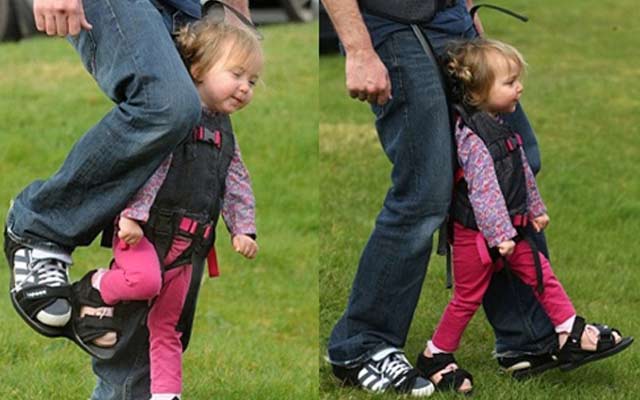
Debbie Elnatan, an Israeli mother of a boy suffering from cerebral palsy (cerebral palsy), set out to see her child walk. This is despite the fact that doctors unanimously told Debbie that her two-year-old son would never be able to move.
But even despite the categorical nature of the doctors, Eltanan continued to study with her son, hoping to teach him how to move, although it seemed like an impossible task. And then the woman came up with the idea to create a wonderful device.
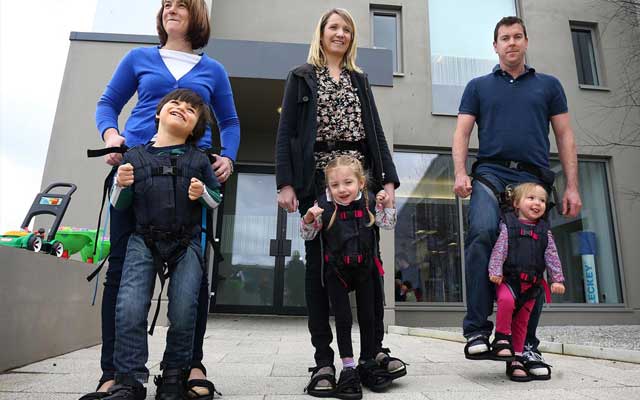
This is a kind of harness, with the help of which the legs of a sick child are literally fastened to the legs of an adult. This allows the child not only to maintain a horizontal body position, but also makes it possible to take small steps with the support of an adult.
This is how, through the pain, suffering and disappointment of a mother who really wanted her son to be able to walk, this invention, called Upsee harness, was born.
An early version of this device has already been tested in 20 families raising children with certain diseases that limit their ability to move. And the results of these tests inspire the inventor.
Parents and children who started using a device called Upsee harness significantly expanded the range of activities they could do earlier. It is quite obvious that children also love this invention.
The Upsee harness was mass-produced by the Irish company Leckey. Thanks to this seemingly simple invention, children with reduced mobility around the world got a chance to improve their lives.
Embrace Infant Warmer Sleeping Bags

Harsh statistics — about one million babies die every year due to complications associated with premature births. One of the main factors affecting the number of deaths is the hypothermia (hypothermia) to which these children are exposed.
The reason for this is that babies don't have enough subcutaneous fat, which is needed to regulate their body temperature. In developed countries, where babies born prematurely can be immediately placed in incubators, they are much more likely to survive.
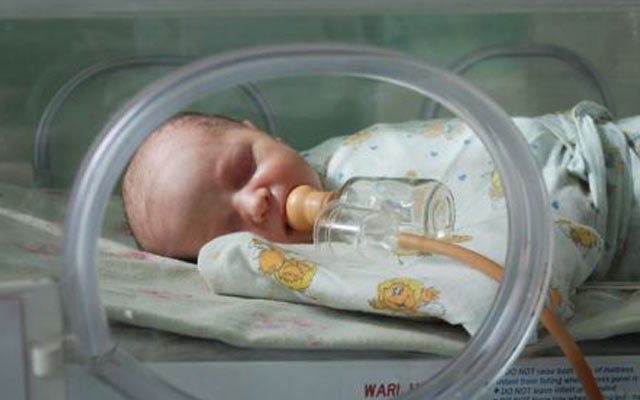
In poor countries, with a shortage of hospitals equipped with all necessary equipment, or with power outages, mortality from hypothermia is very high. In addition, not all hospitals in such countries can afford expensive incubators, which can cost up to 20,000 US dollars.
A group of specialists from Stanford University, California, USA undertook to solve this problem. A special program was created at the university — “Design for Extreme Affordability).
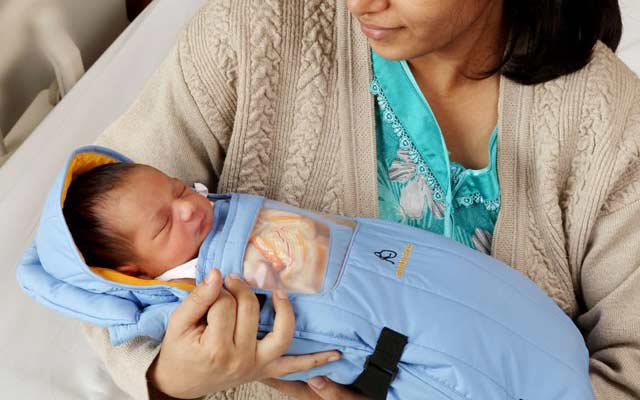
One of the projects was a special sleeping bag for babies called Embrace Infant Warmer, which was made possible thanks to the efforts of the whole team. A short time later, the first prototype of this product was born.
The Embrace Infant Warmer sleeping bag is based on a special wax pad that heats up to a temperature of 37 degrees Celsius. Such an incubator bag costs several hundred dollars, which is much cheaper than a regular incubator.
Already, the lives of more than three hundred thousand babies around the world have been saved with this invention. To develop this project, the company began to produce a purely commercial product, part of the sales of which goes to the production and distribution of Embrace Infant Warmer sleeping bags.
Lifestraw water filter
against Guinean worms
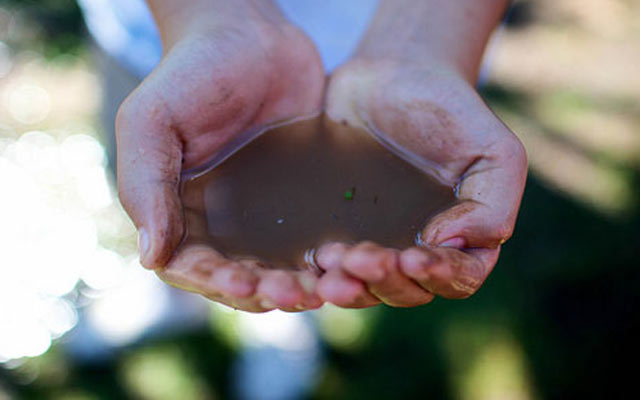
The history of the Lifestraw water filter begins with guinea worm (Dracunculus roundworms), a tropical parasite that infects those to whom its larvae enter the intestines along with polluted water.
In 1986, guinea worm disease affected more than 3.5 million people in Africa and Asia. And already in 2017, the disease was almost defeated — then no more than 30 cases of infection were registered.
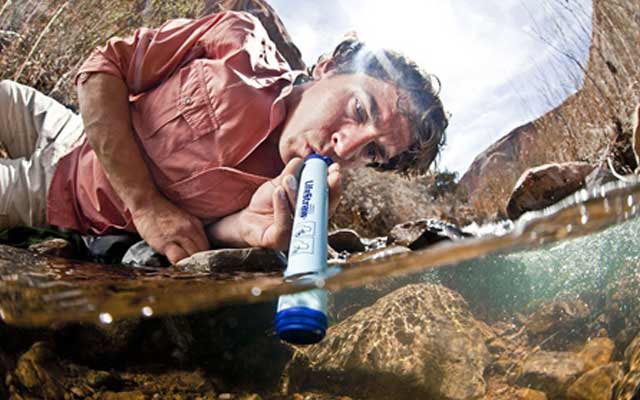
One of the reasons that led to a sharp decrease in cases was a special filter developed by Vestergaard, Switzerland. This filter is designed specifically for removing roundworm larvae from drinking water.
After their filter proved effective against Guinean worms, Vestergaard turned its attention to treating water and other sources of pollution.
In 2005, she introduced the Lifestraw filter, a rod-like personal water filter designed specifically for emergencies in developing countries countries where drinking water treatment is difficult to implement.
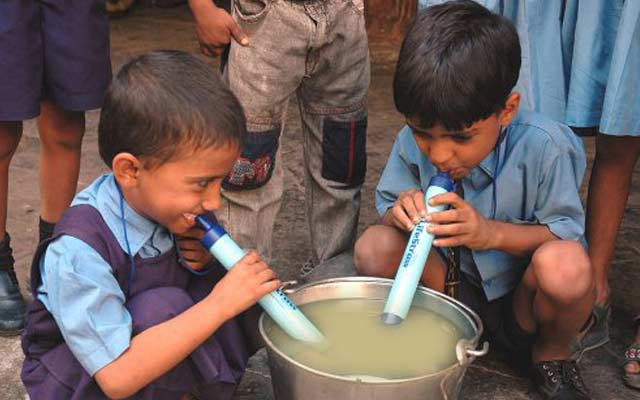
Today, the company offers a wide range of products related to this topic — from flasks for travelers to much more complex water purification systems designed for whole neighborhoods.
From the sale of each of its products, the company directs part of the funds to provide drinking water to children in developing countries (through purification systems designed for schools). Thanks to this noble activity and Lifestraw pumps, more than a million children around the world already have access to clean drinking water.
“Be My Eyes” phone app
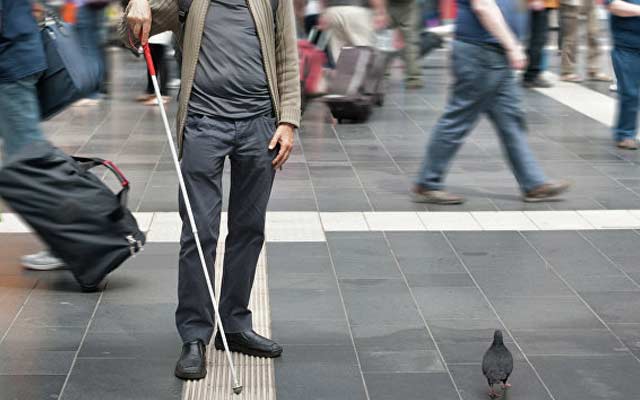
The idea of creating such an application that would help people with serious visual impairments contact volunteer assistants for free with simple and short questions for clarification came up to the head of a certain Hans Weiberg, who knows firsthand about blindness.
Wyberg's blind friends told him that they often rely on video calls they make to friends, acquaintances, relatives, or family members. The latter, looking through the camera on at the environment surrounding a blind person, give certain advice.
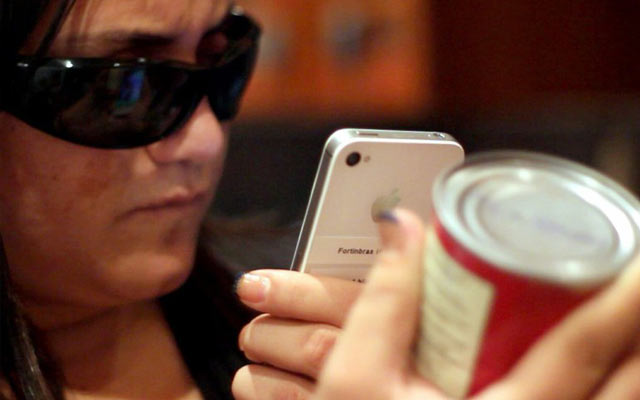
For example, you may need to read the expiration date on a bag of milk in the refrigerator, find out the train departure time from the information board at the railway station. But you never know what other help a person who is deprived of the joy of seeing the world around him may need!
However, many blind people feel uncomfortable, constantly straining loved ones, involving them in solving many of their minor issues. Weiberg, on the other hand, saw an opportunity to connect blind people with a network of volunteers who are always ready to read the contents of the product or report the amount of the electricity bill they received.
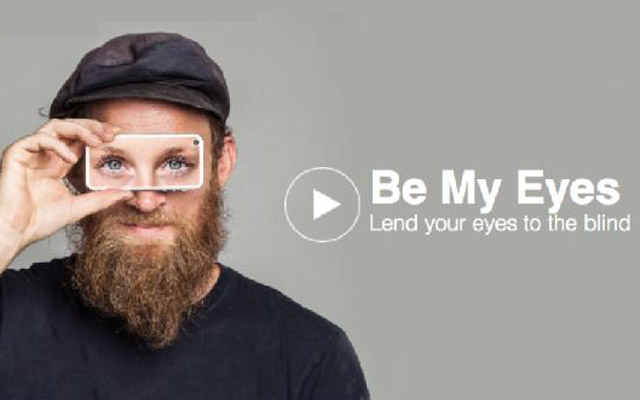
Weiberg presented his idea in 2012 at Startup Week in Aarhus, Denmark. He managed to find like-minded people who helped Hans turn his idea into reality. In 2015, the world received a free iOS app, and two years later, the app was launched on Android.
Since the app was released, the number of visually impaired users has reached more than 80,000 people. At the same time, the number of volunteers who are ready to provide absolutely free assistance to blind people amounted to more than 1.3 million people.
There are so many volunteers that many of them have to hurry to help. By the end of 2017, the average response time in the app was 20 seconds, which means that most blind users almost always received timely help, in which needed