
The Appian Way in Rome
The Appian Way is, if translated into modern language, the first ancient pedestrian and horse—drawn expressway. At one time, it connected Rome with the far part of the Apennine Peninsula, and today it is a recognized landmark of Italy.
Capitol Hill
According to legend, the Capitoline Hill is one of the seven hills on which the Eternal City of Rome arose. Anyone can visit Capitol Hill for free. However, you will have to pay for visiting museums and temples located here.
The Colosseum in Rome
A symbol of Rome and Italy in general, the Roman Colosseum got its current name because of the statue of the madman Nero installed in front of it, originally it was known as the Flavian Amphitheater. Built in the 1st century, the amphitheater became the largest structure for mass entertainment in the entire Roman Empire.
Palatine in Rome
If you love history, excavations and ruins, then welcome to the Palatine! The Palatine is one of the seven hills on which Rome stands, the hill from which the history of the Eternal City began. It was on the Palatine hill, according to a well-known legend, that the she-wolf nursed the brothers Romulus and Remus.
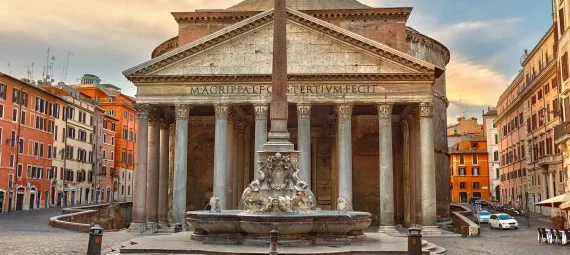
The Pantheon in Rome
The Pantheon is an ancient pagan temple, later consecrated as the Christian Church of St. Mary and the Martyrs, dedicated to all Roman deities at once. This architectural object of the pre-Christian era has been preserved to this day and impresses with its greatness not only archaeologists, but also ordinary tourists.