
1. The Great Wall of China
As many travelers say: “You haven’t been to China unless you’ve been to the Great Wall of China.”
The most recognizable symbol of China, the Great Wall of China is considered the largest defensive structure in the world. Its winding path runs through rough terrain among stunning landscapes of steep mountain slopes. No wonder the Great Wall of China was included in the lists of the New Seven Wonders of the World and UNESCO World Heritage Sites.
The length of this greatest monument of history and architecture from the western border of China to the eastern coast is more than 8000 km. However, most of the well-preserved sections of the wall are located near Beijing. It is this part of the wall that is usually meant when talking about the Great Wall of China.
2. Terracotta Army in Xi’an
The Terracotta Army has been underground for more than 2000 years. However, in 1974, local peasants, digging a well, made one of the greatest archaeological discoveries in the world. In 1987, the Terracotta Army was officially recognized as a World Cultural Heritage.
This is a monument of great importance: hundreds of life-size statues of warriors represent the army that defeated all other Chinese armies during the Period of the Fighting Kingdoms (475-221 BC). This victory played a decisive role in the formation of a unified Chinese state.
The question arises: why was this famous cultural object built? You will get the answer to it by meeting face to face with the warriors of the past.
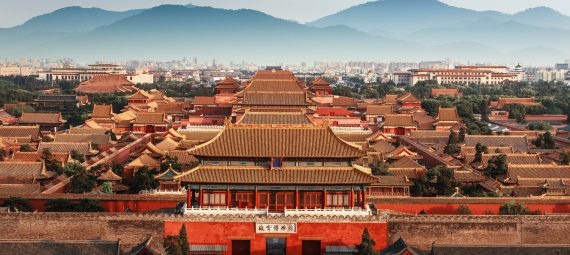
3. The Forbidden City in Beijing
The Forbidden City is the largest palace complex in the world. Once the entrance to the territory for ordinary people was strictly prohibited (hence the name – “Forbidden City”). Now everyone can admire this striking example of ancient Chinese architecture – more than 8000 rooms with golden roofs are elegantly decorated and painted in red and yellow.
The Forbidden City was an imperial palace during the Ming and Qing dynasties until 1911 and served as the residence of 24 emperors for 560 years. A World Cultural Heritage Site, known among Chinese residents as the “Palace Museum”, it is a real treasure trove of Chinese cultural and historical relics.
4. Bund in Shanghai
It was the most prosperous area of Shanghai in the late XVIII – early XIX century. When the first British company opened its office here in 1846, the Bund became the epitome of elegance.
Today Bund Bund is one of the most recognizable architectural symbols of Shanghai. The European colonial style of waterfront architecture and the impressive skyscrapers of the business district on the other side of the Huangpu River allow Shanghai to compete with New York or London.
5. Li River in Guilin
The karst landscape along the Li River has captured the hearts of many. Generations of Chinese artists and poets have found inspiration here, admiring the picturesque nature, capturing breathtaking landscapes. Today it is one of the most popular places among photography lovers.
The Li River and the town of Yangshuo are the first thing that comes to every Chinese’s mind when he thinks about the charm and beauty of nature.
The most amazing landscapes of the Li River can be seen between the cities of Guilin and Yangshuo, on a stretch of 83 km long. The hills of bizarre shape, steep cliffs, peasant villages and bamboo groves fascinate with their beauty.