
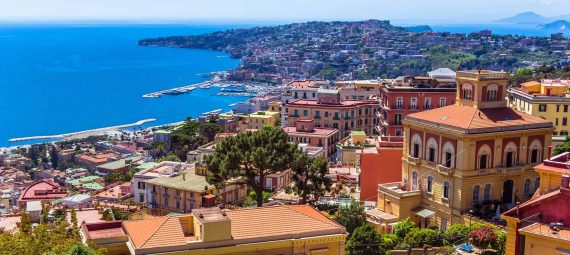
Vesuvius
The first thing any tourist sees in Naples is the legendary Vesuvius volcano. This landscape dominant gives the panorama of Naples an amazing view. Vesuvius itself is located 15 km from the city, and it is not only the most famous, but also a dangerous attraction of the suburb — the only active volcano in mainland Europe.
Castel del Ovo
Castel del Ovo Castle is located on the small island of Santa Lucia in the Tyrrhenian Sea. This castle has a rich history: since ancient times, it has managed to visit an estate, a fortress, a prison and a museum. It is believed that the “Egg Castle”, as its name translates from Italian, is located in the very place where Naples was founded by the Greeks in the 6th century BC.
The Royal Palace in Naples
The Royal Palace in Naples is the residence of the monarchs of the Kingdom of Both Sicilies from the Bourbon dynasty. It was built in the 17th century by architect Domenico Fontana, expanded and restored several times after a fire, sometimes radically changing its appearance.
Pompeii
A little closer from Vesuvius to Naples, the excavations of the famous Pompeii and Herculaneum are located, actually buried alive under a layer of volcanic ash during an eruption in 79 AD. The ruins of ancient cities are included in the list of UNESCO protected sites and have been of increased interest to tourists for more than three centuries.
St. Januarius Cathedral
The current official name is the Cathedral of the Assumption of St. Mary, the Cathedral of Naples, dedicated to the patron saint of the city, St. Januarius. His main relic, revered since the Middle Ages, is a vessel with the blood of St. Nicholas. Januaria. Twice a year, it is shown to believers, and the blood inexplicably boils, filling the entire vessel.
Chapel of San Severo
The small chapel of San Severo is hidden in the narrow streets of Naples near the Palazzo Venezia. In the 16th century, when it was first built, it was very tiny. The Sangro family, who bore the princely title of San Severo, built a church in honor of two miracles.
The Royal Palace in Caserta
The country residence in Caserta was built in the second half of the 18th century by order of Charles III of Bourbon, then ruling Naples. He decided that it was too dangerous for members of the royal family to live in Naples itself because of the frequent attacks from the sea.