
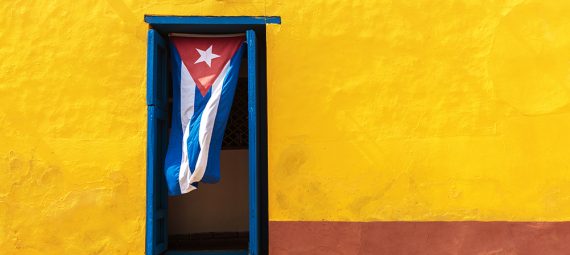
How to live on $20 a month? What have the sanctions and the American blockade done in Cuba? How does the Island of Freedom live now, what traps lie in wait for tourists in the homeland of Fidel Castro and what is rich in the impoverished Cuban people?
If someone thinks that Cuba is just cigars and fun, then in vain. Cuba is a country of contrasts, bright, diverse, sincere and sometimes dangerous. Both very wealthy people and those who have to survive below the poverty line live here.
The situation on Liberty Island has been difficult for many years. This is mainly due to the American blockade, sanctions imposed against the citizens of this country. Therefore, speculation, barter and underground trade flourish here, and tourists are a source of income, and not always in honest ways.
It has its own Internet. And you’ll be surprised how it works. Little is done here without a bribe, but at the same time the most honest and kind people live. Such a Cube is not shown on excursions, guidebooks do not write about it. But this is exactly what Stas Natanzon saw in his next extreme journey around the world.
Queue country
The first thing that catches your eye is queues, everywhere and behind everything. One of them, with a long “tail” stretches to the only store in Cuba that sells alcohol. A queue is a business where you can buy and sell anything, even a place in the same queue.
The queue stretches for a very long time. One customer is served by two employees — directly the seller and the cashier, who checks and writes in a special book the data of the so-called “virtual MLS card”, without which nothing can be bought here, and it is sold only for currency.
In general, everything in Cuba is very confusing in terms of money. However, you can still buy goods for the currency itself. But not rum, in search of which the locals are forced to turn to resellers, and buy one and a half, or even two times more expensive than its official price.
The store’s security guard is an important person, you can stand in line for hours without a bribe, but you can’t get into the store. Once there, it is necessary to bargain because of the price – even in a state store, and after giving the “paw” to the guard, the cost of the goods may become significantly lower than stated in the price tag. Wildly, surprisingly, unreal, but a fact.
Currency exchange: how tourists do and how locals do
There are three ways to change currency in Cuba. The first is to go to the bank and make everything official. The second is to find a money changer on the street — this is what experienced tourists do. And the third is to look at the real course of the black market on the Internet, and call a money changer to your home, as the Cubans themselves do. However, in Cuba, such currency exchange, as in the whole world, is a criminal offense. But this does not stop the locals, and the money changers are practically not hiding, literally, walking with bags full of money.
Cuban market: aliexpress from Moscow
There is a big problem with goods here. There is, of course, a delivery service from abroad, mainly Moscow and China, such as “Cuban Aliexpress”. But local businessmen prefer to go shopping in Russia. The Moscow Fair is Europe’s largest center for the sale of branded clothing and equipment. Dozens, maybe hundreds of Cubans come here regularly to buy, and they sell 2-3 times more expensive at home. They can be recognized by the hot Spanish speech, huge carts and wholesale purchases. Uniting, they come in whole groups and help each other.
Someone goes to New York for counterfeit goods, and returns a happy owner of a Louis Vuitton belt for 300 rubles, a Rolex watch for 350 and a “branded” box for 250. While the original costs 30 thousand dollars.
The market in Cuba is small and cramped, but this is the only place where you can buy products with a label. Of course, they are fake, but they stand here like originals in the rest of the world. Interestingly, speculation in Cuba is illegal. Therefore, formally, the Cuban market is a flea market of old things. Permission to trade is given by the “looking from the authorities”, legalizing resale after collecting tribute. All this strongly resembles the “hustle” of the USSR.
Prices pretty much “bite”. For example, an old smartphone from two years ago, bought for $ 200, costs $ 420 in a Cuban state store.
Is a car a luxury or a means of transportation?
Fidel Castro’s grandson, Sandro, runs a cafe. But especially the descendant of a fighter for freedom and independence loves cars. Old, but very expensive. The cheapest one from his garage costs at least $6,000. Even the price of a decrepit Moskvich-412 on the move can reach 10,000, and the VAZ 2101 will cost 30,000 at all.
Almost all cars in Cuba are Frankenshanes, assembled from a variety of spare parts. Spare parts in the country are a family value passed down from generation to generation, and the engine to the car is just a treasure. In fact, such cars look very cool. Imagine: 1955 year of manufacture, part of the original leather interior, retro steering wheel and at the same time a modern radio, an engine from a completely different model, somehow mounted under the hood, an extended (or trimmed) dashboard and Chinese wires and terminals. Up to the point that all four wheels can be with different discs and tires. Super upgrade. But, the most amazing thing is the trip. Everything rattles, creaks, but moves!
About ten years ago, the Cuban authorities opened state car dealerships for ordinary people. But their prices are sky-high, an ordinary Peugeot costs like a Rolls-Royce. But the most valuable machines here are Frets. They are the easiest way to get spare parts from Russia. Motorcycles and scooters are exported to Cuba in a collapsible form. Bicycle tires are very popular, the price for them reaches the three-month salary of a Cuban doctor. But they are being taken because they are in great short supply in Cuba. In anticipation of their delivery, people take places in a multi-day queue from five in the morning, many come with stools.
Interestingly, the departments with equipment are full, but deserted. Washing machines for $ 860 and microwaves for $ 180 are not in demand, they cannot afford it.
Gangsters
American gangsters settled on the island back in the days of prohibition, and eventually built luxury hotels and casinos in Cuba.
Gangster Cuba was led by the famous Meyer Lansky, who was called “The Accountant of the entire mafia.” He was expelled from the United States as a criminal, settled in Cuba and agreed with then-President Batista to turn the island into a gaming paradise. On December 22, 1946, the largest gathering in history took place there, which went down in history as the “Havana Mafia Conference”, where all the gangsters of America gathered, and Frank Sinatra himself sang in front of them. Since then, dirty money from drug trafficking, kickbacks and bribes has poured into the Island in an endless stream. They were laundered under the cover of casinos, which grew like mushrooms after the rain, and returned to US banks already clean. In the 30s, a forest was cut down for the construction of luxury villas, in which hunting was forbidden to everyone except the king. Since then, an elite quarter has been located in its place in the central part of Havana. They built a lot in the 40s and 50s.
Slums in palaces
Exotic restaurants, shops and office buildings are the face of Cuba for most foreign visitors. But this is just a facade behind which the true life of this country is hidden. Now, almost 60 years after the revolution, most of the posh mansions of the gangster period have become homes for the poorest, slums built inside former palaces. These are the so-called Cuban dormitories Solares (Solares). At the same time, both Lansky and other former authorities still consider themselves not criminals, but the chosen ones, the elite.
— Sometimes you tear your hair out. But there is always something, somehow you get out. I snatched some coffee here today. I got some sugar tomorrow…. More or less. Mutual assistance helps. Lend me 10 pesos to pay over there. Today they tell me: “I made soup, come in, I’ll feed you.” And tomorrow I’m like, “Hey, come on, now you come in for coffee” or “I cooked beans — take some.” That’s how Cubans get out,” slum dwellers say.
At the same time, Cubans keep their squalid homes in perfect cleanliness and even manage to break up small gardens. The ceilings in the rooms are low, because two or even three floors were made from one former floor, laying shaky ceilings that periodically collapse on the heads of residents. There are no funds for repairs, building materials are expensive and it is problematic to buy them even for a lot of money.
There is some kind of surreal eclecticism around. Marble steps, balustrades, bathrooms and balconies, expensive frescoes and moldings on the walls and ceiling are just a reminder of a completely different era of these majestic buildings, and now anthills on the verge of survival.
But, the biggest problem here is the shortage of water. Solares receive water on schedule. Constant water supply only in the rich neighborhoods and tourists of Havana.
Dignity and diligence
Self—respect, dignity, solidarity and cleanliness are the main distinguishing features of the Cuban people. Even in the poorest areas here you will not see garbage and landfills of household waste. And unlike the rest of Latin America, Cuba is just an oasis of security and goodwill. She is like an old retired professor — poor, but taking care of herself. It is almost impossible to meet untidy people in Havana. The cars are washed. The entrances are clean and tidy.
Even the bloggers here are different. For example, one of the three most famous in the country, blogger Jorge, who has as many as … 120 thousand subscribers, does not shake his buttocks, does not cheat on cryptocurrency, but carries good. And this is not a turn of speech, for the sake of a red word, but the truth. And he’s not the only one. The guys collect money from all over the world to help people — repair houses, get food for the poor.
And Cubans are very good-natured and inquisitive. They will help not only their own, but also tourists. They love children and never raise their voices to them. Completely non-aggressive.
People do not want war, and they are trying to achieve change not by protest actions, but by peaceful beliefs and music. In Cuba, the most popular style now is reggaeton (a combination of hip—hop and salsa), the essence of which is a story about what is happening on the streets. Reggaeton in Cuba is semi-legal, it is not shown on radio and television, concerts mostly take place at banned bonchas parties.
And the durakitos perform this music, the same influencers, only with a Cuban flavor. Distinctive features — reggaeton performance, long hair with highlights, curling and a trimmed section of the head on the back of the head. In general, these are hipsters, stylists of the XXI century.
Cubans are not lazy people, but there are big problems with working in Cuba, and the salaries of professional specialists are extremely low. For example, an engineer or a doctor with a higher education receives several times less here than the same reseller. But every second here is Kulibin. From improvised means and all sorts of rubbish, a Cuban can literally assemble a cotton candy machine or a gym under the sky in a couple of days, and glue a sink from broken tiles.
Old furniture and household items are not thrown out here, but they are reconstructed or used to create new things. The furniture of most houses is century—old retro: dressers of the beginning of the last century, refrigerators of the 40s. And, surprisingly, it all functions.
Where not to go
There are still unsafe places in Havana. Parraga, Arroyo Naranjo district, and neighboring San Miguel del Padrón are considered especially criminal. There are new slums located there — without electricity, water and sewerage, which are called here: “lega y pon”, which translates as: “come and take”. There is not a single police station in these areas, and patrols are very rare. The authorities are trying to pretend that these areas are not on the map of Havana at all. In such places, people live more by concepts than by laws, and on the streets you can buy everything, even the most forbidden.
Why did it happen this way?
Cuba does not produce anything by itself. As a result, there are no jobs, there is no proper assortment of goods, a general shortage and a low economic situation of the country — 180th in the world ranking.
America played a leading role in the decline of Cuba’s economic situation, refusing to buy Cuban sugar and supply oil. Then the Soviet Union came to the rescue, having established the export of sugar from Cuba and the supply of oil, aircraft, cars and weapons to protect Cuba, including air defense systems. Relations between Washington and Havana finally deteriorated after the events of 1961, when the CIA organized the invasion of American troops in Cuba, calling it “operation in the Bay of Pigs.” Thus began the “Caribbean crisis”.
Interesting facts about the unknown Cube
Havana is a seaside city. But fish is practically not eaten here and is not sold in stores, and fish restaurants can be counted on the fingers.
In the former mansions of American gangsters and local rich people, there are whole streets of shacks with small front gardens of poor Cubans.
Initially, the monument to John Lennon in the center of Havana was with removable glasses, their safety was monitored by a “special grandmother”. But then the authorities decided to remove the glasses forever. The holes where the shackles were attached are still visible on the statue. At the time of coming to power, Fidel Castro banned the Beatles, but years later he became more loyal, and in 2000 he even personally attended the opening of the monument to Lennon.
The name of the exotic papaya fruit in Cuba sounds almost obscene, as it means female genitals. Buying it on the market, you need to ask for a “bomb”.
The main delicacy of Cuba is mamey. It is also called marmalade plum. It tastes like a dessert made of chocolate, almonds and pumpkin. You need to buy it in Cuba not on Tuesday, the first day of the market, but on Friday, when the unripe fruit will ripen itself.
The Cuban Internet is very specific. This is a digital samizdat based on information from different sites of the Network. Only a few have access to it, so it is distributed in “packages” of downloaded information. This is for you and the cinema, and music, and terabytes of other information for the choice of admins, who are called “queens” here. Updates — once a week.
For taking photos and videos of shooting queues in Cuba, you can go to jail.
That’s how it is, Cuba is a country of contrasts: dealers and generous beggars, stylists, digital samizdat, slums in palaces, financial distress, and at the same time incredible spiritual wealth.