
 Useful tips
Content:
Valerian for insomnia
The benefits of valerian
Where do doubts arise about the benefits of valerian The
harm of valerian
The composition of
valerian in drops vs valerian in tablets
Valerian to children – is it possible to give
Valerian and cats — why cats care about her
Is Valerian a placebo that cats care about or an effective sedative?
In this article, you will find out the answer to this and many other questions about the well-known valerian.
Valerian is what we used to call this drug, although from a medical point of view it is more correct to say “valerian” or “valerian officinalis”. Valerian is well known to the vast majority of people living in the post-Soviet space as an effective sleeping pill that primarily provides sedative (i.e. sedative) impact.
Valerian for insomnia
chesirecat/Getty Images
As you will find out below, valerian is also indicated for other pathological conditions, but its pharmacological effect as a sedative for insomnia is the most pronounced, which makes it possible to recommend this drug to people suffering from various sleep disorders caused, for example, by nervous overexcitation.
An amazing fact
Almost all the chemical components that make up valerian roots and rhizomes are well known. However, it is still not known for certain (at least as the reports of the US National Institutes of Health state) which of these components has the most powerful effect on mechanisms sleep regulation.
As a result, scientists came to the conclusion that a certain specific effect on our body is not exerted by a single substance contained in the roots of this plant, but by a group of them. Certain categories of components have even been identified that are supposed to be “collectively” responsible for the sedative effect of valerian in this combination.
Read also: Tea for insomnia: 6 effective “antidote” options
The possible mechanism of action of valerian officinalis, according to representatives of the aforementioned institute, is that valerian causes an increase in the content of a certain acid (its called gamma-aminobutyric acid) in the body. This acid, in turn, affects chemical synapses (roughly speaking, communication between brain neurons at the cellular level).
The difficulty in describing the mechanism of valerian officinalis is that scientists cannot experimentally verify whether this is actually the case. However, the medical fact is that this plant contains enough gamma-aminobutyric acid to stimulate sedation in our body.
The benefits of valerian
Pattanaphong Khuankaew/Getty Images Pro
Valerian was so popularized during the former USSR that many consider it a remedy for insomnia invented in the former Soviet country. At the same time, valerian began to be harvested in Russia as early as the 18th century, and on an industrial scale. The plant itself, as a remedy for nervous disorders, was used in ancient Russia.
Moreover: valerian, as a sedative, is known almost all over the world. This is not surprising, since valerian, as a medicinal plant, was used by the ancient Greeks and Romans, and its therapeutic effect was described by Hippocrates and Galen. And much later, in the 16th century, drugs for headaches, sedatives, tremors, and even a remedy for heart palpitations were made on the basis of valerian root.
Officially, in the West, valerian was declared a medical device back in the 19th century. It is noteworthy that during World War II, valerian was given drugs (or drugs based on it) to the British military to relieve the constant stress and anxiety caused by regular enemy air raids.
In addition to the remedy for insomnia, valerian was used as a drug for the relief of the following pathologies:
gastrointestinal spasms;
distress and depression;
epileptic seizures; attention
deficit hyperactivity disorder.
Where do doubts arise about the benefits of valerian
Most scientists (especially in the medical environment of the West) unanimously argue that scientific evidence of the effectiveness of valerian at this point in time is completely insufficient to recommend this drug as an effective medication.
It is noteworthy that many old popular Soviet medical directories, which reviewed various diseases and health disorders, do not have any in the “Insomnia” section references to valerian as a medicine for sleep disorders.
On the other hand, the Great Medical Encyclopedia, which was a scientific medical reference book for Soviet doctors, mentions studies by venerable scientists of the former USSR, the results of which indicate that valerian (like various valerian drugs) has an effect on both the hypothalamus in particular and on the brain stem in general.
Alex_Doubovitsky/Getty Images
Soviet scientists emphasized the special effectiveness of valerian in combination with other drugs that have calming and other therapeutic effects in the following pathologies:
insomnia and nervous agitation; gastrointestinal
spasms (in particular, intestinal smooth muscle spasms); bile duct smooth muscle
spasms; coronary artery
spasms;
hyperthyroidism;
symptoms of atopic dermatitis;
neuroses of the body's cardiovascular system.
It is no coincidence that valerian is part of a large number of drugs, among which the most popular are valocordin, corvalol, as well as other drugs that have mild sedative effect. Valerian is also part of various gastric and soothing herbal preparations, from which decoctions and tinctures can be made.
Why, then, in recent years, various information sources (mainly on the Internet) have raised an “unhealthy” wave that discredits the pharmacological effect of valerian medicinal, repeatedly confirmed by Soviet medicine back in time immemorial?
The reason lies in the numerous publications of foreign media, which are furiously translated into Russian for the purpose of republication on various resources that have questionable reputation in terms of the reliability of the medical information provided.
It works as follows: a resource, when faced with another publication about the uselessness of valerian, immediately publishes this information at home, wanting to increase traffic due to the relative scandal of this material.
But where do all these rumors get their legs from?
The reason is globalization and the widespread dissemination of information related to medical research carried out in the West. Many people were guided by one of the US Department of Health Agencies, also known to us as the “FDA” (that is, the Food and Drug Administration and much more, including tobacco products and dietary supplements).
This Office, which reports to the U.S. Secretary of Health, is a relatively independent body that independently regulates the circulation of medicines in the Territory this state. The Agency has the right to recognize, relying on certain studies (or their absence), a drug as a medical product or dietary supplement.
Olivier Le Moal/Getty Images Pro
It is clear that for this Agency, studies by Soviet scientists on the pharmacological effect of valerian are not an authority. The Agency does not have enough research in this area to recognize valerian as a medicine, as its representatives periodically state. These statements serve as the basis for publications in information sources around the world that raise doubts about the effectiveness of valerian.
The FDA recognizes valerian as a dietary supplement (BAA) that can be used as a supplement to the main diet.
In support of its findings, the Agency provides its own analysis of various studies on the benefits of valerian carried out around the world. It is based, of course, on studies by Western countries that have been carried out over the past few decades.
If you read the results of these studies in more detail (a link to them is provided at the end of the article), you can see that almost all of them are accompanied by almost the same conclusion.
It says something like this:
the results of the studies did not reveal significant changes in the sleep patterns of the subjects when taking valerian, sufficient for this drug to be declared a medication.
At the same time, it is recognized that, despite the results of some studies that indicate that valerian can be used as a medicine for the treatment of insomnia and others sleep disorders, other studies refute this conclusion.
It is emphasized that the scale of research was extremely small, and the conditions were not “clean” enough to be able to draw global conclusions. What is left for an ordinary man in the street, that is, you and me? It seems like deciding for yourself whether valerian is an effective remedy for insomnia and stress, or a placebo.
In any case, it is recommended to consult with doctors before taking valerian, and when taking it, you should follow the instructions in the annotation to this drug.
Valerian harm
If you study the information that is usually indicated in the annotation attached to valerian (that is, to the instructions for use), you can see a number of side effects that are possible when taking this funds.
Side effects may include:
increased fatigue, lethargy;
increased drowsiness;
depressed state;
reduced working capacity.
MetamorWorks/Getty Images
The side effects of any drug, however severe, usually fall short of symptoms that indicate an overdose with a similar drug. Valerian overdose symptoms mentioned in the same annotation (far more serious than side effects, by the way) include:
dysfunction of the gastrointestinal tract;
nausea;
vomiting;
nervous arousal, drowsiness, depressed mood.
Recently, there have been more and more publications urging us to be extremely careful in deciding whether or not to drink valerian. This is a rational grain, as many people tend to decide for themselves which drug is right for them, and at the same time prescribe doses that have nothing to do with a safe dosage medications.
Since valerian, as most publications claim, is almost a useless placebo that affects the body at the level of autosuggestion, it is beginning to be taken in horse doses. Meanwhile, insufficient knowledge of the various side effects of valerian in all control groups of patients leads to contraindications for drugs that are not recommended for use:
during pregnancy;
during lactation.
More serious side effects described in various publications can also be found, but the reliability of such data raises serious doubts. It is possible to talk about a serious danger to health (or even to life) after taking valerian when a particular person demonstrates an individual intolerance to one of the components, which are part of the drug.
Interestingly, to date, among official publications, you can find only one (and the one in Western sources) that reports more or less serious consequences after an overdose valerian. That doesn't mean they're gone, though!
The case was officially reported in 1995. The US Drug and Nutrient Control Commission published a report on its official website that described the first reported
case of valerian overdose. The report emphasized that valerian is poorly studied for possible toxic effects.
Kaboompics .com/Pexels
An incident was described that occurred with a patient who exceeded the recommended dose of the drug by 25 times. A young man of 18 years old sought medical help, complaining of mild symptoms, which included severe fatigue, convulsive bouts of stomach pain, and tightness in chest tremors, upper and lower extremity tremors, dizziness.
It is noteworthy that a urine toxicology test revealed minor residues of tetrahydrocannabinol, a substance that indicates that the patient was taking marijuana. The young man admitted that he had taken the drug two weeks earlier. The patient was hospitalized, prescribed rest and activated charcoal as therapy, and after 24 hours, when all the symptoms of the overdose were gone, he was discharged.
Valerian composition
When we go to the pharmacy, we can purchase valerian officinalis mainly in the following form:
in the form of valerian tincture, that is, in the form of a liquid whose aroma cannot be confused with anything else. Valerian is infused with alcohol; the strength of the finished product is at least 65 percent;
in the form of tablets that are valerian extract;
in the form of vegetable raw materials, which, in fact, can used to prepare the tincture.
Today, you can also buy valerian in liquid form without alcohol. There are many similar offers on various thematic Internet resources dedicated to the sale of all kinds of herbs and homeopathic remedies.
In any case, before you buy valerian in one form or another, you should consult a doctor.
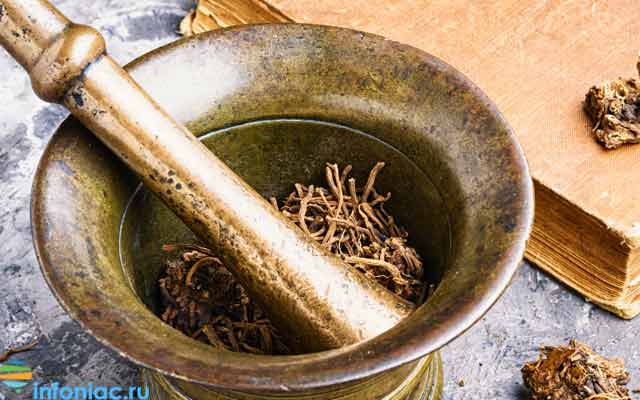
For the manufacture of modern valerian preparations, the roots and rhizome of this medicinal plant are used. Moreover, both the roots of cultivated plants and the root system of wild valerian are suitable for medical purposes. The harvest period is important — the roots must be extracted in early spring or early autumn.
The composition of valerian tincture is usually simple and unpretentious, since it is, in fact, an alcoholic tincture of the roots and rhizomes of this plant. The composition of valerian tablets is more intricate. Usually the tablet contains:
· extract of plant roots and rhizomes, extracted with the same alcohol as an extractant;
· paraffin;
· beeswax;
· sunflower oil;
· sugar;
· gelatin;
· potato starch;
· colloidal silicon dioxide and some other chemical components.
Nikolay_Donetsk/Getty Images
There are also valerian tablets, which are coated finely divided roots and rhizomes of this plant. Tablets can also be found on sale that contain not only valerian root, but also motherwort as an active substance, as well as other supplements that make the drug more effective and multipurpose. There is also the so-called dark valerian, which is a pressed raw material without a shell.
Before buying the drug, read
its composition carefully, after consulting with your doctor.
And what about the composition, in fact, of the roots and rhizomes of vegetable valerian? In order to understand the variety of substances that make up the roots of a plant, it is necessary to understand chemistry quite well. However, even ordinary people in the street can easily understand the fact that the calming effect of valerian roots and rhizomes is mainly due to its alkaloids and unique essential oil plants.
The essential oil, whose percentage in valerian roots reaches 2-2.5 percent, contains many acids (including valerenic and isovaleric acids, as well as formic acids, better known to the average person in the street, acetic, malic and other acids), various tannins, enzymes and much more.
Valerian in drops vs valerian in pills
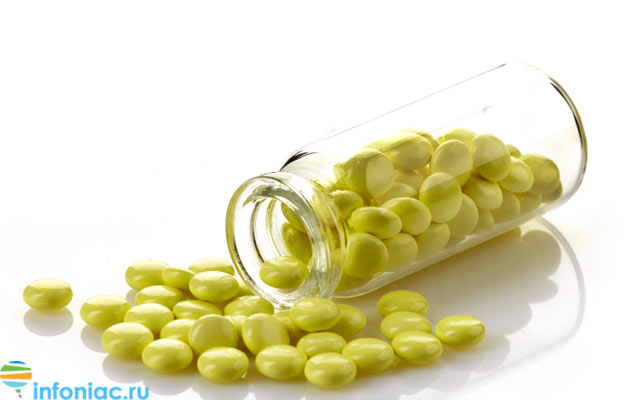
In order to answer this question, it is necessary to compare not only the alcoholic tincture of valerian with the usual yellow coated tablets, but also with “dark” tablets, without the usual yellow shell. The main evaluation criterion is, of course, the speed of the drug's effect on the human body.
Of course, valerian in the form of a tincture gets the palm in this peculiar competition, which is not surprising: the drug in liquid form is absorbed much faster. The second place in terms of the rate of absorption of the drug can be safely put “dark” valerian tablets, since the body does not need time to assimilate the tablet shell due to their absence.
Yellow valerian tablets are the slowest to digest. Thus, they can be called the “weakest” in terms of impact. They can be called weak purely conditionally – they will simply begin to act later than the tincture and “dark” pills. Of course, the dosage of the drug is of paramount importance, but we assume the same doses of the active substance.
Magone/Getty Images
It is also worth considering such a parameter as valerian safety. Despite the low probability of side effects in the absence of an overdose, it is worth noting that they are most likely to occur when taking valerian tincture and “dark” tablets. The tincture itself is less safe, since it contains alcohol; and the “dark” tablets are less purified, since they are made not from extracts, but from the pure pressed root system of the plant.
Finally, yellow valerian tablets are the safest. Despite the fact that valerian is not recommended for use during lactation and during pregnancy, even women in position can take this drug most easily. In addition, the composition of such tablets may imply the presence of components that make this type of valerian as safe as possible when absorbed by the body.
However, in 1998, Belarusian experts proved that it is not yellow and “dark” tablets, or even valerian tincture, that are most effective, but raw materials directly in crushed form ( that is, finely crushed roots and rhizomes of the plant). The effectiveness of valerian in this form exceeds the effectiveness of tablets made from valerian root system extract by two and a half times!
By the way, it was Belarusians who proposed their own original method of grinding vegetable raw materials, which involves preserving the volatile substances contained in the roots and rhizomes of the plant. They also proposed the optimal composition of the resulting tablets that meets the needs of our body.
Valerian to children — is it possible to give it
In some annotations to valerian officinalis, you can read that children over 12 years of age can be given 30 to 60 milligrams of the tablet
(note that that the dosage of the drug varies from manufacturer to manufacturer) 3-4 times a day. Other annotations do not mention pediatric patients at all.
Other manufacturers note in the drug instructions that it is not recommended to prescribe valerian to children under 12 years of age, arguing that there is no evidence of the safety of using the drug for pediatric patients. In this case, it is more reasonable to take the recommendation as a direct instruction NOT to give children under 12 years of age valerian in tablet form.
Zinkevych/Getty Images
Can I give valerian tincture to children?
It is no secret that many parents give valerian tincture to younger children when they need to relieve irritability or restore healthy sleep. However, the tincture contains alcohol, which can be extremely dangerous for an unformed child's body.
Some pediatricians do not mind if children over three years of age are prescribed valerian tincture at the rate of one drop of the drug for each year of the baby's life. With a high degree of probability, it can be noted that nothing terrible will happen if, at a particularly crisis moment, a child is given an appropriate amount of valerian, based on his age.
However, this recommendation is also best applied to children over 12 years of age. In other words, if you suddenly need to regulate the sleep of a child who is much less than 12 years old (or relieve irritability, stress, fear, etc.), valerian should be one of the latest products on the list of available drugs.
Modern pharmacology offers a variety of completely safe sedatives that have been developed specifically taking into account the characteristics of the child's body. That is why it makes sense not to give your child valerian, but to consult a pediatrician about other, safer means and methods that will help improve children's sleep and correct it behavior.
Valerian and cats — why cats care about her
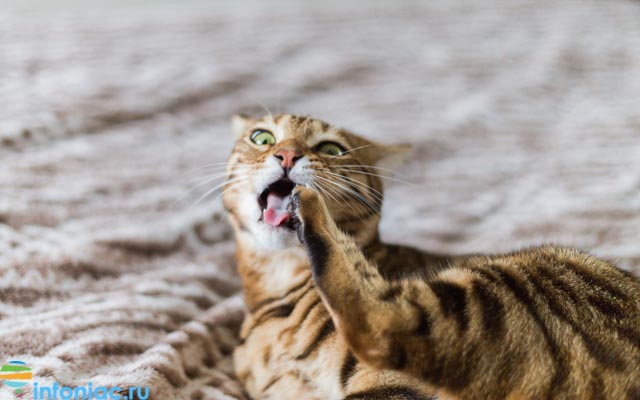
Valerian has a pronounced effect not only on domestic cats and cats. As practice shows, almost all cats (including ferocious lions, tigers, panthers and other predators) are not indifferent to this tool. However, some individual cats and cats may not react at all to this drug, which, however, is rather an exception to the rule.
Many people compare the effects of valerian on cats with the effects of drugs on humans. Some cats and cats, after contact with valerian, fall into a riot, start rushing around the room, and become very, very active. Others, on the contrary, forget about everything in the world, trying to keep them close to the place where they smell valerian, rub against the place, purr incessantly (or simply fall into prostration), and so on.
Ingus Kruklitis/Getty Images
Regardless of the behavior of our smaller brothers, who sniff valerian, this tool will not leave most cats and cats indifferent. The reason is that valerian essential oils contain a certain substance that spreads the same aroma as one of the components of cat urine (this substance is actinidine, which is similar in aromatics with cat feces enzymes).
Read also: Insomnia? Try the Golden Elixir before bed!
This reaction of cats to the root of valerian officinalis has been known since time immemorial, which is why, in fact, this plant was called “cat grass”, and its root was called “cat root”. It is believed that there is no harm to cats and cats from valerian, but you should not experiment for fun by offering your pet a potion that makes him literally not himself.
The material has an informational and reference function! Before using any products or services, you should consult a specialist!