
 Ecology
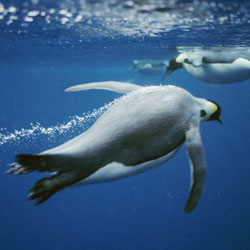
Many people are interested in the question of how penguins manage to swim underwater so fast. It has recently been discovered that these flightless birds release air from their feathers in the form of tiny bubbles. Scientists have found that without this feature, penguins could only achieve speeds of 1.2 to 2.7 meters per second. However, they manage to triple their speed thanks to these wonderful bubbles.
Emperor penguins can swim at incredible speeds in cold Antarctic waters in search of food or while trying to escape from enemies, but scientists have not been able to date understand what helps them do this.
Marine biologists have recently revealed a secret: the bubble stream that a penguin leaves behind while swimming acts as a jet engine that allows the penguin to increase speed.
Penguins can reduce the resistance of the water that surrounds them with their feathers. Birds can keep air between their feathers, but penguins are particularly good at keeping air in their dense feathers due to their small villi.
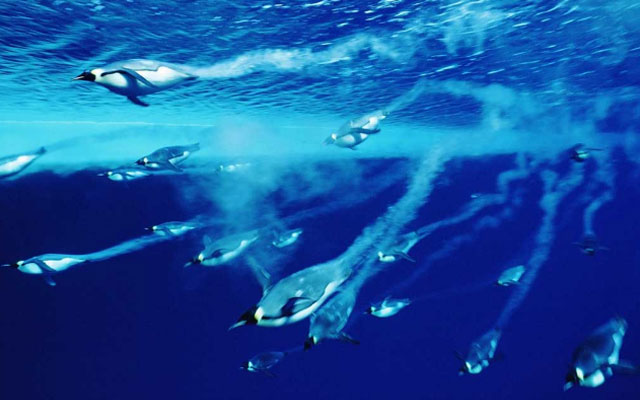
When penguins fluff up these small villi, they release air bubbles that reduce the density of the water around them. The bubbles act as a layer of lubricant to reduce the viscosity of the water. A similar effect is achieved with the help of special swimming suits.