
 Science
If you are taking pictures for a birthday, wedding or concert, you probably won't remember the highlights of the holiday.
Taking photos at holidays has long been common, as everyone wants to keep pleasant moments in their memory.
But according to scientists, those who are too keen on this process simply cannot concentrate on the rest of the things that are happening around them.
A recent study by researchers from Fairfield University, Connecticut in the United States, led by Dr. Linda Henkel, has shown that if you pay too much attention to photographing at the holiday, then you will not remember the brightest moments.
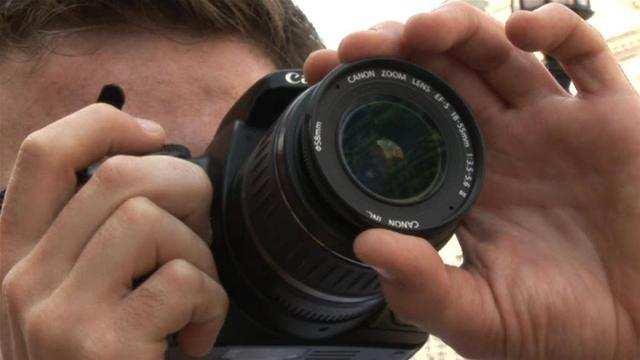
Henkel and her team decided to conduct an experiment at the museum to find out if photographing exhibits affects visitors' memory, namely what they saw at the museum.
A group of students decided to take a trip to the Bellarmini Art Museum at Fairfield University. One group was told to take pictures, while the other group was told to just try to remember the exhibits.
The next day, scientists tested their memory.
Read also: 10 fascinating “latest” photos
The results showed that those who looked at the exhibits in the museum remembered much more interesting details about what they saw than those who photographed these same exhibits.
What affects memory
Scientists are now trying to find out whether what is shown in the photo affects memory. For example, if you were photographed, will you be able to remember the exact moment in detail?
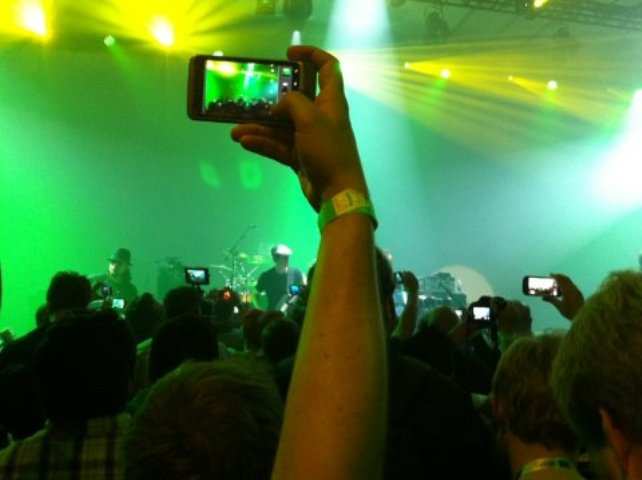
Henkel also wants to know if actively searching for an item to photograph affects memory.
In a subsequent study, scientists found that if you take a photo of a certain detail of an object, you will remember the smallest detail of the item, and not only that one the detail that was photographed, but so did everyone else.
A souvenir photo
Earlier studies have found that looking at photos that depict important moments in life helps us remember those moments, but it takes time.

In addition, according to scientists, in order to remember certain moments in life, you need to periodically review photos, which is less and less common due to the huge number of digital images that” in all directions” are recorded on a computer.
The study was published in the journal Psychological Science.
How to remember what you forgot: where you put your keys, wallet, etc.

For example, you don't know where you left your keys. Perhaps you cleaned up somewhere and were immediately distracted at that moment, so you can't remember. It turns out that the very action associated with the keys went unnoticed by you. Keys are things you don't think are important, so your brain doesn't perceive them as important.
How to decide: always be especially careful when cleaning everyday things. Try saying to yourself, for example, “I'm putting my keys on the table.” A very effective way to remember is consistency. You're unlikely to forget where you put your keys if you put them in the same place.
How to remember something: a person's word or last name

Sometimes you want to remember a word, and it still appears in your tongue, but it still doesn't come to mind. The older we get, the more often this situation haunts us. Under stress, it is even more difficult to solve such a problem.
How to decide: first you need to calm down and convince yourself that this happens to everyone. Next, you need to take a deep breath, which will help clarify your thoughts. Then you need to say out loud the first word you think of, like “This word has something to do with water” or “This person's name starts with C.” Start looking through the letters of the alphabet, and there's a chance you'll find the one that starts with the forgotten last name or word. After that, it will be easy to remember the whole word. If this does not help, simply replace the word you need with its synonym or description.
How to remember a person (name)

You have met a person, but you find it difficult to remember their name – this often happens to many people. Most of the time, a person's name is forgotten because you simply didn't focus on the name when you first met.
How to decide: when you meet someone new to you, you need to look at them carefully. Be sure to say that person's name to yourself, and then take a moment to say it out loud. When speaking, remember the person's name by referring to them by their name at least three times. Try asking questions by referring to the person by name. There is another way to remember a name – just try to associate it with a famous person, for example, Ilya – Ilya Bogatyr, Elena – Elena Prekrasnaya, etc.
How to remember the past (did you turn off the iron, stove, lights)

When you perform the same actions, such as turning electrical appliances on and off, you turn on procedural memory, which allows you to acquire unconscious automated skills, such as riding a bike or typing on a keyboard. Since these actions are performed “automatically”, the mind does not fully control what you do.
How to solve: 99 times out of 100, you are likely to turn off the iron. But if you have big doubts or you actually often forget to turn something off, try to do such actions more consciously. For example, when you leave home, you can say loudly: “I unplugged the iron.” In addition, you can leave reminding notes for yourself and glue them next to the front door.