
 Health
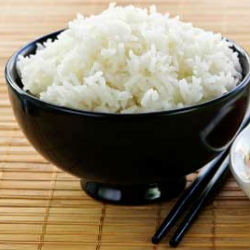
It would seem that what could be more harmless than such a dish as rice? Moreover, boiled rice is often served in hospitals and is recommended as a healthy food containing B vitamins. It is also known that ancient Indians used this product to restore the health of sick and wounded tribesmen. However, not all rice is equally healthy! It has been known for a long time that so-called white polished rice, which has only the remains of the seed coat after processing, loses some of its beneficial properties. However, it has only recently been proven that this tasty product is responsible for a significant increase in the risk of developing type 2 diabetes, especially if consumed regularly.
The link between white rice consumption and type 2 diabetes was discovered by scientists from the Harvard School of Public Health, who analyzed numerous studies aimed, among other things, at studying the eating habits of Asian peoples, where rice is an extremely popular product. This study took into account the fact that type 2 diabetes is a disease that accompanies a sick person all his life, forcing him to constantly monitor the level of content blood glucose. Also, this form of diabetes is the most common.
In fact, the authors of this study analyzed four earlier studies. Two of them were implemented in Asia (China and Japan), and the other two were implemented in the West (in the United States and Australia). As part of the study, scientists had to do a lot of work to trace the medical history of many patients and learn as much as possible about their diet. It is reported that white polished rice is the most preferred type of rice that is consumed everywhere in the world. However, this rice is characterized by a high level of the so-called glycemic index. It is these foods that have a high level of the glycemic index that are the source of increased risk of developing type 2 diabetes.
The glycemic index demonstrates the ability of a carbohydrate found in a particular food to be processed into blood glucose. In other words, it shows how quickly certain foods can increase blood sugar levels. Foods with a low glycemic index usually cause a moderate increase in blood glucose levels, while a high glycemic index leads to an increase in levels sugar, which becomes higher than optimal values. The average amount of rice consumed everywhere in Asian countries differs significantly from the level of consumption of this product recorded in Europe and the West. The average Chinese consumes up to four servings of rice a day, while the average American eats no more than five servings of rice per week.
The results of the study also show that the more white polished rice is consumed, the higher the risk of developing type 2 diabetes. According to the authors of the study, the risk increases by ten percent when the average rice consumption increases by about 160 grams. Moreover, as mentioned earlier, white polished rice contains far fewer healthy ingredients than unpolished rice. Let us recall that these components include fiber, magnesium and a number of vitamins. All these components, according to experts, help reduce the risk of type 2 diabetes. Trying to increase the consumption of white unpolished rice in order to get an adequate amount of all of the above nutrients is pointless, since increased consumption of this product is only leads to the opposite effect, increasing the risk of developing diabetes.