
 Ecology
Cross-spiders attract insects to their webs using “ultraviolet ornaments”, scientists have recently found out. The functions of the intricate patterns that spiders make in their webs have caused a lot of controversy in the scientific world.
In the past, researchers have explained that they can act as bird repellents, mating signals, sunscreens, and camouflages. New research has shown that these structures reflect ultraviolet rays, thereby luring flying insects to approach and land on the web.
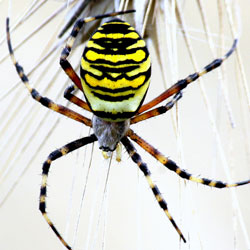
Scientists from Incheon University, South Korea, researchers of wasp spiders (lat. Argiope bruennichi). This type of spider is common throughout Europe, and is found in northern Africa and parts of Asia. It got its name from the resemblance of female spiders to wasps, which have black and yellow stripes on their abdomen.
When building webs, spiders are known to sometimes add zigzag details that start from the very center of the web. These parts are made of special white silk, which reflects much more ultraviolet radiation than other web materials.
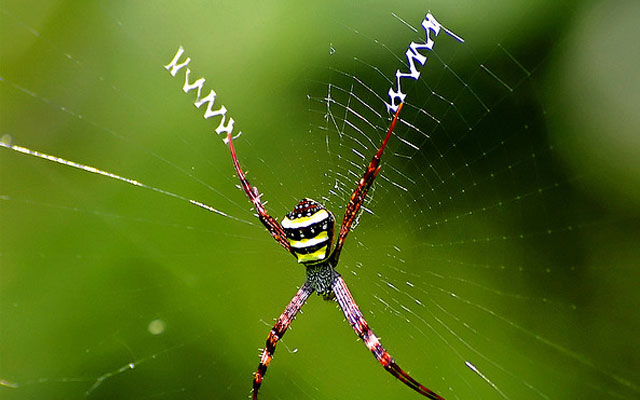
Scientists have wondered why animals build their webs in such a way that only certain parts of them are well able to reflect ultraviolet light. To test the properties of jewelry, which are called stabilimentums, scientists compared decorated webs with webs that do not have similar ornaments.
The researchers observed which insects were caught in each of the nets, which allowed them to draw conclusions about the functions of the jewelry. They noticed a link between stabilimentum and successful hunting. As it turned out, this is due to the fact that pollinating insects sensitive to ultraviolet radiation were more likely to come across pollinating nets with decorations. Moreover, such “decorated” webs contained much more victims than those that were deprived of stabilimentum.
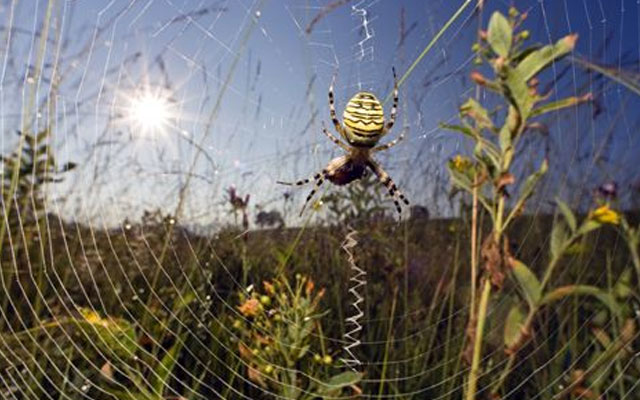
Previous studies have shown how pollinating insects are attracted to flowers with a high ability to reflect ultraviolet rays, so the researchers concluded that, most likely, zigzag ornaments simply serve to attract insects. Spiders have learned to use existing insect trends and fly to objects that reflect sunlight well.
Other scientists believe that the functions of the stabilimentum do not end there. Perhaps this design makes it possible to stabilize the web and make it stronger, allowing spiders to catch larger prey. The researchers also emphasized that the initial function of such a structure could have been quite different; it is likely that its role has changed today.