
 Events
Every year we can see amazing phenomena in the night sky. These include meteor showers and solar and lunar eclipses.
Armed with binoculars, a simple telescope, or even in some cases just looking with the naked eye, enthusiastic astronomers can witness some of the most spectacular phenomena in the night sky, as long as they know when and where to watch, of course.
Even as light pollution continues to threaten the future of observational astronomy, national parks and other natural protected areas provide an opportunity to observe clear night sky.
Here you will learn about ten astronomical events in 2020 that will make many stargazers want to visit different places on the planet where they can enjoy the natural the splendor of the Milky Way.
10.
February 18 — The Moon will pass in front of Mars
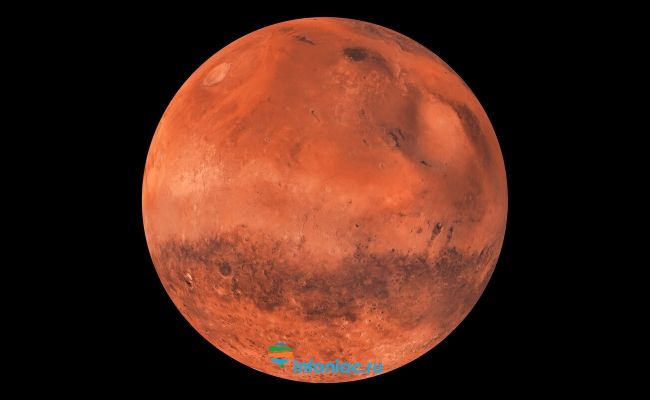
At the end of February, Mars, Jupiter, and Saturn will line up in the night sky, making it possible to see all three planets using binoculars or telescopes. In some places it will be visible to the naked eye. Between February 18 and February 20, the Moon will pass near each of these planets, making it easier for them to stay in the night sky wherever you are.
Depending on your location on Earth, you might even see the Moon pass in front of Mars and Jupiter.
If you find yourself in Antarctica or southern South America on February 19, you can catch the Moon blocking Jupiter. And on February 20, the Moon will pass near Saturn.
Read also: The most significant discoveries in astronomy
9.
April 27 — Venus will shine brightly in the night sky
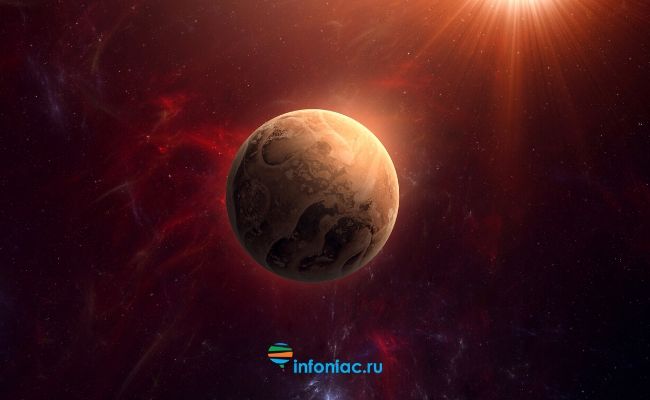
Venus is the brightest natural object in the sky, after the Sun and Moon. It will shine in full force at the end of April. The “Evening Star” will rise in the west after sunset this month, and this can be seen no matter where you are in the world.
On April 27, at 9 p.m. ET (5 a.m. Moscow time), Venus will reach its greatest illumination.
With the help of a telescope, you can see the disk of Venus and the changing phases of the planet, which are similar to the phases of the moon. The brightness of Venus can be seen even with the naked eye.
8.
June 21 — Annual solar eclipse
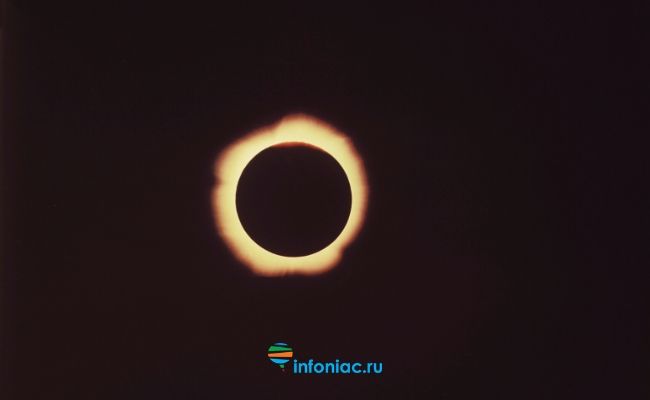
Thanks to their amazing cosmic coincidence, the Moon and the Sun are at an ideal distance from each other so that they appear approximately the same size from Earth. Sometimes during a solar eclipse, the Moon is close enough to Earth to completely cover the Sun's disk, creating a total solar eclipse.
One of these eclipses will occur on June 21 and will be visible in parts of the Democratic Republic of the Congo, South Sudan, Ethiopia, the Arabian Peninsula, Pakistan, northern India, and southern China and the Taiwan Islands. The eclipse will not be visible in North and South America, and a partial eclipse can be observed in some countries in Africa and Asia.
On the territory of Russia and the CIS countries, the eclipse will also be visible, while residents of the Central Asian CIS countries will see the maximum phase of the eclipse.
Read also: How to safely watch a solar eclipse?
7.
July 14 — The confrontation between Jupiter
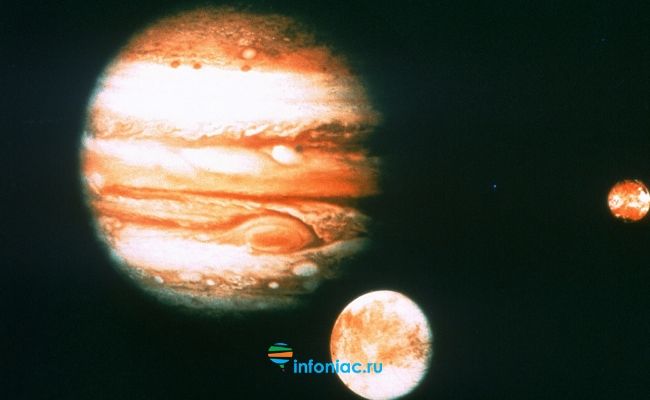
The best time to observe and photograph Jupiter is July 14th, when the largest planet in the solar system will be in line with the Earth and the Sun. During this period, Earth is slightly closer to planets as far away as Jupiter than at other times of the year, but more importantly, Jupiter will shine in the sky almost all night.
You'll be able to see Jupiter with the naked eye — it looks like a white, unblinking object that looks like a star. Using binoculars or a telescope, you'll also be able to identify Jupiter's four largest moons.
6.
July 20 – Saturn's confrontation
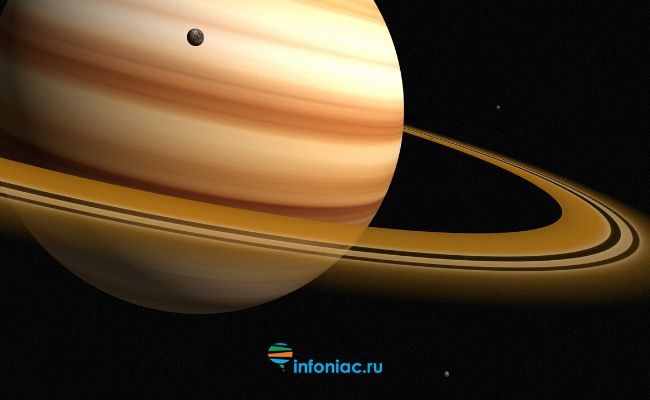
Less than a week after Jupiter's confrontation, it will be possible to observe Saturn in confrontation. It will appear as a yellow-white dot. The planet will glow in the sky all night, providing plenty of opportunities to observe it in dark skies that will be even darker due to the new moon coming on the night of July 20th.
You won't be able to see Saturn's rings through binoculars; you'll need a large telescope to do this. This year's confrontation provides a fantastic opportunity to better see the rings around the giant planet. Although they were as inclined to Earth as possible in 2017, Saturn's rings are still tilted about 21 degrees this year and should be clearly visible.
5.
August 12 — Perseid meteor shower
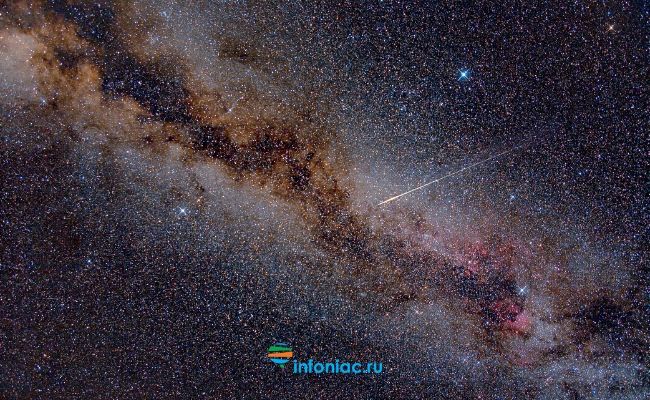
This is one of the most popular meteor showers. It peaks on warm August summer nights. This year, shooting stars should be visible at night and early in the morning of August 11, 12 and 13, and the peak of the stream is in the pre-dawn hours of August 12.
At its peak, this rain allows you to see one meteor every minute, although the last quarter of the moon will drown out some of them with its light. For the best viewing experience, find a place outside away from major cities and remember that it takes your eyes about 20 minutes to fully adjust to the dark.
4.
October 13 — Mars Confrontation
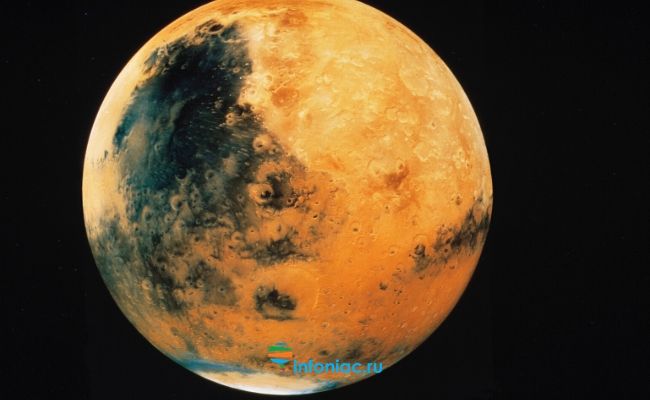
Jupiter and Saturn will shine brightest during the confrontation, and Mars is no exception. But because this planet is much closer to Earth, it's going to be even brighter. Mars only reaches a confrontation with Earth every two years, and this year the Red Planet will be well viewed.
During most of October, the light on Mars will get brighter. The brightness of the red planet will peak on October 13, when Mars is in confrontation.
In early October, according to EarthSky, Mars will approach Earth by 62 million km. This is the shortest distance between planets in recent years. It will only get closer in 2035.
3.
December 13 — Geminids Meteor Shower
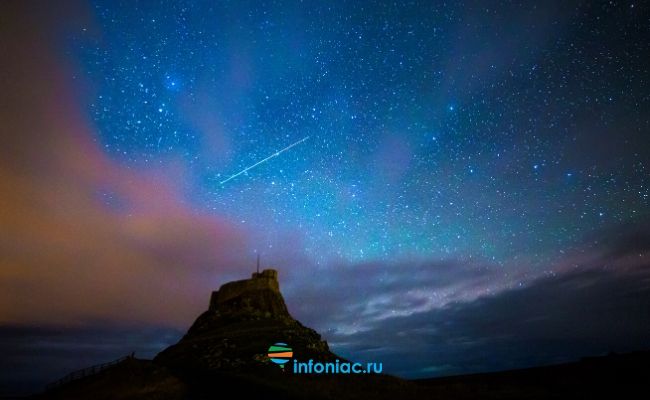
The best meteor shower of 2020 could be the Geminid Stream, which peaks on the night of December 13 and early in the morning on December 14. Meteors coming from the Gemini constellation are often seen as slowly moving bright bands of white light. This year, its peak coincides almost perfectly with the new moon, which provides a dark sky, which means ideal conditions for viewing the meteor shower.
Such rains occur when the Earth passes in front of the wreckage of another object, usually a comet that orbits the Sun. In the case of the Geminids, meteors are pieces of rock from the asteroid 3200 Phaeton, which usually flies very close to the Sun while crossing the Earth's orbital path.
2.
December 14 – Total solar eclipse
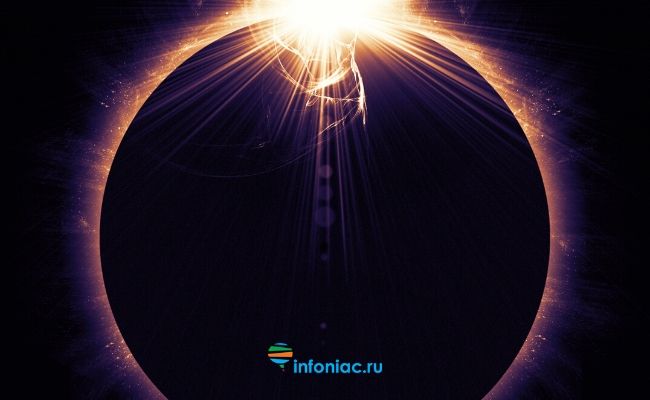
The second consecutive solar eclipse will cross southern South America. To see a total solar eclipse, you'll have to visit southern Chile or Argentina. It should be noted that the eclipse will occur on the new moon and its maximum duration will be 2 minutes 10 seconds.
During a total eclipse, viewers will be able to see the solar corona with the naked eye, as well as red plasma antennae emerging from the sun, known as solar prominences.
1.
December 21 – The conjunction of Jupiter and Saturn
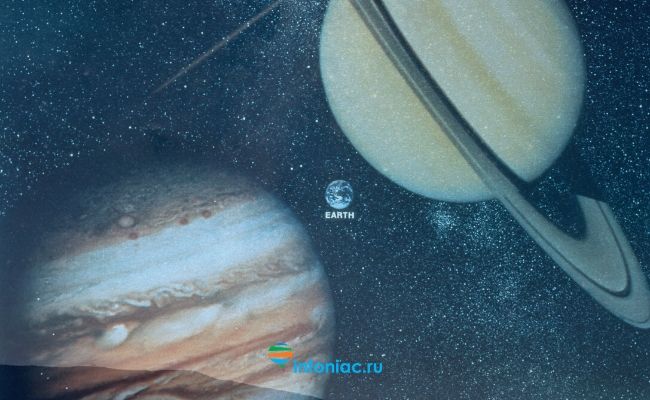
At the end of the year, Jupiter and Saturn will be closer together in the night sky, for the first time in four centuries (since 1623). This is reported by the space portal Space.com. When two objects appear close to each other in the sky, astronomers call this phenomenon a conjunction, and the combination of Jupiter and Saturn is called a “great conjunction.” It happens about every 20 years, but this year the two planets will be particularly close to each other.
In the sky, there will be a distance between the planets about 1/5 of the diameter of the full moon. Astronomers will be able to see both planets using high-resolution telescopes. The planets will be low above the horizon in the southwest sky after sunset.