
 Science
Earth won't always be habitable. Over time, the Sun will become even hotter, and billions of years from now, the Earth will no longer be able to support life.
Our planet will be exposed to the friction of the solar atmosphere and will go into oblivion.
The only consolation is that everyone we know will be dead long before that happens.
Perhaps humanity should look for other places to live?
Here are a few options.
Space station
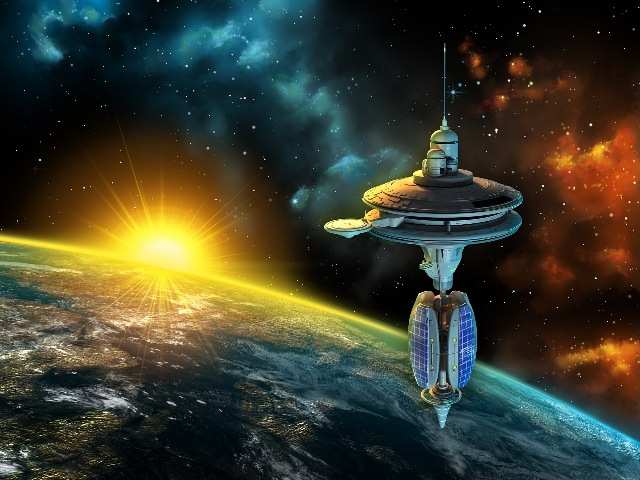
If our world is hit by a catastrophe, such as an asteroid crash or a super volcano eruption, space stations could become temporary lifeboats for some people.
Space stations have one advantage over the other options on this list, as they are technically achievable. Installing the station can generate artificial gravity, which is necessary to maintain bone and muscle mass.
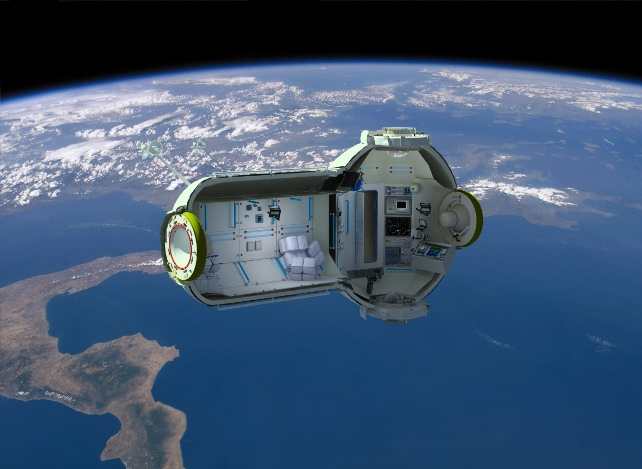
Photosynthesis is also possible, as a station orbiting Earth will receive as much Sun as on Earth.
The only problem with space stations is that they have so far all been in unstable low Earth orbit and require periodic ascension to a higher orbit in order to prevent uncontrolled entry into the atmosphere.
But this can be solved with Lagrange points—areas where gravitational and tidal forces are balanced and it takes more energy to get out of these points than stay there.
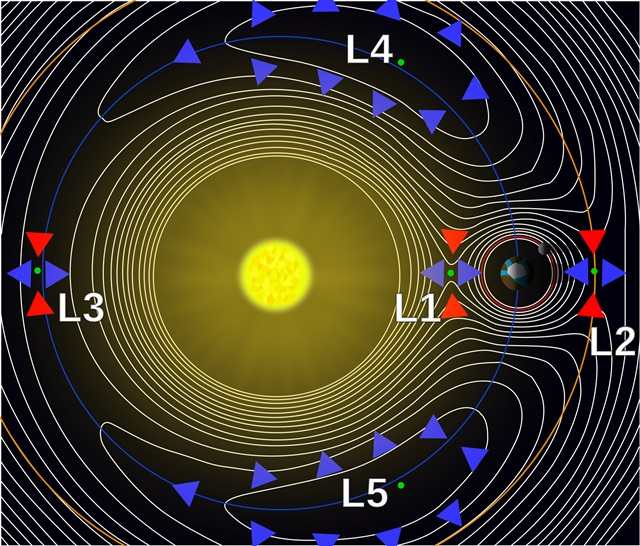
There are five such points in the Earth-Moon system, and two of them are very stable. This means we can build space stations of almost any size and place them at Lagrange points, point them towards the Sun and make them rotate, giving people large autonomous homes, from where you can safely watch the end of the world on Earth.
Interesting facts:
· The International Space Station is the most expensive man-made structure, costing about $100 billion.
· The size of the ISS is comparable to the size of a football field.
· The ISS complex has more living space than a 6-room house.
Luna
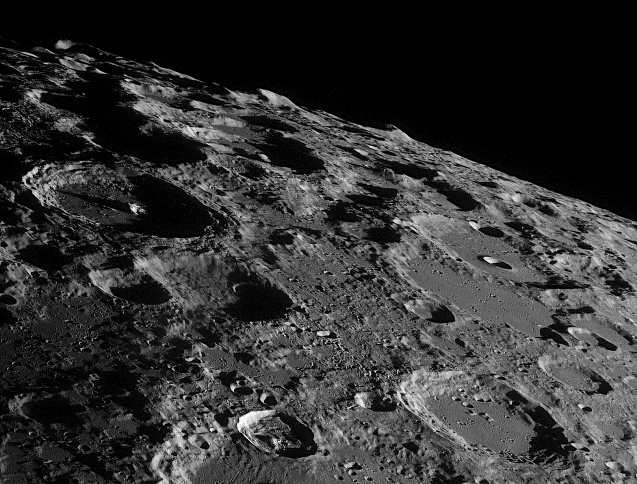
The moon is not the best choice for human life. Unlike the space station's controlled environment, settlers on the moon will have to live in protective modules with a gravity that is 6 times weaker than Earth's. The Moon also has very long days and nights (13.5 Earth days).
At night, temperatures are so low that steel becomes brittle and cracks. During a long week of lunar days, temperatures rise high enough for water to boil even under normal atmospheric pressure, which is also not present on the Moon.
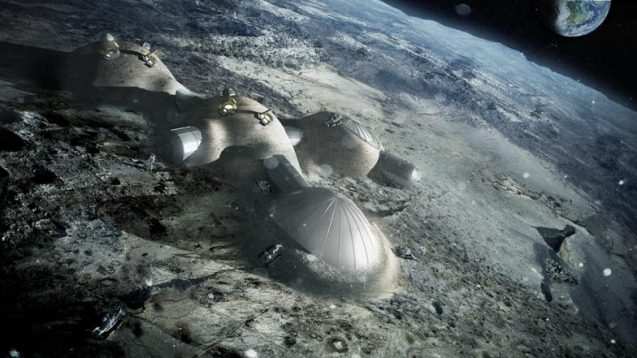
This does not mean that people will not be able to live on the moon, but it will be necessary to create an environment with water and air where it will be possible to effectively switch from heating to cooling, as well as protect residents from periodic solar flares that can kill all living things.
Interesting facts:
· Because of the weaker gravity, your weight on the Moon would be one-sixth that of Earth.
· Due to the lack of atmosphere, you will not hear sounds on the moon, and the sky will always look black.
· Temperatures on the Moon's surface can reach between 123 °C and -153 °C.
Mars
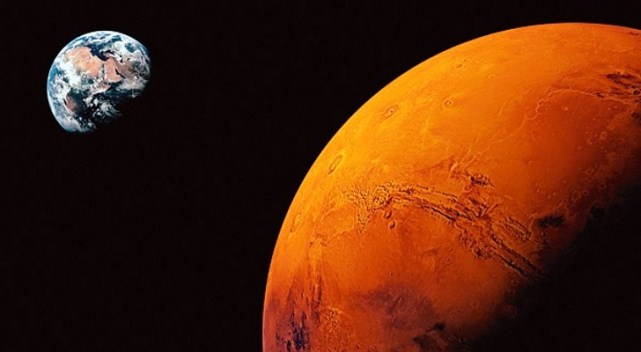
Mars is far from an ideal place to live, but it is closer to establishing a civilization here. Mars's surface area is equal to Earth's land area, and its atmosphere allows for higher levels of oxygen or ozone.
Although Mars is much smaller and denser than Earth, its surface is closer to the core, which causes gravity on the surface to be 40 percent of Earth's.
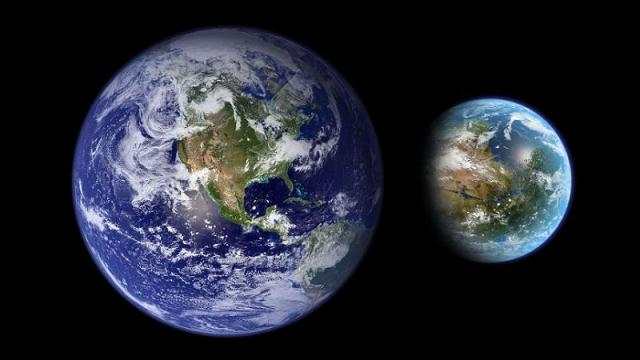
However, the Red Planet is still quite far from us. To make Mars habitable, humans would have to warm it up enough and add plenty of air.
Most of the carbon dioxide in the Martian atmosphere can be converted into oxygen, which plants can handle.
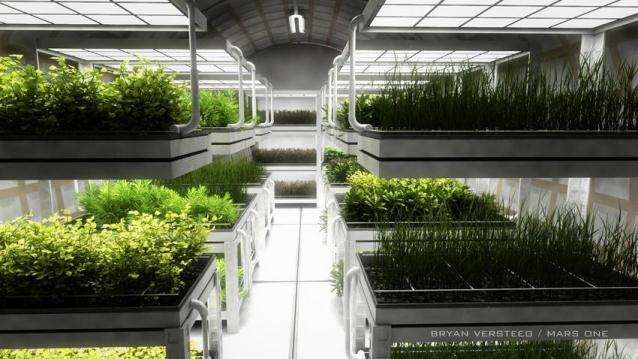
We should not exclude the possibility of creating genetically modified plants that can withstand conditions of strong radiation.
Read also:The first 1058 people who can fly to Mars have been selected
Interesting facts:
· Since 1960, 68 missions have been launched to Mars or past the Red Planet.
· A 100 kg person on Mars would weigh 38 kg.
· The average temperature on Mars is -80°C. In winter, it can drop to -125°C near the poles, and in summer near the equator it can rise to 20°C, but drop to -73°C at night.
Oort cloud
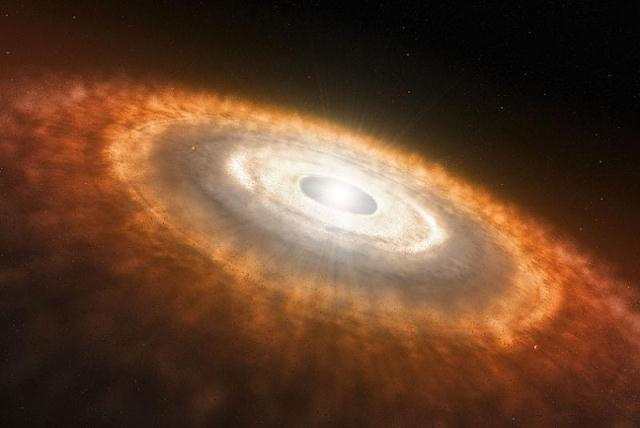
The Oort Cloud is one of the little-known regions of our solar system. A huge cloud of comet nuclei orbits the Sun in the form of a spherical shell that extends over a distance of 5,000 to 100,000 astronomical units (1 AU = 150 million km).
The bodies in the Oort cloud contain almost everything humans need to live: water and carbon.
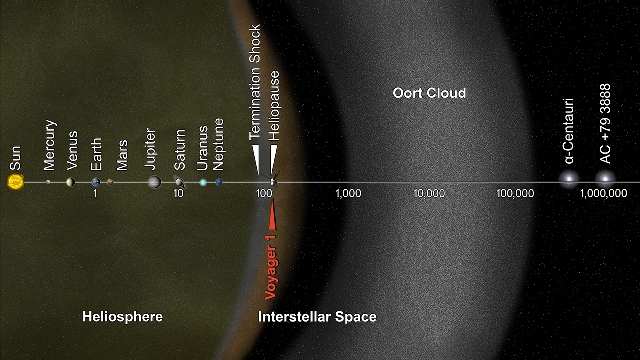
In one of his books, Carl Sagan envisioned a future in which people travel from one Oort cloud comet to another, consuming their resources and gradually moving to the nearest star system.
The only problem is how to travel several centuries through interstellar space.
Interesting facts:
· The distance from the Sun to the outer reaches of the Oort cloud is about a quarter of the distance from the nearest star, Proxima Centauri.
· No one knows how many objects exist in the Oort cloud, but it is estimated that there are about 2 trillion.
Deep space
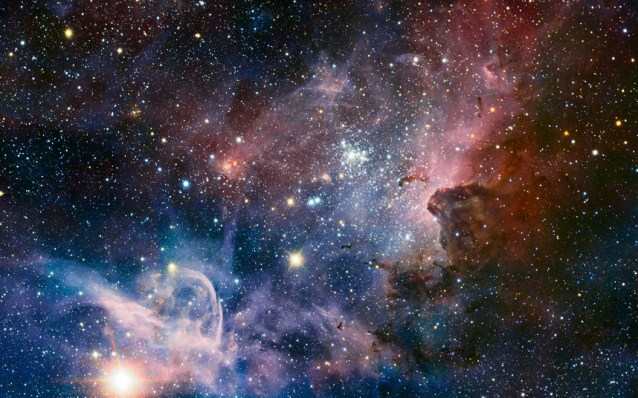
None of the above options is a long-term solution. Even a cloud of icy comets cannot escape the agony of the Sun's dying throes. The same cannot be said about deep space.
Colonial ships can drift in the space between stars indefinitely without colliding with a changing environment.
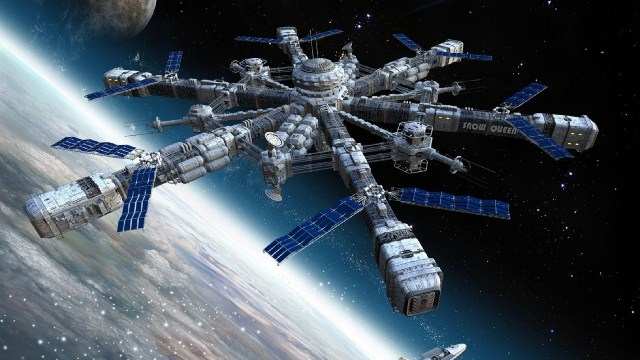
Each ship will be a kind of time capsule, transporting the microcosm of the society it created, which has hardly changed in response to floods, famines, droughts, or wars.
Of course, interstellar travelers will have to face some challenges. They will need fuel to produce energy, materials to repair and expand, and possibly contraceptives to prevent overcrowding.
They will have to periodically enter a star system to resupply, and at the same time drop off dissatisfied inhabitants every few generations.
Interesting facts:
· The Voyager 1 space probe is the farthest human-made object from Earth, located 19 billion km from the Sun.
· Voyager 1 will reach another star in 40,000 years, and could reach Sirius in 285,000 years.
Planets outside our solar system
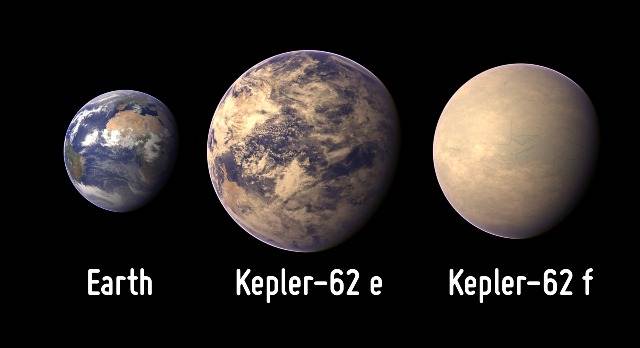
People will explore new worlds and civilizations, but are unlikely to find a planet they can live on.
Although the Kepler space telescope has discovered thousands of Earth-like planets, and many of them are in the habitable zone, where liquid water can exist, that doesn't mean we can be there settle down.
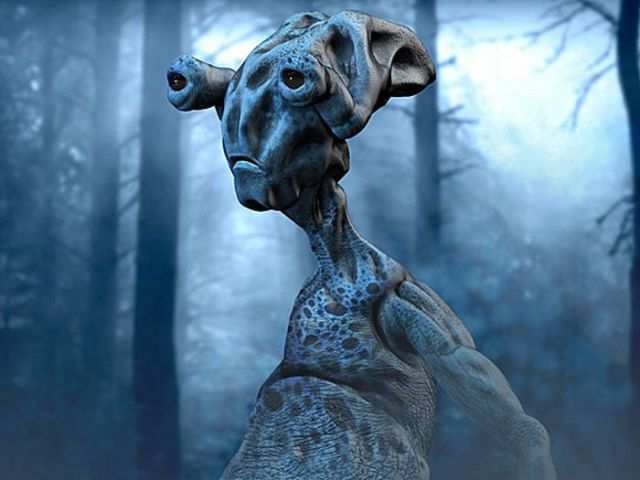
Planetary ecosystems are quite complex. To imagine how difficult it would be for humans to colonize an exoplanet, imagine an alien with a completely different biology trying to live on Earth.
Even if it can withstand gravity and atmospheric pressure, the level of radiation will not be fatal to the body, and oxygen will not cause it to burn, and other problems will have to be faced.
The alien will starve to death, as the unearthly ecosystem will almost certainly not use the same 20 amino acids we use for life. What happens if you eat amino acids that are foreign to you? Nothing. They will pass undigested, as our anatomy is not adapted to obtain nutrients from them.
We can't even survive on grass, even though it's much closer to human biology than any extraterrestrial organism. Every step in the evolution of life on Earth depends on the steps that have taken place before, and nothing on Earth can go long without other life.
Even our oxygen-rich atmosphere is a product of life, and oxygen-rich worlds may already be habitable. But if we do find a planet that is a clone of Earth in every way, its biology will be incompatible with ours.
Interesting facts:
· According to the study, there are about 160 billion exoplanets in the Milky Way galaxy alone.
· The discovery of 1,743 planets outside the Solar System has now been confirmed.