
 Science
Flying over Pluto in 2015, New Horizons provided information about the dwarf planet that indicates that Pluto once had an ocean under Pluto's ice.
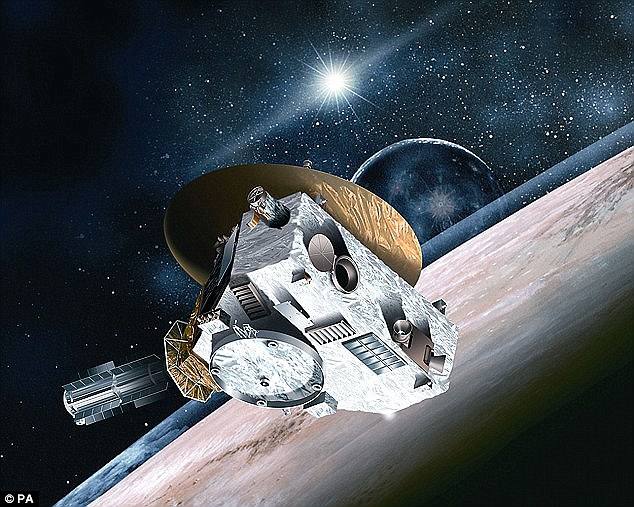
It is worth noting that New Horizons is NASA's automatic interplanetary station, part of the New Frontiers program, which aims to study the dwarf planet and its Charon's natural satellite.
The ocean on Pluto, which froze more than one million years ago, may have contained living organisms.
New information from the station indicates that there is still liquid under Pluto's ice layer, which means there may still be life on the dwarf planet.
New information about Pluto from New Horizons
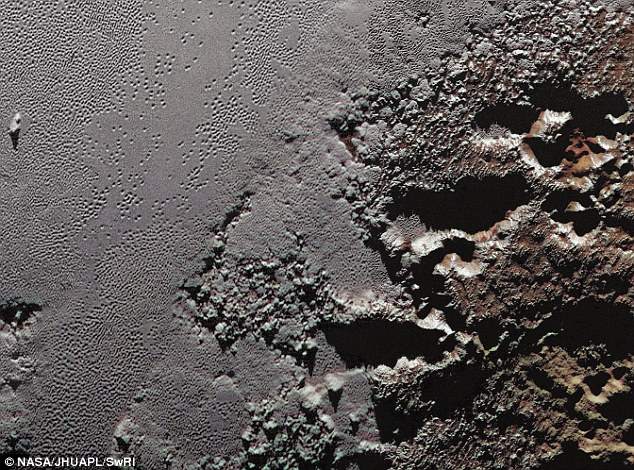
This New Horizons photo shows dark, rocky plateaus known as Krun Macula (lower right corner) bordering icy plains. Tectonic features may indicate that there is water under the ice crust.
Thanks to updated information from New Horizons, scientists were able to recognize tectonic features on Pluto's surface.
Also Read: 12 Surprising Facts You Didn't Know About Pluto
They changed the model of thermal evolution, adding new information, and concluded that if the ocean on Pluto had frozen millions or billions of years ago, the dwarf planet would have shrunk to look like overripe peach.
Not only did New Horizons not detect contraction, but the new data showed that the dwarf planet expanded. This phenomenon may have been caused by the slow freezing of the subsurface ocean.
Read also: New Horizons: 10 interesting facts about the first mission to Pluto

A team of scientists working at NASA on the New Horizons project. They will be analyzing information from the station for years to come.
Dwarf planet Pluto

According to scientists, Pluto's core could contain enough radioactive elements that create heat to partially melt the ice crust.
Scientists have seen more in images of Pluto than expected. The dwarf planet's surface contains not only frozen water, but also nitrogen and methane. In addition, Pluto has mountains several hundred meters high and a huge heart-shaped plain.
Read also: Impressive photos of Pluto
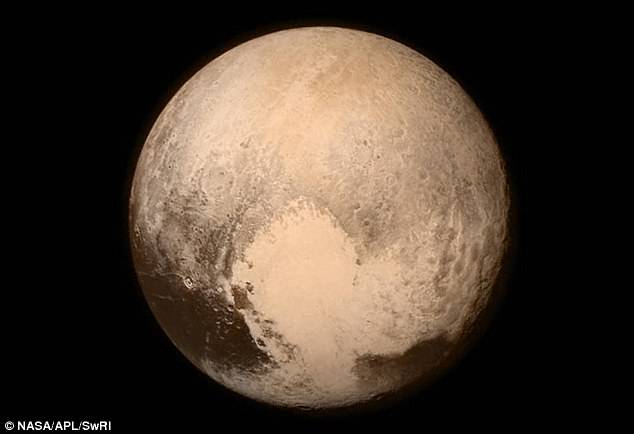
Scientists believe that Pluto's ice crust is about 260 km thick, but according to updated data, this figure could rise to 300 km.
After studying all the alternatives, scientists are very confident that the ocean under Pluto's icy crust is liquid.
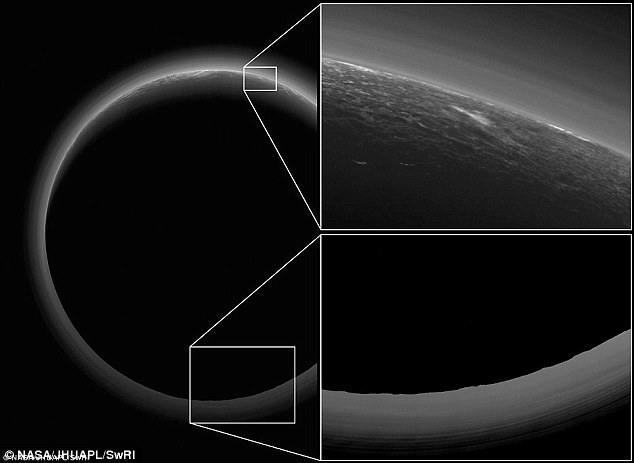
This image from New Horizons was taken just minutes after it came closest to Pluto on July 14, 2015. In the image, you can see how sunlight seeps through the dwarf planet's ice layer, illuminating the atmospheric haze. The photo also shows a cloud that NASA scientists describe as “an intriguing bright light tens of kilometers in size.”
First contact with Pluto
More about New Horizons