 Events
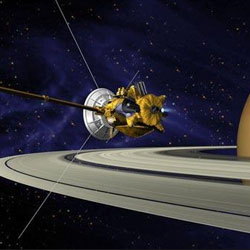
The Voyager 1 spacecraft is currently the first and only object created by man that has managed to get this far from Earth. Recently, the device came to a new area on the edge of the solar system, which has puzzled physicists a lot. Their theories couldn't predict anything like this.
Launched 36 years ago, the twin unmanned spacecraft Voyager 1 and Voyager 2 were the first to follow an incredible journey past all planets, sending a wealth of useful information on their way to Earth.
The first Voyager flew through the entire system by 1980 and has been on its way to interstellar space ever since. Today, this object is 120 times farther away from us than the distance between Earth and the Sun.
An unexpected turn of events
Initially, scientists believed that Voyager's transition to a new reality, where the influence of the entire galaxy is more noticeable, would be gradual and would not be particularly interesting. However, it turned out that this transition became much more difficult than the researchers suspected. Now the device is in a strange area, which scientists find it difficult to find an explanation. All the models that predicted what should happen in the area were wrong.
Solar wind and cosmic rays
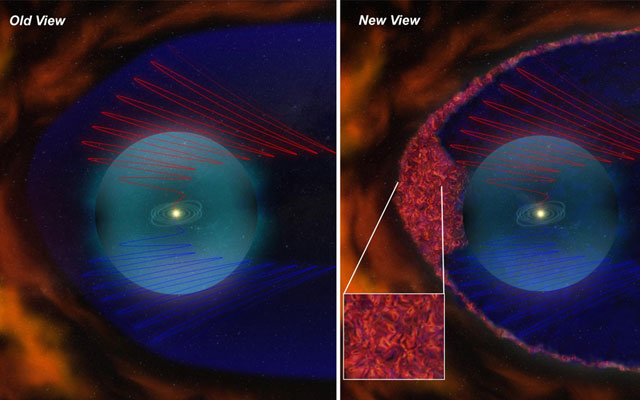
The sun produces a stream of charged particles called the solar wind. This wind “blows” at a speed of more than 1 million kilometers per hour. The particles carry with them the solar magnetic field.
How close can you get to the Sun
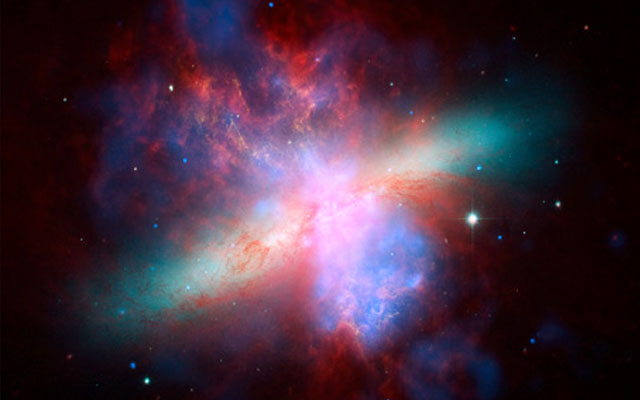
Ultimately, the solar wind collides with the interstellar medium, a completely different stream of particles that came from the explosions of massive stars. The super-intense ions that were released as a result of the explosions are known as galactic cosmic rays.
The solar wind blocks cosmic rays from entering the solar system. The galaxy, in turn, has its own magnetic field, which is assumed to be located at a significant angle to the solar field.
It is known that Voyager 1 reached the edge of the cosmic wind back in 2003. The spacecraft's instruments showed that particles around it move at subsonic speed, that is, their movement slows down as they move away from the Sun.
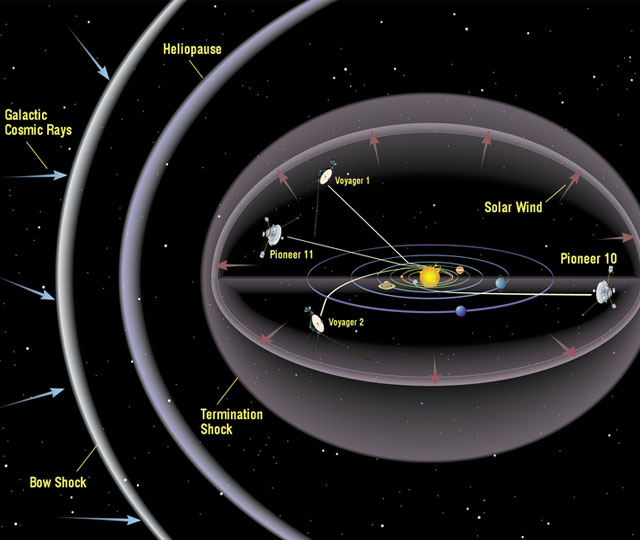
About a year ago, everything around the device became calm. Voyager 1 equipment showed a decrease in solar wind speed by a thousand times. This figure was so significant that it became clear that the solar wind had completely “subsided”. Interestingly, the device's transition to this area was incredibly fast and took only a couple of days.
At the same time, galactic cosmic rays have increased significantly. Scientists believe this means only one thing: Voyager 1 is out of the Sun's control.
Strange place
There is one odd thing about this situation: if the solar wind has completely disappeared, galactic cosmic rays must “shine” from all sides. However, Voyager 1 found that the rays came from only one direction.
Moreover, although the solar particles were gone, the spacecraft did not detect any changes in the magnetic field around it. This is quite difficult to explain, since it is assumed that the galaxy's magnetic field is tilted by 60 degrees relative to the Sun's magnetic field. None of the astrophysicists can yet understand exactly what is going on.
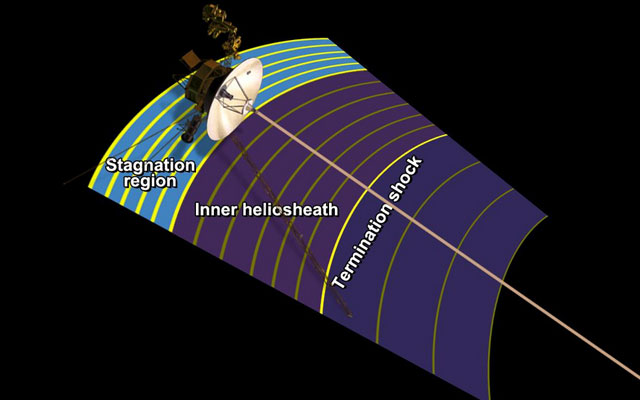
It seems that Voyager 1 is about to leave its sunny home, but instead is in a “foyer” with the door open, into which the wind from the galaxy blows. Scientists did not suspect that such a “foyer” existed, and they also have no idea how long the device would be in it.
It could be months or years before Voyager 1 makes it to interstellar space. So far, scientists do not have models to determine this.
So far, we can say that Voyager 1 has not fully left the solar system, but it has left the area under the influence of the solar wind. What will happen to the device next is anyone's guess.
Interesting facts about Voyager spacecraft
1) The Voyager 1 and Voyager 2 spacecraft are twins, so they are absolutely unique in design. Each of them weighs about 680 kilograms. The devices are equipped with useful tools for various studies, including tools for photographing and measuring plasma concentrations.
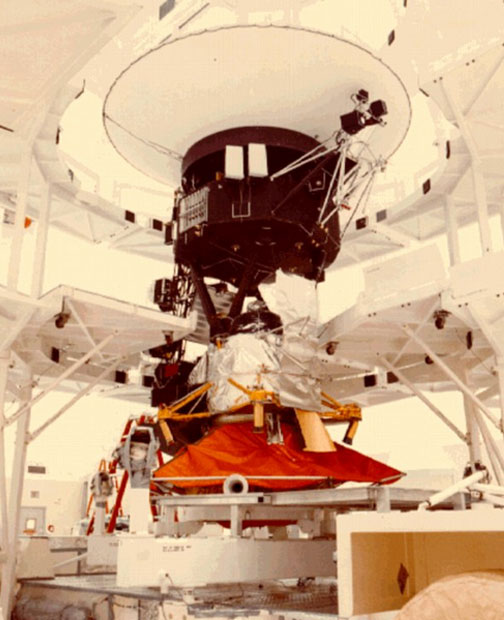
2) Some of the 65,000 components of the devices seem ridiculous today, but in the late 1970s they were considered advanced technologies, such as a digital multi-track tape recorder.
3) The Voyagers were designed to last about 5 years, but in fact they have been operational for more than 30 years.
4) Voyager 1 actually launched 16 days after Voyager 2. This happened on September 5, 1977. The fact is that every 175 years, the planets Jupiter, Saturn, Uranus and Neptune are so located relative to each other that allows the spacecraft, flying by, to catch and use their gravitational fields to cover vast distances with ease.
Interesting facts about spaceships and planet exploration
The devices were launched with different trajectories. One spacecraft visited all four planets, and the other, Voyager 1, visited Jupiter and Saturn before going into deep space.
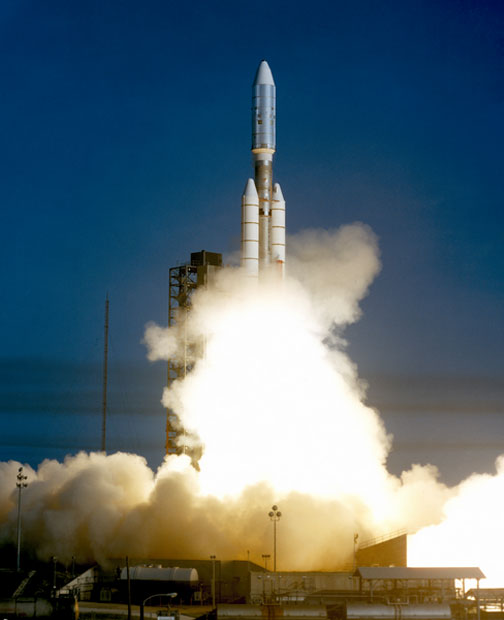
Voyager 1 caught up with Voyager 2 in the asteroid belt and took the lead during the mission, as planned.
5) NASA engineers had to consider more than 10,000 possible trajectories for the Voyager mission.
6) It currently takes 16 hours and 38 minutes to receive a signal from Voyager 1. The device is located at a distance of about 12 billion kilometers from Earth
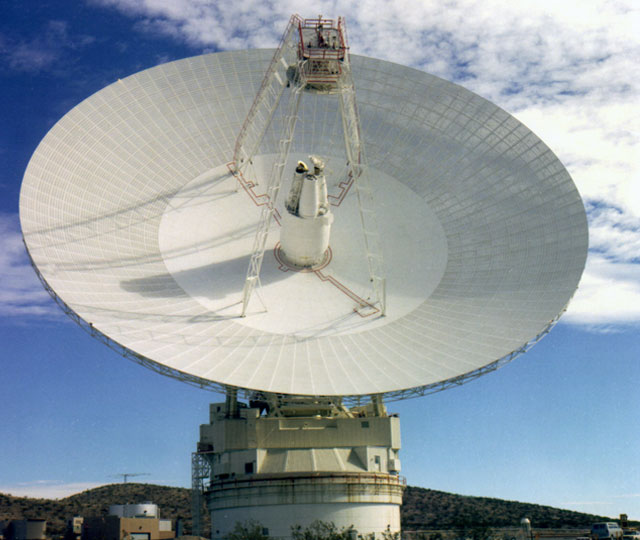
NASA's Deep Space Network radio telescope (California, USA), which receives Voyager 1 signals
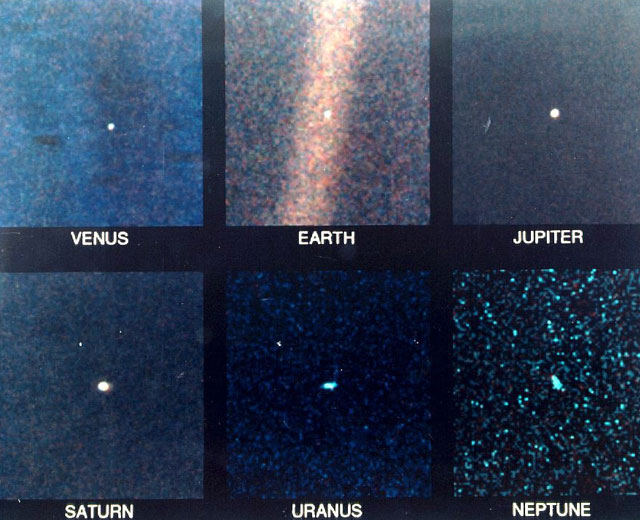
7) In February 1990, when the planets were behind Voyager 1, researchers signaled the spacecraft to turn on its cameras and capture what was left behind. Thus, with the help of 60 images taken by the device, it was possible to obtain a “family portrait” of the solar system.
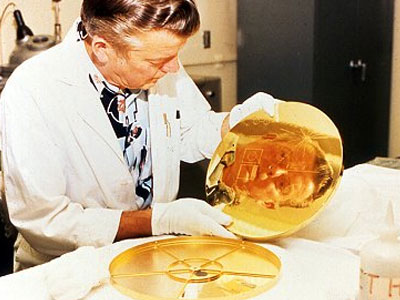
8) Both devices contain messages to alien life forms from earthlings in the form of gold-plated copper discs. These discs contain information prepared for NASA by astronomer Carl Sagan. Here you can find images, recordings of natural sounds, greetings in 55 languages and musical compositions from different cultures and times.
The most unusual attempts to contact aliens