
 Health
A recent study in the US found that about
20 per cent of adults don't leave the pool to urinate
and these are just the ones who confessed to what they did. Moreover, about 70 percent of people don't take a shower before they dive into the pool water.
But what are the dangers of urinating or going into the water without washing yourself? After all, no one, as they say, will notice.
See also: Clean and hot water: Which water heater is suitable for a summer residence and which one for an apartment
Toxic mixture
Urination and lack of hygiene skills before going to the pool present a number of problems. Chlorine can react with nitrogen in sweat and urine, as well as with other substances we use, such as deodorant, cosmetics, and sunscreen. This chemical reaction results in chloramines, which can irritate skin and eyes, and the strong chlorinated odor we're so familiar with in many swimming pools.
Many people think that since the pool smells like chlorine, that's good. This is actually bad, and a good pool shouldn't give off the pungent smell of chlorine.
What about saltwater pools? Chlorine is also added there. However, although such pools also use chlorine for disinfection, it is not added to the water, but it is formed when salt in the water reacts with electricity generated by a special generator. Manufacturers claim that this makes it possible to produce less chloramine, but so far this has not been proven.
Keeping the pool clean
 Using the pool as a toilet or shower room also removes chlorine in the water. This means less chlorine will be left to kill germs.
It should also be remembered that, like all living things, humans are also home to many microorganisms. Thus, according to some reports, each person carries from a billion to a trillion bacteria.
There are two factors that ensure the safety of swimming in the pool: the amount of chlorine and the water pH value. In order for chlorine to perform its task, the pH level and the chlorine level must be appropriate. Chlorine levels between 1 and 3 ppm and pH between 7.2 and 7.8 are considered optimal.
The lack of balance between these indicators creates a breeding ground for many harmful microbes, such as hepatitis A, norovirus, which causes stomach flu, and cryptosporidia, which are one of the main causes of swimming pool related diarrhea.
Children's pools, which many people fill with water from the cottage, can also spread germs if a child with diarrhea bathes in the same water as a healthy child. You should also pour out the water after bathing.
How can I protect myself in the pool?
If you want to protect yourself as much as possible from harmful microbes in the pool, you should first of all not help it become polluted yourself.
Here are some guidelines to help keep you and others safe in the pool:
1. Take a shower before diving into the pool
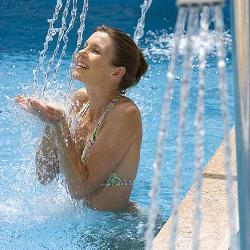 A study in the Netherlands found that showering for just 15 seconds would help get rid of half of the pollutants on our body.
2. Don't pee in the pool
It is best to go to the bathroom in front of the pool. If you're swimming with young children who wear swim diapers, check them every half hour to hour.
3. Avoid swallowing pool water
Those who like to splash water from their mouths should give up this fun. You can swallow a spoonful of excrement, although it will not have a harmful effect if there is no harmful pathogen there. For safety, avoid putting pool water in your mouth and avoid swallowing it.
4. Don't go to the pool if you're sick
If you're not feeling well or have a cut or sore on your body, it's best to avoid going to the pool. Use common sense and don't infect other people. This is especially true when you have diarrhea, which is particularly resistant to chlorine.
5. Learn about the composition of water
The best way to find out more about the pool is by talking to people directly related to the pool.