
 Unbelievable facts
Why has gold become the standard for measuring all money? Why isn't copper or platinum or argon the standard? The answer to this question is provided by a chemical engineer.
“An element must meet four qualities in order to be next to a premium currency,” says Sanat Kumar, dean of the Columbia University School of Chemical Engineering. Firstly, it should not be gas, because gas is simply impractical when it comes to currency exchange. This fact is already “knocking out” a large number of opponents from the right side of the periodic table, including noble gases that meet the remaining three requirements.
Secondly, the element must not corrode or be reactive. Pure lithium, for example, ignites when it comes into contact with water or air. Iron rusts. In accordance with this requirement, another 38 items are being eliminated.
Third, the element must not be radioactive. After all, your money doesn't have to emit anything, and radiation can kill you after all. This requirement eliminates two more competitors' lines: elements known as actinides and lanthanides. Any of the 30 or so remaining elements could be in place of gold, were it not for the fourth requirement. The item must be rare enough to be useful, but not rare enough to be impossible to find.
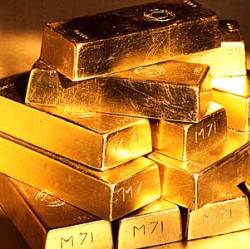
That fails us, according to Kumar, in the five remaining elements: rhodium, palladium, platinum, silver, and gold. Although silver was used as a currency, it fades quickly, so we remove it from the list. Rhodium and palladium were only discovered in the 1800s, so they did not take part in the history of early civilizations. So what remains is gold and platinum. Platinum, however, has a melting point of about 1,600 degrees Celsius (this temperature can only be used in modern furnaces), so early civilizations could not smelt from it the forms of coins and money they need. Thus, all that remains is gold, which is hard but malleable, does not react and cannot kill you. This is truly the gold standard.