
 Events
East Antarctic explorers discovered a meteorite crater last month.
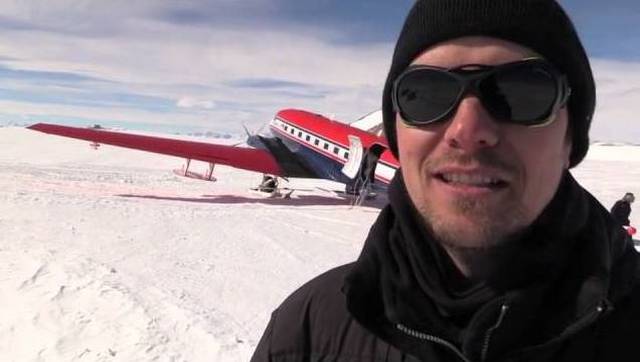
The crater is about 2 km in diameter and is a round spot on the smooth part of the glacier near the Belgian research station King Baudouin. German scientist Christian Müller was the first to see the crater during an aerial survey carried out by plane on December 20, 2014.
Meteorite crater
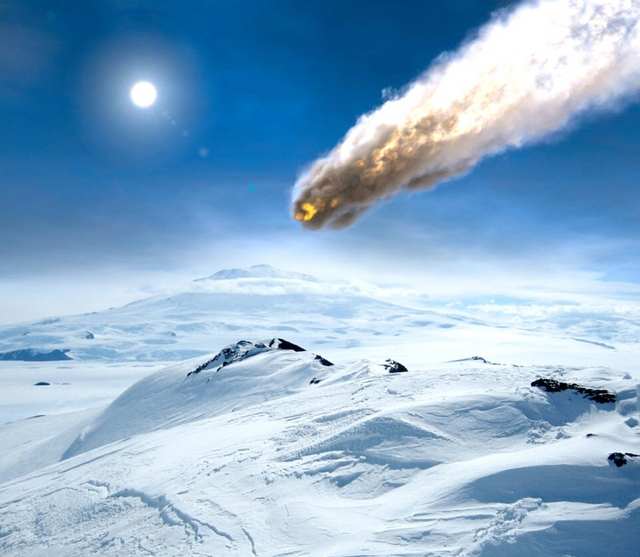
“I looked out the window and saw an unusual structure on the ice surface,” Müller said, describing the discovery. “There was some broken ice, which is very unusual for a flat ice shelf, which was also surrounded by a large, pterygoid, annular structure,” Müller continues.
Read also: The 10 largest impact craters on planet Earth
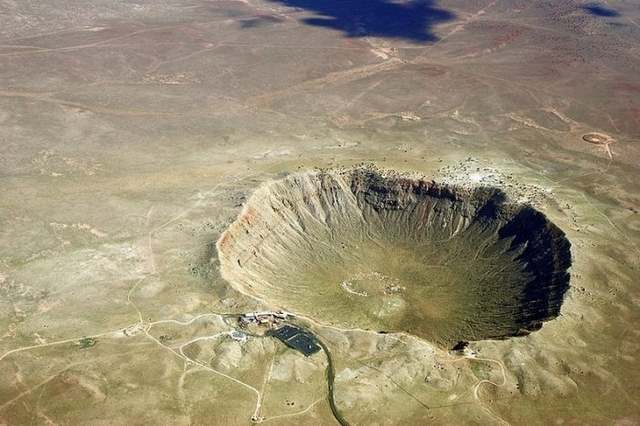
This place is about twice the size of Arizona's Berringer Crater (one of the best-known craters on Earth). And from the height of the satellite, the image of this crater clearly shows signs of a meteorite entering the ice.
The crater is at least 25 years old. Undoubtedly, this is a meteorite crater, say researchers who discovered this place.
Also near the crater, to the north, is the Princess Elizabeth research station (Belgium).
German researchers at the station are researching surrounding soil rocks to gather new details about the formation of the Gondwana supercontinent that existed here between 550 — 180 million years ago. Flying over ice shelves is not part of the research.
“We flew so far north because our radar equipment was broken and we didn't want to waste such a good flying day in vain,” said Graeme Eagles, a scientist at the Institute Alfred Wegener in Germany, who is currently conducting geophysical surveys of the area. “It was exciting to see a meteorite crater,” he added.
A German research team discovered this crater in satellite images dating back to 1996.
Great crater
If this rock really crashed into the ice shelf, then, judging by the crater, the block was quite large. Typically, the object that forms the crater is 10 to 20 times smaller than the crater itself, said Peter Brown (director of the Center for Planetary Science and Exploration at the University of Western Ontario in Canada).
This means that 2 km is a large crater created by an object about 100 m in diameter. “And such an object could create a huge explosion with significant consequences, so it's probably not a meteorite that created this crater,” says Brown.
Meteor hunter Peter Jenniskens also argues that the idea of a crater looks implausible. “I don't think it's a crater,” said Jenniskens, who works at the SETI Institute (Search for Extraterrestrial Civilizations) and NASA's Ames Research Center in California.
See also: Scientists have discovered a meteorite crater of incredible size
However, it is believed that German researchers did not discover all of their maps. Scientists collected photos, videos and other data about a trip to the large crater site on December 26.
A team of scientists mapped the surface of the ice near the crater in great detail, using a laser scanning tool that records accurate changes in topography. They also surveyed the area with a radar instrument that examines the upper part of the ice and snow.
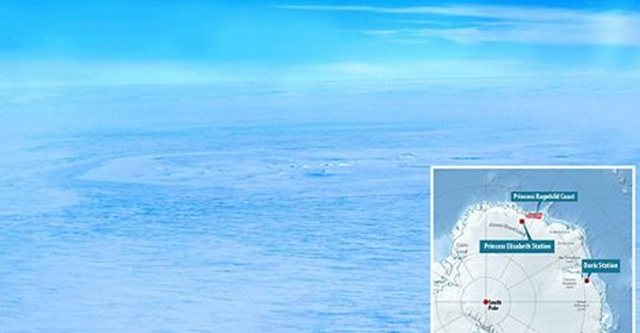
Small craters were also seen near this site. The researchers have not yet analyzed all the data, but they hope to publish the results in a scientific journal if this structure really turns out to be the large crater that formed as a result meteorite impact.
The cold weather of Antarctica makes it possible to preserve space rocks, of which there are actually many. “There are a lot of extremely interesting discoveries on this cold earth, so it's not necessary to send probes to distant comets if there are any on Earth,” said Graham Eagles.